
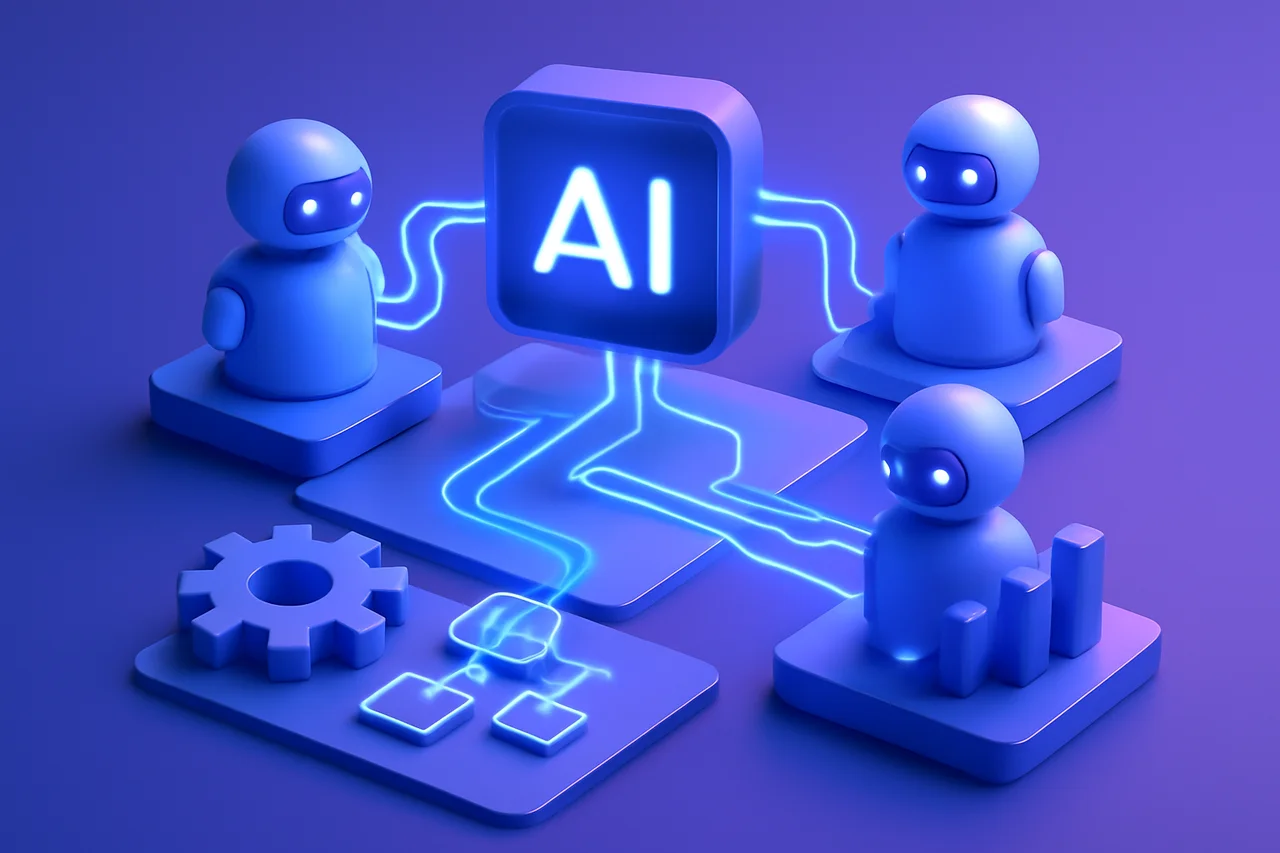
In the rapidly evolving landscape of enterprise technology, companies are increasingly turning to artificial intelligence (AI) to enhance their operational capabilities. AI-native firms like Basis, Clay, and Exa Labs are at the forefront of this transformation, utilizing AI agents to streamline workflows across various domains, including onboarding, account management, and developer integrations. This article explores how these innovations not only boost efficiency but also provide actionable insights for enterprise leaders aiming to leverage AI technologies.
Understanding AI Agents in Enterprise Workflows
AI agents are sophisticated software programs capable of performing tasks that typically require human intervention. In the context of enterprise workflows, these agents can automate repetitive processes, analyze data, and facilitate communication between different systems. By integrating AI agents into their operations, companies can significantly reduce the time and resources spent on routine tasks, allowing employees to focus on more strategic initiatives.
The role of AI agents extends beyond mere automation; they can also enhance decision-making processes by providing data-driven insights. For example, AI agents can analyze historical data to identify trends and suggest improvements, which can be invaluable for enterprise leaders looking to optimize their operations. This capability allows organizations to not only react to current challenges but also anticipate future needs and opportunities.
Streamlining Onboarding Processes
Onboarding new employees is a critical yet often cumbersome process for organizations. Companies like Basis are harnessing AI agents to automate various aspects of onboarding, from document collection to training schedules. This not only speeds up the process but also ensures that new hires receive a consistent experience. By utilizing AI, companies can provide tailored onboarding programs that adapt to the specific needs of each new employee, enhancing their initial engagement and retention.
Furthermore, AI agents can facilitate the onboarding process by providing real-time feedback and support to new hires. For instance, chatbots powered by AI can answer common questions, guide employees through training modules, and track their progress. This level of support can significantly reduce the burden on HR teams while ensuring that new employees feel welcomed and supported from day one.
Enhancing Account Management
Effective account management is essential for maintaining strong relationships with clients and ensuring their needs are met. AI agents play a pivotal role in this area by automating routine tasks such as follow-up communications, data entry, and reporting. Clay, for instance, has implemented AI solutions that help account managers track client interactions and analyze customer data in real-time. This enables teams to respond proactively to client inquiries and issues, ultimately leading to improved customer satisfaction and loyalty.
Moreover, AI agents can assist in personalizing client interactions by analyzing preferences and past behaviors. This allows account managers to tailor their approaches to each client, fostering deeper relationships and enhancing the overall customer experience. By leveraging AI in account management, companies can not only streamline their processes but also create a more engaging and responsive service model.
Facilitating Developer Integrations
In an era where software development is increasingly collaborative, integrating various tools and platforms is crucial for productivity. Exa Labs is leveraging AI agents to simplify the integration of developer tools, streamlining workflows and enhancing collaboration among development teams. By automating the setup and configuration of these tools, AI agents reduce the friction that often accompanies new integrations, allowing developers to focus on coding and innovation rather than administrative tasks.
Additionally, AI agents can provide insights into the performance of different tools and platforms, helping development teams to make informed decisions about which technologies to adopt. This data-driven approach not only enhances productivity but also ensures that developers are equipped with the best tools for their projects, ultimately leading to higher quality outputs and faster delivery times.
Insights for Enterprise Leaders
The implementation of AI agents in enterprise workflows offers valuable insights for business leaders. As organizations strive to remain competitive, understanding how to effectively integrate AI into their operations becomes paramount. Leaders should consider the following strategies:
- Identify repetitive tasks that can be automated using AI agents.
- Invest in training for employees to work alongside AI tools effectively.
- Continuously evaluate and adapt AI solutions to meet evolving business needs.
- Encourage a culture of innovation where employees feel empowered to leverage AI technologies.
By adopting these strategies, leaders can ensure that their organizations are not only keeping pace with technological advancements but are also positioned to capitalize on the efficiencies and insights that AI can provide.
The Future of AI in Enterprise
As AI technology continues to advance, its application in enterprise workflows is expected to grow. Companies like Basis, Clay, and Exa Labs are leading the charge, demonstrating how AI agents can transform traditional processes into dynamic, efficient operations. The potential for AI to enhance productivity and operational capabilities is vast, and organizations that embrace these technologies will likely find themselves at a competitive advantage in the marketplace.
Moreover, as AI becomes more integrated into everyday business processes, the demand for skilled professionals who can work alongside these technologies will increase. This shift will necessitate a reevaluation of workforce training and development strategies, ensuring that employees are equipped with the skills needed to thrive in an AI-enhanced environment.
Conclusion
In conclusion, AI-native companies are redefining the landscape of enterprise workflows by employing AI agents to streamline onboarding, account management, and developer integrations. As more organizations recognize the benefits of these technologies, the future of work will undoubtedly be shaped by AI, paving the way for increased efficiency and innovation in the business world. The integration of AI into enterprise workflows not only promises to enhance productivity but also to foster a culture of continuous improvement and adaptability, essential traits for success in the modern business landscape.
Key Highlights
- AI agents are transforming enterprise workflows for improved efficiency.
- Companies like Basis, Clay, and Exa Labs are leading in AI integration.
- Onboarding processes are becoming faster and more personalized with AI.
- AI enhances account management by automating routine tasks.
- Developer integrations are simplified, allowing teams to focus on innovation.
- Enterprise leaders should identify tasks to automate with AI.
- Continuous evaluation and adaptation of AI solutions are crucial.
Expert Analysis
Technical Analysis
The article discusses the implementation of AI agents in enterprise workflows, which are advanced software programs designed to perform tasks typically requiring human intervention. These AI agents automate repetitive processes, analyze data, and facilitate communication between different systems, thus streamlining operations across various domains such as onboarding, account management, and developer integrations. By integrating these agents, companies can significantly reduce the time and resources spent on routine tasks, allowing employees to focus on strategic initiatives. This capability not only enhances efficiency but also improves decision-making by providing data-driven insights, enabling organizations to anticipate future needs and opportunities.
AI agents differ from traditional automation tools by offering a more intelligent and adaptive approach to workflow management. They can analyze historical data to identify trends and suggest improvements, which is crucial for enterprise leaders aiming to optimize operations. However, while AI agents provide substantial benefits, they also come with limitations, such as the need for continuous training and adaptation to meet evolving business needs. Additionally, the reliance on AI may create challenges in workforce dynamics, as employees must learn to work alongside these technologies effectively.
Advantages
- Increased efficiency by automating repetitive tasks.
- Enhanced decision-making through data-driven insights.
- Tailored onboarding experiences that improve employee engagement.
- Improved customer satisfaction and loyalty through personalized account management.
- Streamlined developer integrations that enhance collaboration and productivity.
Disadvantages
- No major disadvantages reported yet.
Real-World Use Cases
- Automating onboarding processes to ensure a consistent experience for new hires.
- Using AI agents to manage follow-up communications and data entry in account management.
- Facilitating real-time analysis of customer data to enhance client interactions.
- Streamlining the integration of developer tools to reduce administrative burdens on development teams.
Business Impact
The integration of AI agents into enterprise workflows is poised to significantly impact the market by enhancing operational capabilities and driving efficiency. Companies that adopt these technologies, such as Basis, Clay, and Exa Labs, are likely to gain a competitive advantage, as they can respond more effectively to client needs and optimize internal processes. This shift may also lead to increased demand for AI solutions, creating new revenue opportunities for technology providers and reshaping the competitive landscape within the enterprise technology sector.
User Impact
Ordinary users, particularly employees in organizations that adopt AI agents, stand to benefit from enhanced support and streamlined processes. New hires may experience a more engaging onboarding process, while account managers can provide more personalized service to clients. However, there may be concerns regarding the adaptation to AI technologies, as employees will need to develop new skills to work effectively alongside these tools. Overall, the adoption of AI in enterprise workflows appears to be a worthwhile investment for organizations aiming to improve efficiency and innovation.
Security & Privacy
Security and privacy analysis not applicable.
Future Outlook
As AI technology continues to evolve, its application in enterprise workflows is expected to expand further. Companies that successfully integrate AI agents into their operations will likely lead the way in productivity and innovation. Additionally, the growing reliance on AI will necessitate a reevaluation of workforce training strategies, ensuring that employees are equipped with the necessary skills to thrive in an increasingly AI-enhanced environment. This trend suggests a future where AI becomes an integral part of daily business processes, driving continuous improvement and adaptability.
Expert Summary
The rise of AI agents in enterprise workflows marks a significant shift in how organizations operate, offering substantial benefits in efficiency and decision-making. Business leaders and technology providers should pay attention to this trend, as it presents opportunities for competitive advantage and innovation. Overall, the integration of AI into enterprise processes is a crucial development that can reshape the future of work, making it essential for organizations to embrace these technologies.
Originally reported by OpenAI News.



