

Trending
Fake QR Codes on Parking Meters: How to Spot One Before You Pay
Scammers are pasting fake QR codes over real ones on parking meters. Here is how the scam works, the red flags to watch for, and what to do if you already scanned one.
Category
Threat intelligence, privacy, breaches, and security best practices.

Anthropic has warned that future autonomous AI agents could spread like worms across poorly secured smart TVs, cameras, and appliances. Here’s what the warning really means, and nine simple steps to protect your home network today.
Explore
Continue browsing across the newsroom.
Artificial intelligence, machine learning, and generative AI breakthroughs.
Emerging tech, industry shifts, and digital transformation news.
Wearables, smart home devices, and consumer electronics reviews.
Smartphone launches, mobile OS updates, and app ecosystem news.
Apps, platforms, developer tools, and open-source updates.
Web platforms, connectivity, cloud services, and digital culture.

Microsoft’s 2026 Digital Defense Report reveals how attackers are using AI to accelerate vulnerability exploitation, phishing, credential theft, and increasingly autonomous cyberattacks—and what individuals and businesses can do to stay safer.

Cisco Talos has uncovered CLOSEDQUORUM, a Windows malware sample that uses multiple AI models to help determine its next actions. Here is what the discovery means for the future of AI-assisted cyberattacks.

AI Phishing, Cybersecurity 2026, Online Safety, Cyberattacks, Internet Security Suggested Alt Text for Featured Image: "Illustration representing AI-powered phishing attacks in 2026"
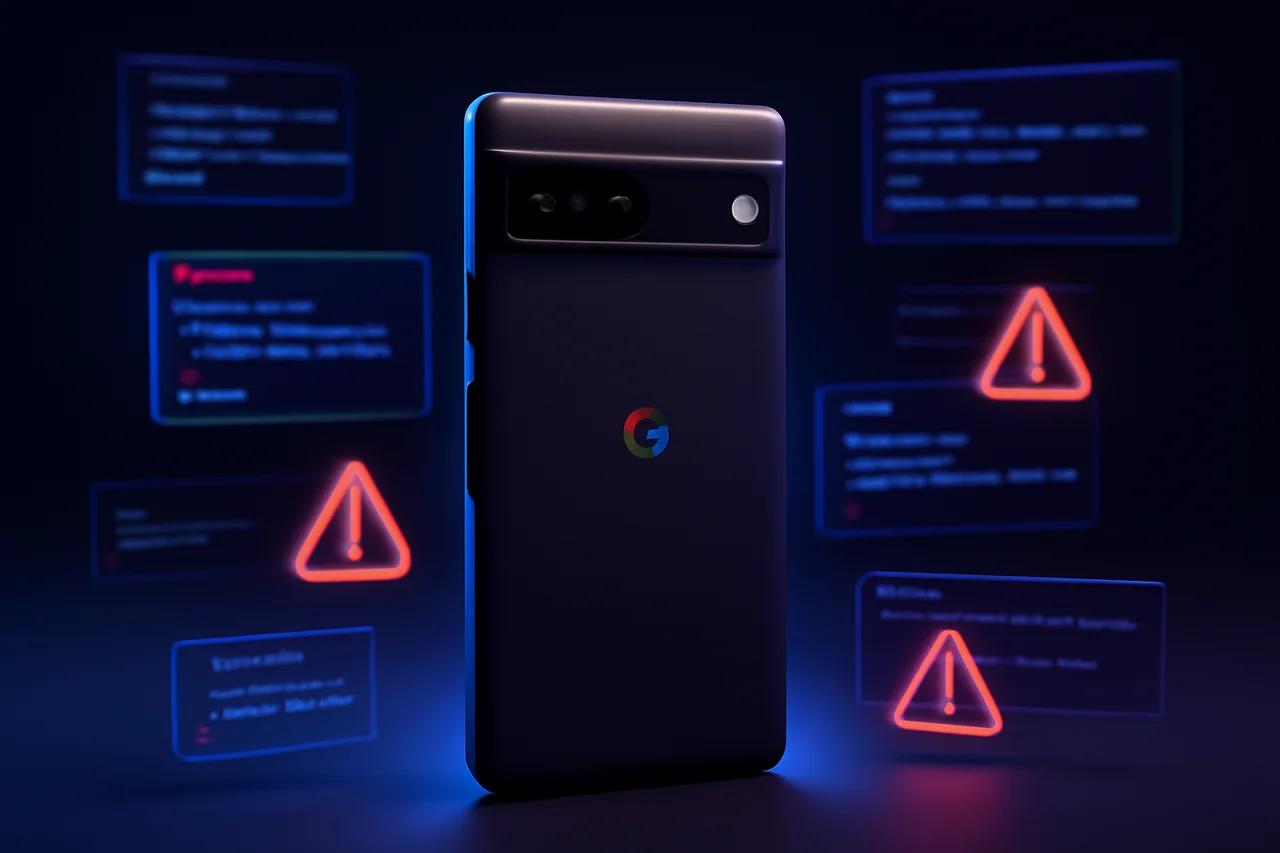
Google has reported that some Pixel phone owners may have been hacked due to a bug in the phone's modem, which is believed to be under limited, targeted exploitation.

Security researchers at Forever Security have discovered that a single browser extension can hijack AI assistants in multiple Chromium-based products, including Chrome and Microsoft Edge. This vulnerability allows the extension to access built-in AI features with just one click.

A flaw in Parallels Desktop for Mac allows non-admin users to execute code as root. The fix is available in version 27, which cannot be installed on Intel Macs.

A critical security flaw in the Issabel Framework allows unauthenticated remote attackers to execute arbitrary OS commands. The vulnerability, identified as CVE-2026-89026, has a high severity score of 9.8 under CVSS v3.1.

An attacker hijacked an AI coding assistant session at a SaaS provider, spreading malware named Shai-Hulud across approximately 100 repositories. The compromised assistant recommended poisoned software, leading to data theft.

A critical security flaw in WSO2 API Manager, tracked as CVE-2026-5430, is being actively exploited. The vulnerability allows for improper verification of cryptographic signatures, potentially leading to account takeover.

Three threat groups, NightEagle, Hacking Cat, and Toy Ghouls, are targeting Russian enterprises with sophisticated cyber attacks, according to Kaspersky. NightEagle, active since at least 2023, employs new techniques for persistence and lateral movement.

N0va is executing phishing campaigns targeting organizations in North America and Europe, impersonating trusted services to exploit legitimate authentication processes. These attacks can compromise identities, leading to unauthorized access to sensitive data and business systems.

Google has revealed a high-severity security flaw in its Pixel Cellular Modem, tracked as CVE-2026-58704, which is currently being exploited. The flaw allows for privilege escalation due to a logic error in the code.

The article discusses how attackers leverage leaked credentials and vulnerabilities, combined with AI, to exploit targets faster than security teams can respond, highlighting a significant gap in cybersecurity defenses.

Acronis has reported a high-severity security vulnerability in its Backup plugin for cPanel and WHM, tracked as CVE-2026-87886, which has been exploited in targeted attacks. The flaw allows for local privilege escalation due to insecure file permissions.

A critical security flaw in the WooCommerce Wholesale Lead Capture plugin is being exploited by attackers to upload PHP web shells, allowing remote code execution. The plugin has over 6,000 active installs.

Cybersecurity agencies from the US, UK, and Netherlands have reported that Iranian hackers are using malware controlled via Telegram to spy on dissidents and journalists globally. The malware can access emails, chat messages, take screenshots, and activate microphones.

Cybersecurity researchers have identified a new Brazilian banking malware operation named KREMLIN, which targets users by impersonating local banks and installs malicious browser extensions on Chrome and Edge.

Security researcher Matthew Gore-Kormanik encountered a fraudulent dating app named Dora, where he received a call from a fake user named Jennifer. The call revealed signs of a scam, including a lack of video feed and distorted audio.

A VPN kill switch is a feature that ensures users maintain their privacy by preventing data leaks when the VPN connection drops.

A report reveals that 64 VPN apps available on Apple’s App Store and Google Play are collecting sensitive user data, undermining the privacy protection that VPNs are meant to provide.

A Chinese threat actor has been linked to a spear-phishing campaign exploiting security flaws in Google Chrome and Microsoft Windows to deploy a malicious backdoor named GRIMWEDGE, targeting NGOs on September 1, 2026.

Cisco has reported a critical vulnerability in its Secure Email Gateway, tracked as CVE-2026-76461, which is actively being exploited. The flaw, with a CVSS score of 9.8, involves insufficient validation in email parsing, allowing remote attackers to execute commands.