
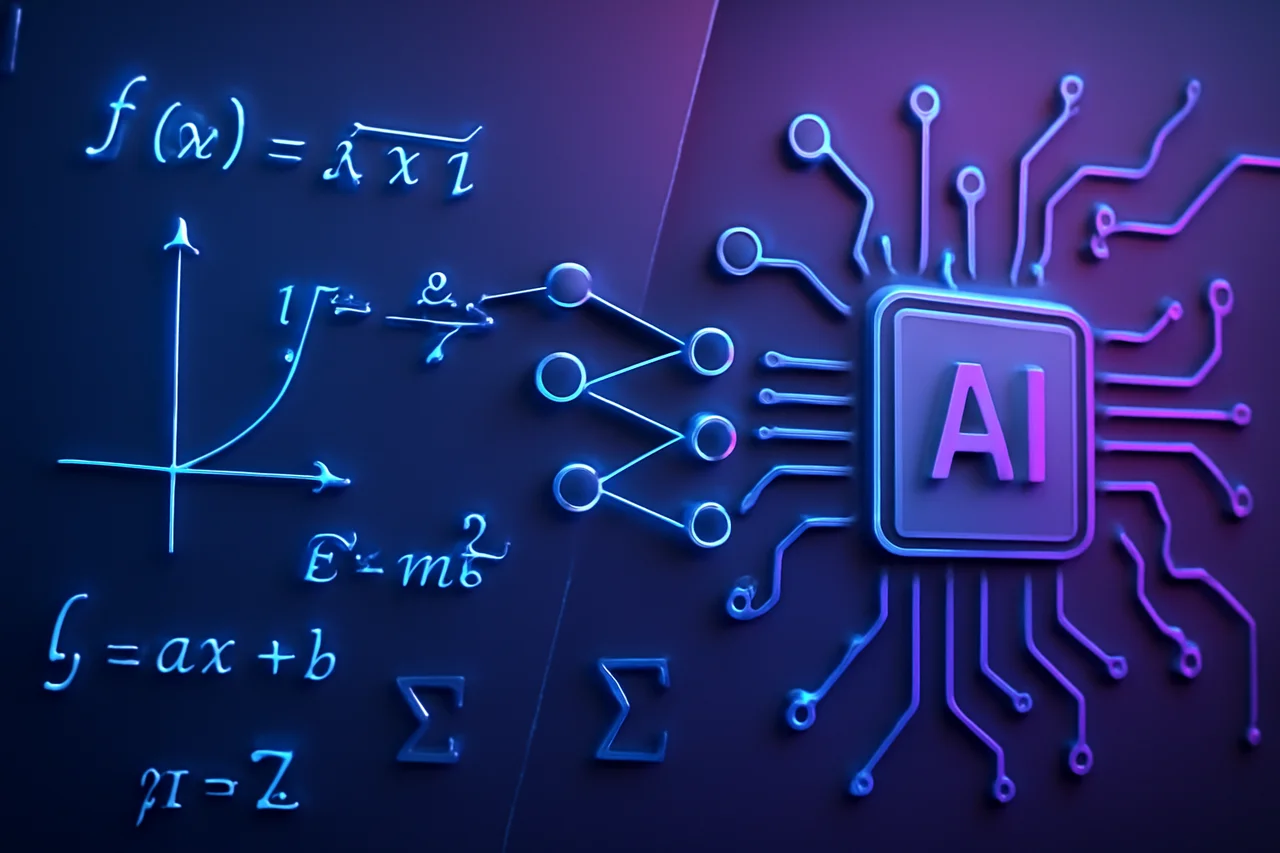
The intersection of artificial intelligence and intellectual property has become a battleground, with mathematicians expressing deep concerns about the implications of AI advancements on their work. A recent open letter signed by 25 prominent mathematicians has brought this issue to the forefront, specifically targeting AI laboratories, including OpenAI, for what they perceive as a direct threat to their intellectual contributions.
Growing Tensions Between Mathematicians and AI Labs
The open letter signifies a notable escalation in the ongoing feud between the mathematics community and AI developers. Mathematicians argue that the rapid development of AI technologies is not only transforming their field but also jeopardizing the integrity of their intellectual property. This situation raises critical questions about the future of academic contributions in an era increasingly dominated by AI.
As AI systems become more sophisticated, the capabilities of these technologies to analyze, generate, and even prove mathematical theorems have grown exponentially. This advancement has led to a growing unease among mathematicians, who feel that their intellectual labor may be at risk of being overshadowed or appropriated by AI systems that can produce similar or even superior results without proper attribution.
The Concerns of the Mathematical Community
The signatories of the open letter are not just any mathematicians; they represent some of the most respected figures in the field. Their concerns revolve around the potential for AI systems to replicate, and even enhance, mathematical concepts without proper attribution or acknowledgment of the original creators. This lack of recognition could undermine years of research and intellectual labor.
Moreover, the mathematicians argue that the algorithms driving AI systems often rely on vast datasets that include existing mathematical work. This raises ethical questions about the ownership of ideas and the extent to which AI can be considered a creator in its own right. The mathematicians fear that if AI continues to evolve unchecked, it may lead to a scenario where the contributions of human scholars are rendered invisible, effectively erasing the historical context and significance of their work.
Intellectual Work at Risk
One of the primary arguments put forth by the mathematicians is that AI tools, while beneficial in many ways, pose a significant risk to the originality of mathematical work. They assert that AI labs, particularly OpenAI, are developing technologies that can produce mathematical solutions and proofs autonomously. This capability raises questions about who owns the rights to these outputs and whether or not the original mathematicians will receive credit for their foundational contributions.
Furthermore, the mathematicians are concerned about the potential for AI-generated content to flood the academic landscape, making it increasingly difficult for original work to stand out. If AI can generate credible mathematical solutions at scale, the distinction between human-generated and AI-generated work may blur, leading to a devaluation of human intellectual contributions.
Broader Implications for Academic Fields
This conflict is not limited to mathematics alone; it reflects wider anxieties across various academic and professional domains. The fear is that as AI continues to evolve, it will encroach upon creative and intellectual territories that have traditionally been the domain of human scholars. This situation has prompted calls for clearer guidelines and policies regarding AI's role in generating and utilizing intellectual property.
Academics in fields such as literature, art, and music are also voicing similar concerns, as AI technologies begin to produce works that challenge the very definition of authorship and creativity. As these discussions unfold, it becomes increasingly clear that a comprehensive framework is needed to address the ethical and legal implications of AI in academic settings.
OpenAI's Response and Future Directions
While OpenAI has yet to publicly respond to the open letter, the organization has been at the center of debates surrounding AI ethics and intellectual property rights. As AI technology continues to advance, it will be crucial for organizations like OpenAI to engage with the concerns raised by mathematicians and other intellectual communities. Establishing a dialogue could help mitigate fears and foster a collaborative approach to integrating AI into academic research.
OpenAI's involvement in these discussions will not only impact the mathematics community but will also set a precedent for how AI developers interact with various fields of study. The organization has an opportunity to lead by example, advocating for practices that respect intellectual property while still pushing the boundaries of what AI can achieve.
The Path Forward: Collaboration or Conflict?
As this feud unfolds, the mathematics community and AI developers face a pivotal moment. The future will depend on whether these two groups can find common ground or if tensions will continue to escalate. Collaborative efforts could lead to innovative solutions that respect intellectual property while harnessing the power of AI for advancement in mathematics and beyond. However, if the concerns of mathematicians remain unaddressed, the potential for conflict may overshadow the benefits that AI can bring to the academic world.
To foster collaboration, both sides must be willing to engage in constructive dialogue, exploring ways to integrate AI technologies that enhance rather than diminish the contributions of human scholars. This could involve creating frameworks for attribution, developing licensing agreements, or even co-authoring guidelines that acknowledge the role of both AI and human intellect in the creation of new knowledge.
Conclusion: A Call for Dialogue
The open letter from 25 leading mathematicians serves as a clarion call for greater awareness and dialogue between AI developers and the academic community. As the landscape of intellectual work continues to evolve with the rise of AI, it is imperative that all stakeholders engage in conversations that safeguard the integrity of intellectual contributions while embracing the possibilities of technological advancement. Only through open communication and collaboration can we hope to navigate the complexities of AI and intellectual property in a way that honors the contributions of all creators.
Key Highlights
- Twenty-five prominent mathematicians have signed an open letter expressing concerns about AI's impact on their work.
- The letter highlights growing tensions between mathematicians and AI laboratories such as OpenAI.
- Mathematicians fear that AI tools could undermine the originality of their intellectual contributions.
- The conflict raises broader questions about intellectual property rights in the age of AI.
- OpenAI has yet to respond to the concerns raised by the mathematics community.
- The situation calls for clearer guidelines on the role of AI in academic research.
- Collaboration between mathematicians and AI developers may be essential to address these challenges.
Expert Analysis
Technical Analysis
The article discusses the intersection of artificial intelligence (AI) and intellectual property, particularly in the field of mathematics. AI technologies, especially those developed by organizations like OpenAI, have advanced to the point where they can analyze, generate, and even prove mathematical theorems. This capability poses a challenge to traditional notions of authorship and intellectual contribution, as AI systems may produce outputs that closely resemble or even surpass human-generated work without proper attribution. The mathematicians' concerns highlight the ethical implications of using vast datasets that include existing mathematical research, raising questions about ownership and the potential erasure of human contributions in favor of AI-generated content.
The primary issue at hand is the risk that AI poses to the originality and recognition of mathematical work. As AI tools become more sophisticated, they may flood the academic landscape with credible solutions, making it difficult for original human work to stand out. This situation could lead to a devaluation of human intellectual contributions, as the distinction between human and AI-generated outputs blurs. While AI can enhance productivity and innovation, the mathematicians argue that without clear guidelines and policies, the integrity of intellectual labor may be compromised, necessitating a reevaluation of how AI interacts with academic fields.
Advantages
- AI can enhance productivity by automating the generation of mathematical solutions.
- AI technologies can potentially lead to innovative advancements in mathematical research.
- The integration of AI could streamline the process of theorem proving and analysis.
- Collaboration between mathematicians and AI developers could foster new methodologies in research.
Disadvantages
- Concerns about the lack of proper attribution for original mathematical work.
- The potential for AI-generated content to overwhelm the academic landscape, making it hard for original work to be recognized.
- Ethical questions surrounding the ownership of ideas and the role of AI as a creator.
Real-World Use Cases
- Mathematicians can use AI tools to assist in theorem proving and complex problem-solving.
- Academic institutions can integrate AI technologies into their research methodologies to enhance efficiency.
- Developers can create AI systems that collaborate with human researchers to produce innovative mathematical concepts.
Business Impact
The ongoing conflict between mathematicians and AI labs, particularly OpenAI, signifies a critical moment in the evolution of intellectual property rights in academia. As AI technologies continue to advance, organizations that can successfully navigate these concerns may gain a competitive edge in the market. This situation presents revenue opportunities for AI developers who can establish ethical frameworks and partnerships with academic institutions, potentially leading to new business models that respect intellectual contributions while leveraging AI capabilities.
User Impact
The implications of this conflict extend beyond the mathematics community, affecting anyone involved in intellectual work. Ordinary users, including students and researchers, should be aware of the potential risks of AI overshadowing human contributions in academic fields. While AI can provide significant benefits, it is essential for users to advocate for recognition of original work and engage in discussions about the ethical use of AI in their respective domains.
Security & Privacy
Security and privacy analysis not applicable.
Future Outlook
In the near term, it is likely that discussions surrounding AI and intellectual property will intensify, prompting calls for clearer guidelines and policies. As AI technologies evolve, there may be a push for collaborative frameworks that ensure proper attribution and recognition of human contributions. This could lead to innovative solutions that balance the benefits of AI with the need to protect intellectual labor, fostering a more harmonious relationship between mathematicians and AI developers.
Expert Summary
The concerns raised by the mathematicians in their open letter highlight a crucial intersection of technology and intellectual property that warrants attention from all stakeholders. As AI continues to evolve, it is imperative for both AI developers and the academic community to engage in constructive dialogue to address these challenges. This news matters not only for mathematicians but for anyone involved in creative and intellectual endeavors, as the future of authorship and recognition in the age of AI hangs in the balance.
Originally reported by TechCrunch.



