
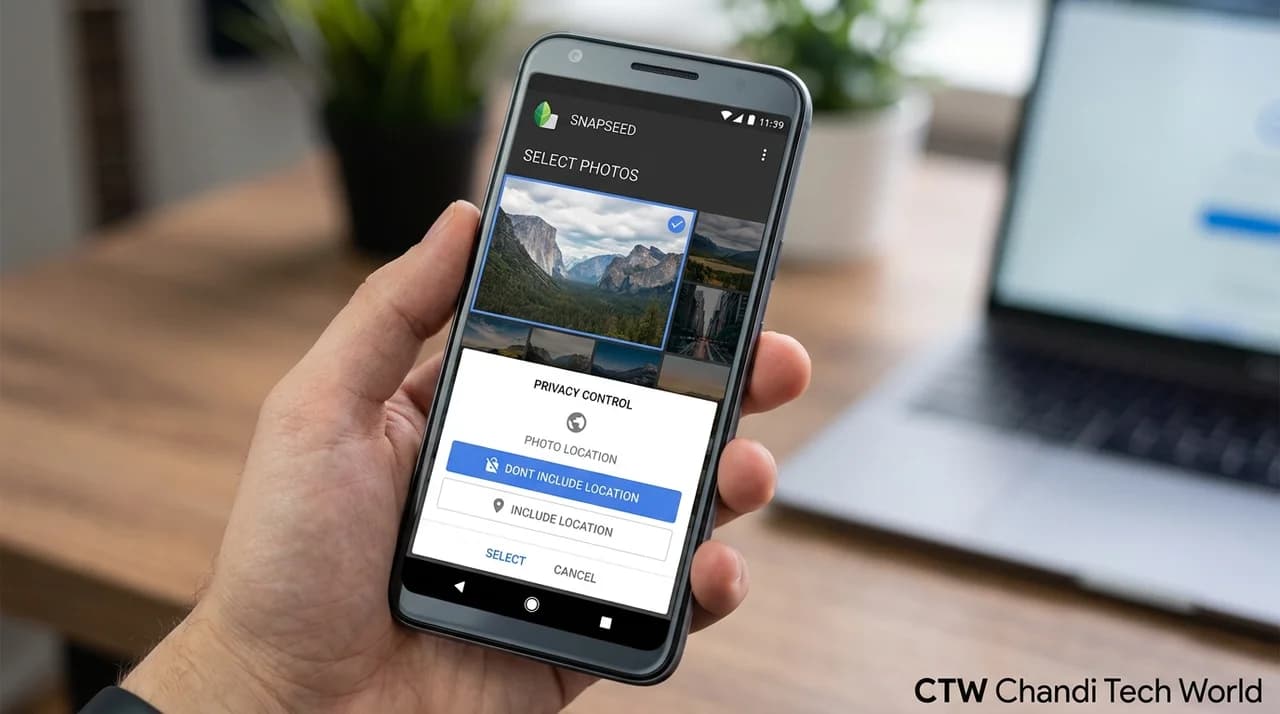
Android Photo Picker Adds Location Controls: Snapseed Leads the Way
Android users are getting more control over the location information shared with apps when they select photos. Snapseed, Google's popular photo-editing app, is the first app reported to support a new location metadata feature in Android's system Photo Picker.
The change addresses a small but important privacy issue: a photo can contain information about where it was taken, even when that information is not visible in the image itself.
With the new controls, users can decide whether Snapseed receives location metadata alongside the photos they select. The feature gives people more flexibility when editing pictures while preserving the option to share location information when it is useful.
How Android's Location Metadata Controls Work
Digital photos can contain EXIF metadata, which may include details such as the date a picture was taken, camera settings, and GPS coordinates. Location information can reveal where someone lives, works, travels, or regularly spends time.
Android's Photo Picker is designed to let users select specific photos and videos for an app without granting it unrestricted access to their entire media library. Previously, the picker removed location metadata from selected media by default.
Google's new location metadata API allows compatible apps to request that information when needed. The system can then ask users whether they want to include location details, leaving the final decision with the user.
According to Android Authority, Snapseed added support in version 4.1.5.970833206. When users select an image through Android's Photo Picker, they can choose whether to include its location information. A location control in the picker also provides a way to change the sharing choice.
The important distinction is that this setting controls the location metadata provided through the Photo Picker. It does not necessarily erase GPS information from the original photo stored on the device.
Why This Matters for Photo Privacy
Location metadata can be useful, but it can also disclose more than users intend to share. For example, a photograph taken at home could contain coordinates identifying the property, while a travel photo might reveal the location of a hotel or another frequently visited place.
The new control helps users make a more informed decision before sharing selected images with a compatible app.
There are two practical benefits:
More privacy: Users can withhold location details when those details are not needed for editing.
More flexibility: Users who need location information for a particular workflow can choose to share it when the app and system support the feature.
This is especially relevant for people who regularly edit personal photographs or prepare images for public sharing. However, location metadata is only one part of a photo's privacy profile. The image itself may reveal identifying details through street signs, landmarks, house numbers, or other visual clues.
What Snapseed Users Should Know
The new control is relevant when Snapseed uses Android's system Photo Picker to select images. Its availability depends on support from the app and the Android system components on the device.
To make a privacy-conscious choice:
Open Snapseed and select a photo using the system Photo Picker when that option is available.
Read the location-sharing prompt before making a selection.
Choose whether to include location information, based on what you need the app to do.
If the Photo Picker displays a location control, check its state before confirming your selection.
Before publishing a sensitive photo online, consider whether the image itself reveals personal information.
Menu names and the exact interface may vary depending on the device and installed software versions.
Users should also remember that allowing location metadata to accompany a selected photo is different from granting an app continuous access to the phone's GPS location.
Could Other Android Apps Adopt the Feature?
Snapseed's early adoption demonstrates how an app can use Android's new API to offer users a more specific choice about sensitive photo information.
Other developers may adopt the same functionality when their apps genuinely need location metadata. For example, certain photography and mapping workflows may benefit from knowing where a picture was taken. Apps that do not need that information can continue to work without requesting it.
However, Snapseed's implementation does not guarantee that other apps will adopt the feature immediately. Developers must update their apps to request location metadata appropriately, and users must have a compatible Photo Picker implementation.
The broader principle is straightforward: apps should request only the information they need, and users should have meaningful control over what they share.
The Bottom Line
Snapseed's support for Android's new Photo Picker location metadata API is a practical improvement in photo privacy. It gives users a choice about whether location details accompany selected images instead of treating that information as something every compatible app should automatically receive.
For users, the best approach is to review location-sharing prompts carefully and remember that metadata is only one potential source of personal information in a photograph.
For more Android updates and mobile privacy coverage, explore CTW's mobile technology section and latest technology stories.
Sources: Android Authority's report on Snapseed and the official Android MediaStore API documentation.
Originally reported by Android Authority.



