
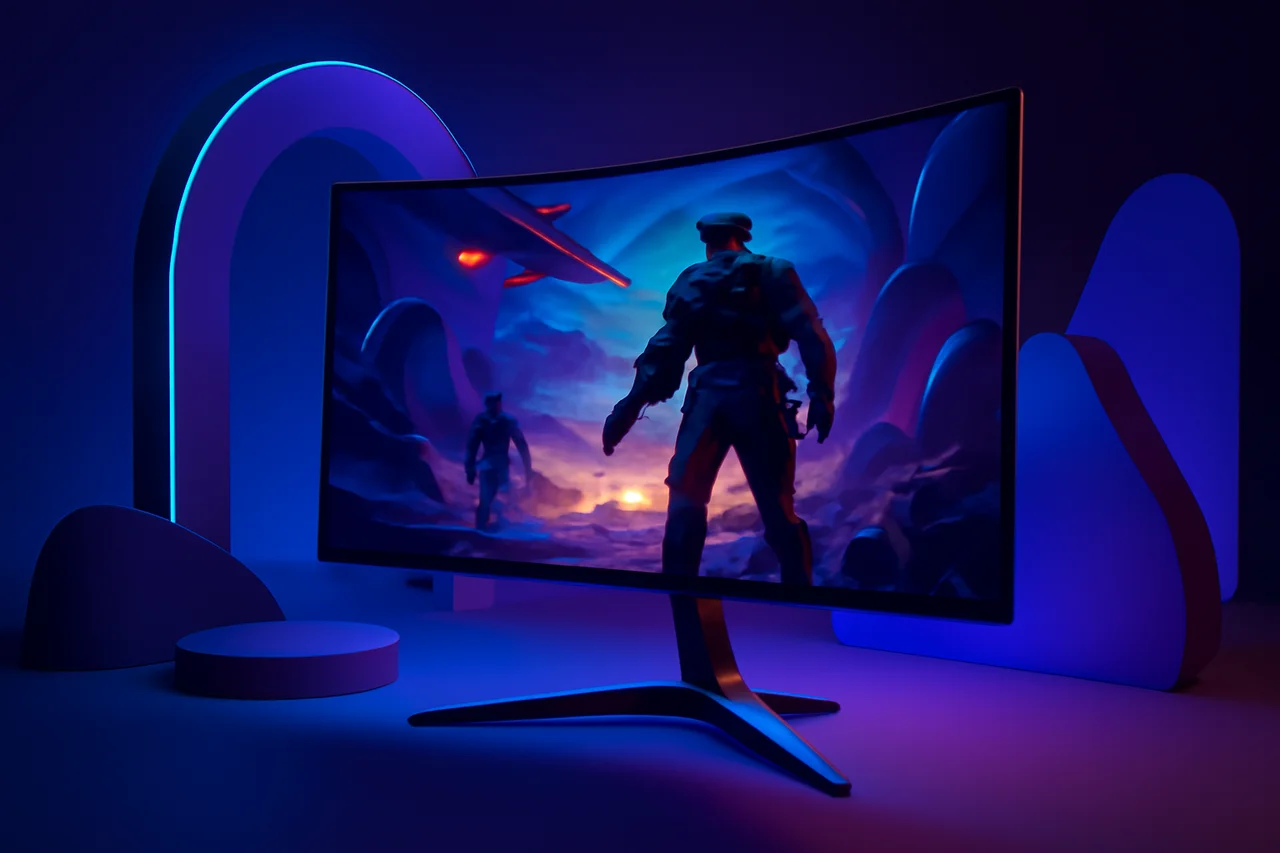
As the demand for enhanced gaming experiences continues to grow, many gamers are considering the switch from traditional flat panels to curved monitors. These displays promise a more immersive experience, but they come with their own set of advantages and disadvantages. This article explores the key pros and cons of curved monitors, enabling potential buyers to make informed decisions based on their specific gaming needs.
The Immersive Experience
One of the primary reasons gamers opt for curved monitors is the immersive experience they offer. The curvature of the screen wraps around the viewer’s field of vision, creating a sense of depth and engagement that flat panels often lack. This feature is especially beneficial in fast-paced gaming scenarios where peripheral vision plays a crucial role. The immersive quality of curved displays can transport players into the game, making them feel as though they are part of the action rather than merely observing it.
Enhanced Visual Comfort
Curved monitors can also provide enhanced visual comfort. The design reduces glare and reflections, which can be particularly advantageous in brightly lit environments. Moreover, the curvature can minimize eye strain during extended gaming sessions, as it allows for a more natural viewing angle. Gamers who spend hours in front of their screens may find this feature particularly appealing. The ergonomic design of curved monitors can lead to a more enjoyable gaming experience, as players can focus on their gameplay without the distraction of discomfort or visual fatigue.
Field of View and Depth Perception
Curved monitors are designed to improve depth perception and widen the field of view. This can be a game-changer in competitive gaming, where every advantage counts. Players may find that they can spot opponents more easily and react faster due to the enhanced spatial awareness provided by the curvature of the screen. In genres such as first-person shooters and racing games, the increased field of view can provide critical insights that flat panels may not deliver, potentially leading to better performance and higher win rates.
Potential Downsides
Despite the advantages, curved monitors are not without their drawbacks. One notable downside is the price point; they often come at a premium compared to their flat counterparts. For budget-conscious gamers, this might be a significant factor to consider. The investment in a curved monitor can be substantial, and it is essential for buyers to evaluate whether the benefits justify the cost based on their gaming habits and preferences.
Viewing Angles
Another potential issue with curved monitors is the viewing angles. While they excel when viewed directly from the front, the image quality can degrade when viewed from the side. This can be problematic in multi-monitor setups or if multiple people are watching the screen simultaneously. Gamers who enjoy multiplayer sessions or who often have friends over for gaming marathons might find that a curved monitor does not offer the best experience for everyone involved. This limitation can impact the overall enjoyment of the gaming experience in social settings.
Space Considerations
Curved monitors typically require more desk space than flat panels. Their design often necessitates a certain distance from the viewer to maximize the immersive experience. For those with limited desk space, this could be a significant limitation. It’s essential to ensure that your gaming setup can accommodate the monitor's dimensions. Additionally, the curvature of the screen may require specific placement to avoid distortion, which can further complicate setup in smaller spaces. Prospective buyers should measure their available space carefully and consider how a curved monitor will fit into their existing gaming environment.
Final Thoughts
In conclusion, while curved monitors offer several benefits that can enhance the gaming experience, they are not universally superior to flat panels. Gamers should weigh the pros and cons based on their personal preferences, gaming habits, and budget. The immersive experience, enhanced visual comfort, and improved depth perception are compelling reasons to consider a curved monitor. However, the potential downsides, including higher costs, viewing angle limitations, and space requirements, cannot be overlooked. Ultimately, the choice between a curved and flat monitor should align with individual needs and the specific gaming environment, ensuring that gamers make a decision that enhances their overall experience and enjoyment.
Key Highlights
- Curved monitors provide an immersive gaming experience by wrapping around the viewer's field of vision.
- They can enhance visual comfort by reducing glare and minimizing eye strain.
- Curved displays improve depth perception and widen the field of view for competitive gaming.
- Curved monitors often come at a higher price point compared to flat panels.
- Viewing angles can be an issue, with image quality degrading when viewed from the side.
- They typically require more desk space, which may not suit all gaming setups.
- The choice between curved and flat monitors should depend on individual preferences and gaming needs.
Expert Analysis
Technical Analysis
Curved monitors utilize a concave screen design that wraps around the viewer's field of vision, enhancing immersion and engagement during gaming. This curvature allows for a more natural viewing angle, which can reduce glare and reflections, making it easier for gamers to focus on their gameplay. The technology behind these monitors typically involves advanced LCD or OLED panels that can deliver high resolutions and refresh rates, essential for fast-paced gaming scenarios. The design aims to improve depth perception and widen the field of view, which can be particularly advantageous in competitive gaming environments.
However, curved monitors also come with limitations. The viewing angles can be less favorable compared to flat panels, as image quality tends to degrade when viewed from the side. This can be a significant drawback for gamers who enjoy multiplayer sessions or have friends over, as the experience may not be optimal for everyone. Additionally, the physical space required for these monitors can be a challenge, as they often need to be positioned at a specific distance from the viewer to maximize their benefits. These factors can impact the overall adoption of curved monitors among gamers, particularly those with budget constraints or limited desk space.
Advantages
- Provides an immersive gaming experience by wrapping around the viewer's field of vision.
- Reduces glare and reflections, enhancing visual comfort in brightly lit environments.
- Minimizes eye strain during extended gaming sessions with a more natural viewing angle.
- Improves depth perception and widens the field of view, beneficial in competitive gaming.
Disadvantages
- Higher price point compared to flat monitors, which may deter budget-conscious gamers.
- Image quality can degrade when viewed from the side, limiting usability in multi-monitor setups.
- Requires more desk space and specific placement to avoid distortion.
Real-World Use Cases
- Gamers seeking an immersive experience in single-player or competitive gaming scenarios.
- Individuals who spend long hours gaming and need reduced eye strain and glare.
- Competitive gamers looking to improve their performance with enhanced depth perception and field of view.
- Social gamers who host multiplayer sessions and need to consider the viewing experience for multiple players.
Business Impact
The growing interest in curved monitors suggests a shift in consumer preferences towards more immersive gaming experiences, which could drive manufacturers to innovate further in this space. Companies that produce gaming hardware may find new revenue opportunities by expanding their product lines to include more curved monitor options. Additionally, as gamers become more discerning about their setups, competitors in the flat panel market may need to adapt their offerings to remain relevant.
User Impact
Gamers who prioritize immersion and visual comfort are likely to benefit the most from curved monitors, as these displays can significantly enhance their gaming experience. However, casual gamers or those with budget constraints may find that the advantages do not justify the higher costs. Ordinary users should consider their gaming habits and whether the benefits of a curved monitor align with their needs before making a purchase.
Security & Privacy
Security and privacy analysis not applicable.
Future Outlook
In the near term, we can expect further advancements in curved monitor technology, including improvements in resolution, refresh rates, and panel types. As manufacturers respond to consumer demand, we may see more affordable options enter the market, making curved monitors accessible to a broader audience. Additionally, innovations in design may address current limitations, such as viewing angles and space requirements, enhancing their appeal among gamers.
Expert Summary
The discussion around curved monitors highlights a significant trend in gaming technology, emphasizing the importance of immersive experiences for gamers. Those involved in the gaming industry, including hardware manufacturers and retailers, should pay attention to this shift in consumer preferences. Overall, while curved monitors offer compelling advantages, potential buyers should carefully evaluate their individual needs and gaming environments before making a decision.
Originally reported by Engadget - Technology News & Expert Reviews.



