
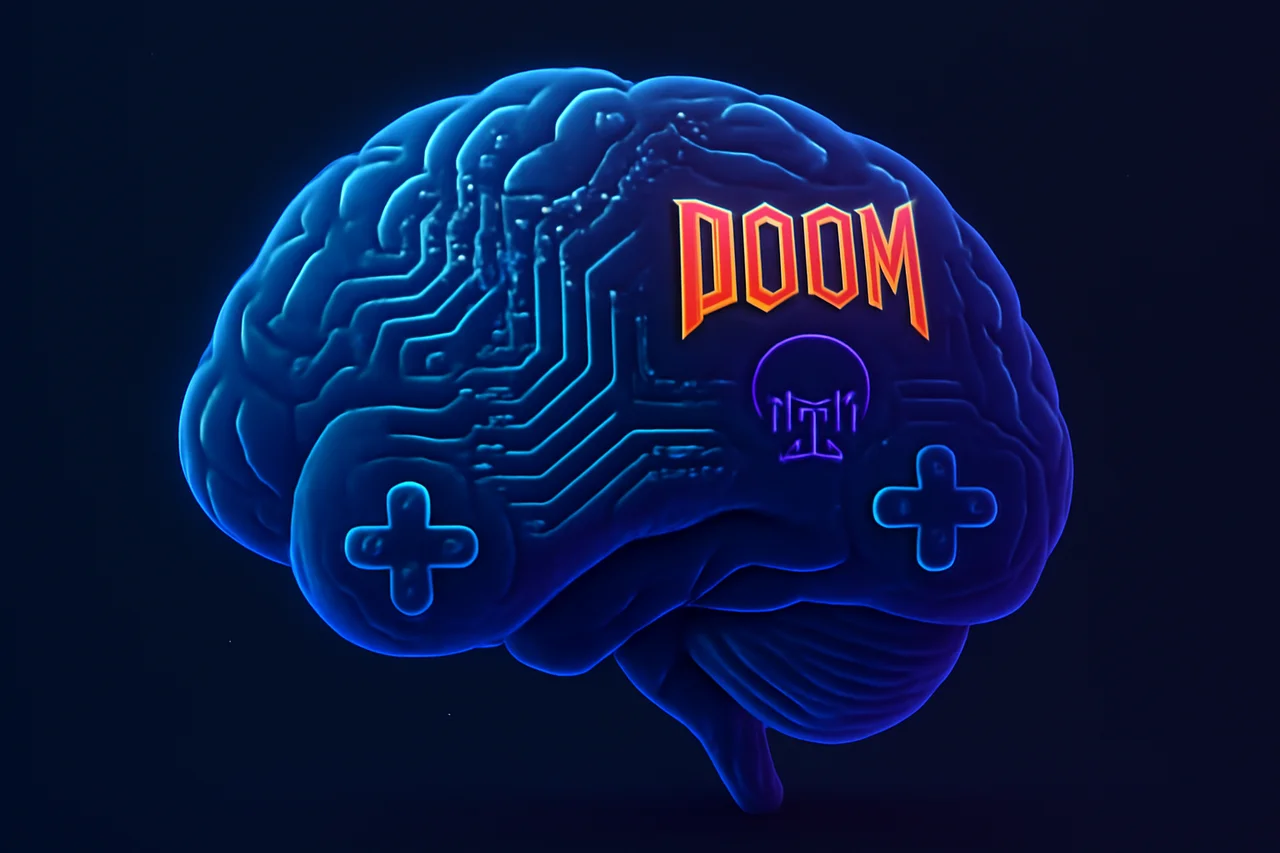
In an intriguing blend of neuroscience and video gaming, Google Research has achieved a remarkable milestone by mapping the brain of a male fruit fly. This groundbreaking work not only advances our understanding of neural structures but has also sparked creativity among modders, who have quickly adapted this biological data to enable the fruit fly's brain to play the legendary game Doom. This development highlights the innovative intersections between biological research and digital technology.
The Intersection of Neuroscience and Gaming
Neuroscience has long been a field of study focused on understanding the complexities of the brain and its functions. The recent mapping of the fruit fly brain by Google Research adds a new dimension to this exploration. By creating a detailed model of the neural connections in a fruit fly's brain, researchers have opened up new avenues for studying how brains process information. This research is not just academic; it has practical applications, including insights into how neural systems can be influenced and possibly replicated in digital environments.
Fruit flies, or Drosophila melanogaster, are a staple in genetic and neurological research due to their relatively simple nervous system and short life cycle. Their brains consist of approximately 100,000 neurons, making them an ideal subject for mapping studies. By understanding the neural pathways and connections in these organisms, researchers can glean insights into more complex brains, including those of mammals. The fruit fly's brain serves as a model that can help scientists unravel the mysteries of cognition, behavior, and neural function.
What is Doom?
Doom, originally released in 1993, is a seminal first-person shooter that revolutionized the gaming industry. Known for its fast-paced gameplay and iconic graphics, Doom has seen numerous adaptations and mods over the years. The game's enduring popularity is a testament to its influence on both gaming culture and technology. It introduced features such as 3D graphics, networked multiplayer gaming, and user-generated content, which have become staples in the industry. By integrating a mapped biological structure into its gameplay, modders are pushing the boundaries of what is possible in gaming.
The game's legacy has inspired countless developers and modders, leading to a vibrant community that continues to innovate. The ability to modify Doom has allowed enthusiasts to create everything from new levels to entirely new gameplay mechanics, showcasing the game's flexibility and the creativity of its community. This adaptability is now being taken to new heights with the integration of biological data, merging the realms of gaming and scientific exploration.
Modding the Fruit Fly Brain
The transition from mapping the fruit fly's brain to modding it to play Doom took only a few days, showcasing the rapid pace at which technology and creativity can converge. Modders have utilized the brain's mapped neural pathways to create a unique gaming experience. This adaptation not only serves as a fun experiment but also provides valuable data on how biological systems can interact with digital platforms. The implications of this work could extend beyond gaming, influencing fields such as artificial intelligence and robotics.
By utilizing the mapped neural connections, modders are essentially creating a living interface that allows the fruit fly's brain to engage with the game environment. This experiment raises fascinating questions about agency, cognition, and the nature of intelligence. As the fruit fly navigates the challenges of Doom, it offers a glimpse into how biological systems can be harnessed in digital contexts, potentially leading to advancements in brain-computer interfaces and neuroprosthetics.
Implications for Future Research
The implications of mapping the fruit fly brain and using it in gaming extend into various scientific domains. Understanding how simple neural systems can be modeled and manipulated in a virtual environment may lead to breakthroughs in AI development. As researchers continue to explore the connections between biology and technology, the potential for creating more sophisticated and responsive digital systems could revolutionize industries ranging from healthcare to entertainment.
Moreover, the insights gained from this research could inform the development of new therapeutic strategies for neurological disorders. By studying how the fruit fly's brain processes information and responds to stimuli in a controlled environment, scientists may uncover fundamental principles that can be applied to human health. The integration of neuroscience with gaming technology could also lead to innovative educational tools, making complex biological concepts more accessible and engaging for students.
Community Response and Future Prospects
The gaming community has responded enthusiastically to this innovative use of brain mapping. As modders continue to experiment with the fruit fly brain in Doom, they are not only creating a unique gaming experience but also fostering a dialogue about the future of gaming and neuroscience. This intersection of disciplines encourages collaboration and inspires new ideas, paving the way for further exploration of how biological data can enhance digital interaction.
As this project gains traction, it may inspire other researchers and developers to explore similar integrations of biology and technology. The potential for creating new forms of interactive experiences that blend entertainment with scientific inquiry is vast. Future projects may expand beyond fruit flies to include more complex organisms, leading to even richer interactions between biological systems and digital environments.
Conclusion
The mapping of the fruit fly brain by Google Research represents a significant advancement in both neuroscience and gaming. By allowing this biological data to be used in a video game like Doom, researchers and modders alike are exploring the creative potential that lies at the intersection of these fields. As technology continues to evolve, the possibilities for integrating biological research into digital platforms are limitless, promising exciting developments for both science and entertainment. The fusion of gaming and neuroscience not only enhances our understanding of the brain but also opens new avenues for innovation in how we interact with technology, making this a fascinating area to watch in the coming years.
Key Highlights
- Google Research has successfully mapped the brain of a male fruit fly.
- Modders have adapted the mapped brain to play the video game Doom.
- This innovation showcases the intersection of neuroscience and gaming.
- Doom, a classic first-person shooter, has inspired numerous mods over the years.
- The rapid adaptation of the fruit fly brain into gameplay highlights creative potential.
- Insights from this research could influence AI development and robotics.
- The gaming community is excited about the implications of this unique modding project.
- This work encourages collaboration between biological research and technology.
Expert Analysis
Technical Analysis
The technology involved in this development includes advanced brain mapping techniques and modding capabilities within the gaming environment of Doom. Google Research's mapping of the fruit fly brain provides a detailed model of its neural connections, which modders have adapted to create an interface that allows the fruit fly's brain to interact with the game. This innovative approach not only enhances our understanding of neural structures but also demonstrates how biological data can be integrated into digital platforms, creating a unique gaming experience that bridges the gap between biology and technology.
What sets this project apart is its rapid transition from biological research to practical application in gaming. The ability to utilize the mapped neural pathways of a fruit fly to navigate a complex game like Doom showcases the potential for biological systems to inform digital interactions. This approach could lead to significant advancements in fields such as artificial intelligence and robotics, as it provides insights into how biological systems process information and respond to stimuli. However, the limitations of this technology lie in the complexity of more advanced neural systems, which may not be easily replicated or understood through the lens of simpler organisms like fruit flies.
Advantages
- Enhances understanding of neural structures and cognitive processes.
- Fosters creativity among modders, leading to innovative gaming experiences.
- Demonstrates practical applications of neuroscience in digital environments.
- Potentially informs advancements in AI and robotics through biological modeling.
Disadvantages
- No major disadvantages reported yet.
Real-World Use Cases
- Researchers can use the fruit fly brain model to study neural processing and behavior in a controlled digital environment.
- Game developers can explore new gameplay mechanics by integrating biological data into their designs.
- Educational institutions can utilize this intersection of gaming and neuroscience to create engaging learning tools for students.
- Modders can experiment with biological data to push the boundaries of traditional gaming experiences.
Business Impact
The mapping of the fruit fly brain and its integration into gaming could create new market opportunities at the intersection of neuroscience and entertainment. Companies involved in gaming technology may find new avenues for product development and community engagement through innovative modding projects. Additionally, this research may inspire competitors to explore similar integrations, potentially leading to a new trend in the gaming industry that combines scientific inquiry with interactive entertainment.
As the gaming community embraces these advancements, there could be increased collaboration between tech companies and research institutions, fostering a culture of innovation that may yield new revenue streams and partnerships across various sectors.
User Impact
Ordinary users, particularly gamers and those interested in science, may benefit from this innovative blend of gaming and neuroscience. The unique experience of seeing a biological entity interact within a digital environment could spark interest in both fields, encouraging a broader appreciation for the complexities of the brain. However, those less inclined towards gaming or scientific exploration may not find immediate relevance in this development, though it represents a fascinating convergence of disciplines that could influence future entertainment forms.
Overall, the integration of biological research into gaming is worth adopting for those interested in the evolving landscape of technology and its implications for understanding cognition and behavior.
Security & Privacy
Security and privacy analysis not applicable.
Future Outlook
In the near term, we can expect further experimentation with biological data in gaming, potentially leading to more complex organisms being integrated into digital environments. This could pave the way for advancements in brain-computer interfaces and neuroprosthetics, as researchers and developers explore the implications of these technologies. The ongoing dialogue between neuroscience and gaming may also inspire new educational tools and applications that make complex biological concepts more accessible to a wider audience.
As interest in this intersection grows, we may see an increase in collaborative projects that leverage biological insights to enhance user experiences in gaming and beyond, suggesting a promising direction for future research and development.
Expert Summary
The mapping of the fruit fly brain by Google Research represents a significant milestone that merges neuroscience with gaming technology. This development is particularly relevant for researchers, game developers, and educators who are interested in exploring the innovative potential at the intersection of these fields. As the project evolves, it may inspire further advancements that enhance our understanding of both biological systems and digital interactions, making it a noteworthy area to monitor in the coming years.
Originally reported by News – CNET.



