
Gemini Spark vs. Perplexity Computer: Which AI Agent Is Better?
AI assistants are moving beyond answering questions. Newer AI agents can work through multiple steps, gather information, interact with connected services, and help complete tasks with less hands-on input.
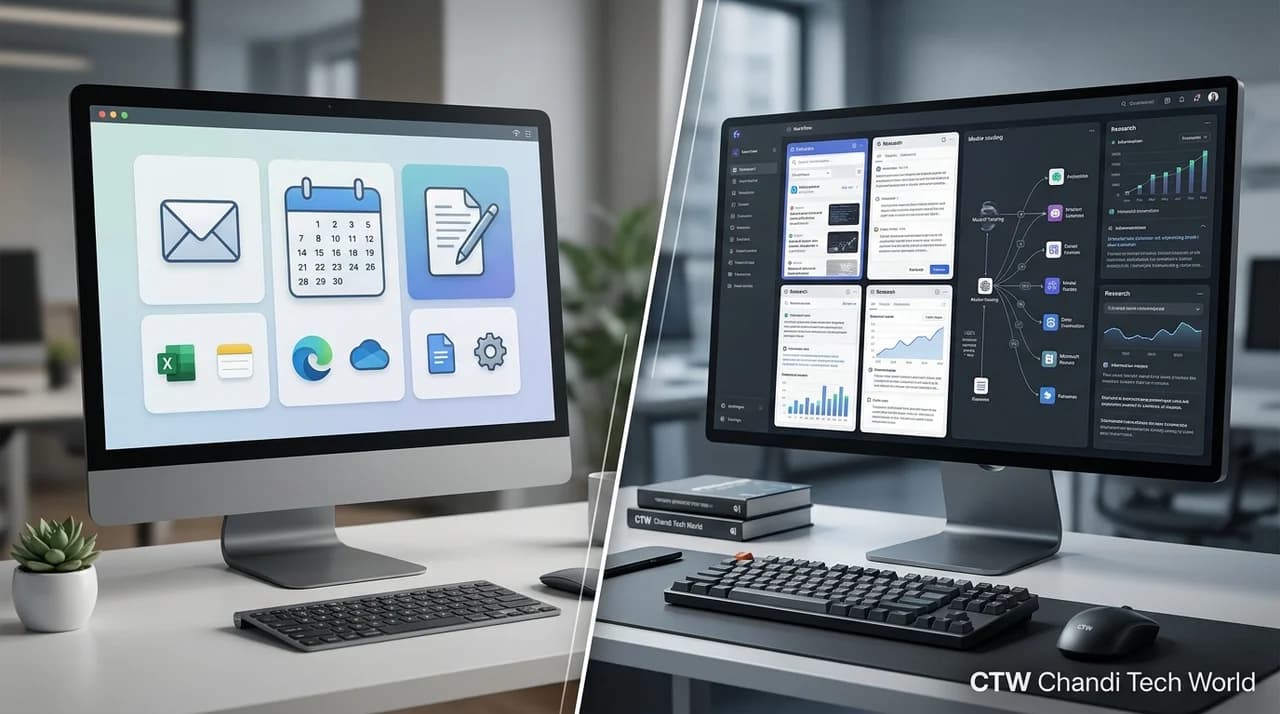
Google's Gemini Spark and Perplexity Computer illustrate two different approaches to this shift. Gemini Spark's biggest advantage is its connection to Google's ecosystem, while Perplexity Computer emphasizes access to multiple AI models, connected tools, and longer workflows.
A hands-on comparison published by Android Authority on August 29, 2026, found Gemini Spark especially convenient for tasks involving Google services. The reviewer preferred Perplexity Computer for some broader professional workflows, citing its model selection and wider third-party integrations.
Neither tool is automatically the best choice for everyone. The right option depends on which apps you use, how much automation you need, and how carefully you want to review an AI agent's work.
What Is Gemini Spark?
Gemini Spark is Google's personal AI agent, designed to help users handle tasks rather than simply respond to individual prompts. Google describes it as a way to move from asking an assistant questions to having it work on tasks on a user's behalf.
Its main advantage is its relationship with supported Google services. When the necessary permissions and integrations are available, an agent can use relevant information from services such as Gmail and Google Drive to help complete a workflow.
For example, the Android Authority reviewer described asking Spark to help prepare a complaint about a defective product. The agent gathered relevant order information from Gmail, found customer-support contact information, and drafted an email for the user to review.
That example highlights the appeal of an assistant that can connect information across services. Instead of manually searching several apps and assembling the results, users can delegate parts of the process to the agent.
However, users should still check important details before sending messages or taking consequential actions. An agent can misunderstand a request, overlook information, or produce an incorrect result.
What Is Perplexity Computer?
Perplexity Computer is a general-purpose AI agent designed to research, browse, create content, use connected tools, and coordinate multi-step workflows.
A key difference is its multi-model approach. Rather than relying on a single model for every task, Perplexity Computer can route work across different AI models and use specialized agents for subtasks.
This approach can be useful when a project involves several types of work, such as researching a subject, analyzing information, creating a report, and organizing the results.
Perplexity also supports a broad range of connectors. Its official product information lists integrations and capabilities for working with tools such as Gmail, Slack, and Notion, alongside browser automation and background tasks.
These capabilities make Computer appealing to users who work across different services instead of spending most of their time inside Google's ecosystem.
Still, more integrations and model choices do not guarantee better results every time. Performance depends on the task, the selected models, the available connections, and the quality of the instructions.
Gemini Spark vs. Perplexity Computer: Key Differences
1. Integration With Google Services
Gemini Spark has a natural advantage for users who already depend on Google's apps. Its integration can reduce the setup required to work with supported services and relevant information.
Perplexity Computer can also connect to Google services, but its broader approach is designed to bring multiple tools and models into a single workflow.
Best fit: Gemini Spark for people who primarily work in Google's ecosystem. Perplexity Computer may suit users who need to combine Google services with a wider range of professional tools.
2. Choice of AI Models
Gemini Spark is built around Google's Gemini technology. That provides a more unified experience, but users have less direct control over which competing model handles a particular task.
Perplexity Computer's multi-model architecture allows it to use different models for different subtasks. This can be valuable when a workflow benefits from specialized capabilities, although results still require verification.
Best fit: Perplexity Computer for users who value multi-model orchestration. Gemini Spark may be simpler for users who prefer an integrated Google experience without managing model choices.
3. Complex, Multi-Step Workflows
Both tools aim to complete tasks that involve more than one prompt or action.
Spark is attractive for everyday tasks that draw on supported Google services. Perplexity Computer is designed for broader workflows involving research, browser actions, connected apps, and content creation.
Perplexity's official product description also highlights background tasks and continuous monitoring. These features may appeal to professionals who need an agent to carry a project forward over time.
However, users should not assume either agent can work without limits or supervision. Some actions require approval, and availability depends on the product's current capabilities and permissions.
Best fit: Gemini Spark for workflows centered on supported Google apps; Perplexity Computer for projects spanning multiple tools and stages.
4. Ease of Use
Gemini Spark's integration with Google's ecosystem can make it feel familiar to people who already use Gmail, Drive, Docs, and other supported services.
Perplexity Computer offers more extensive workflow options, but users may need to spend more time understanding its connectors, model choices, and project controls.
This is not a universal difference in usability. Someone who already works with many connected business tools may find Perplexity's approach natural, while a Google-focused user may prefer Spark's more familiar environment.
Best fit: Gemini Spark for a straightforward Google-centered experience; Perplexity Computer for users who want broader workflow flexibility.
What Are the Limitations?
Neither AI agent should be treated as a fully reliable human assistant.
An agent may misunderstand an instruction, use incomplete information, make an incorrect assumption, or produce a draft that needs substantial editing. A task that crosses several services can also fail if a connection or permission is unavailable.
The Android Authority reviewer reported having to double-check some of Spark's results and described Perplexity Computer as more mature for certain demanding workflows. These are the reviewer's observations, not proof that Perplexity will outperform Spark in every situation.
Users should be especially careful with emails, financial transactions, account changes, confidential documents, and other sensitive operations. Review the information an agent uses, confirm its proposed actions, and avoid granting access that is unnecessary for the task.
Pricing and Availability
Pricing and access can change as both products evolve. Google has offered Gemini Spark through eligible Google AI subscriptions and rollout programs, while Perplexity Computer is available through eligible Perplexity plans.
The original August 2026 comparison discussed a $20-per-month Google AI option and a $200-per-month Perplexity offering. Those figures should be treated as historical context from that review, not guaranteed current prices for every plan or region.
Before subscribing, check the official product pages for current pricing, regional availability, usage limits, included models, and connector access:
Consider the cost in relation to your actual workload. A more expensive tool may be worthwhile for someone who regularly automates complex professional tasks, while a simpler assistant may offer better value for occasional personal use.
Which AI Agent Should You Choose?
The best choice depends on your priorities.
Choose Gemini Spark if you primarily use Google services and want an assistant that can help organize information and complete tasks across supported apps.
Consider Perplexity Computer if you work across multiple platforms and value multi-model AI, extensive integrations, and complex workflows.
Compare both carefully if accuracy is essential. Test each tool on representative tasks and verify the output before giving either agent responsibility for important actions.
For a fair comparison, try the same task in both tools. Ask each to research a topic, prepare a summary with sources, organize the findings, and draft a final deliverable. Compare factual accuracy, missing details, time spent correcting errors, and how much manual work remains.
This practical test will tell you more about their usefulness for your work than a broad claim that one assistant is universally smarter.
The Bottom Line
Gemini Spark and Perplexity Computer represent two approaches to AI task automation. Spark's appeal comes from its connection to Google's ecosystem and its accessible approach to delegating everyday tasks. Perplexity Computer emphasizes multi-model orchestration, broader integrations, and workflows that can span multiple services.
The Android Authority comparison favored Spark for convenience within Google's ecosystem and Perplexity Computer for some broader professional tasks. That assessment is useful context, but the better choice will depend on your own apps, tasks, budget, and tolerance for reviewing AI-generated work.
As AI agents become more capable, the most important question is not simply which tool can perform the most actions. It is which one can complete your actual tasks accurately, securely, and with the least amount of correction.
For more AI developments and practical technology coverage, visit CTW's AI section and latest technology stories.
Sources: Android Authority's Gemini Spark vs. Perplexity Computer comparison, Google Gemini, and Perplexity Computer's official product page.
Originally reported by Android Authority.



