
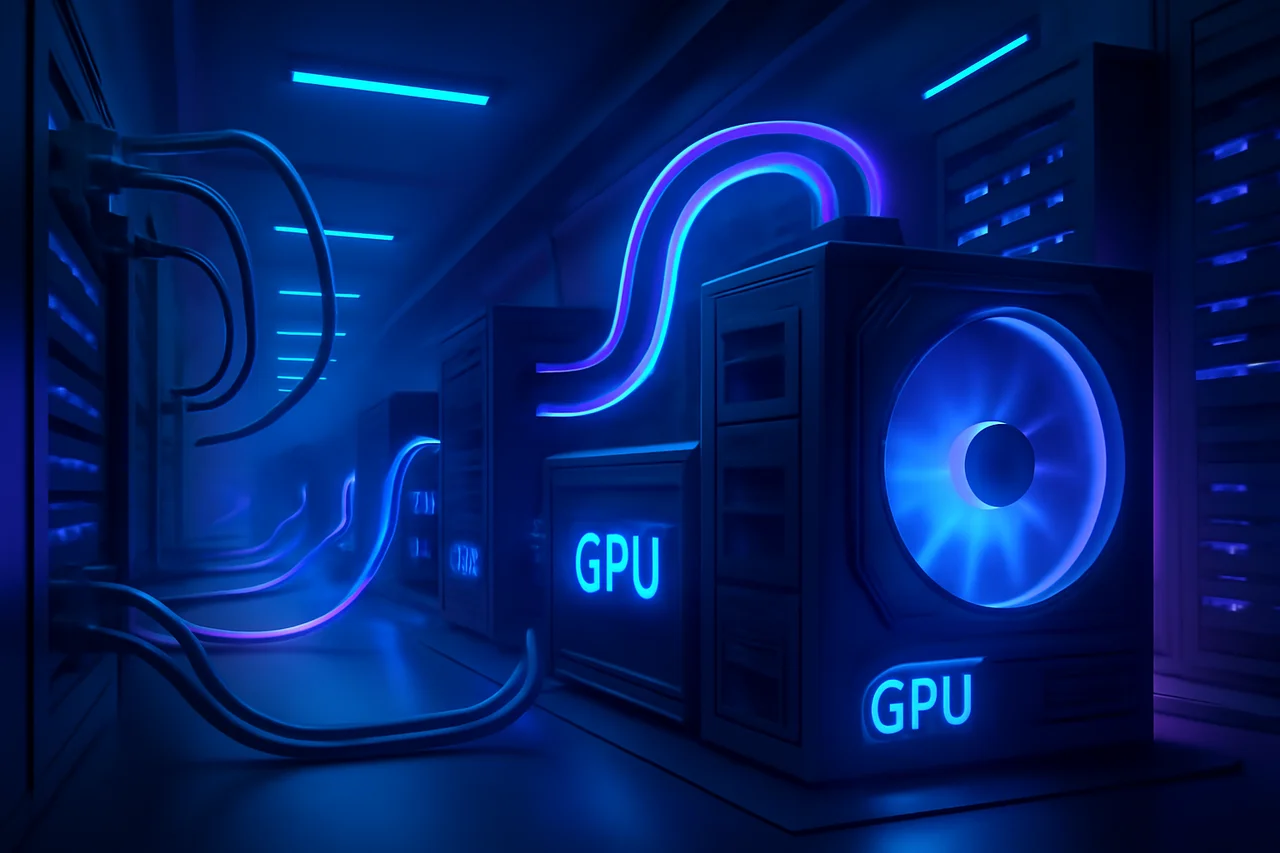
The rapid advancement of generative AI is reshaping the landscape of data centers, necessitating a fundamental rethinking of their architecture. As the demand for distributed model training increases, the need for efficient communication among hundreds of thousands of GPUs has become paramount. Unfortunately, traditional Ethernet networks, while historically reliable and cost-effective, are struggling to keep pace with these evolving requirements.
Generative AI's Impact on Data Center Design
Generative AI has ushered in a new era of computational demands, transforming how data centers are designed and operated. The need for distributed model training has led to extensive scaling, where the interconnectivity of GPUs becomes a critical factor in overall performance. As these networks expand, the limitations of conventional Ethernet become more pronounced, revealing a bottleneck that can hinder the efficiency of AI workloads. This shift is not merely a technical upgrade; it represents a paradigm shift in how organizations approach data processing and storage.
The Limitations of Traditional Ethernet
For decades, traditional Ethernet has been the backbone of enterprise and cloud networking. Its affordability and standardization made it an attractive option for many organizations. However, as data centers evolve to support the vast scale of AI applications, these same characteristics are now contributing to performance constraints. The existing Ethernet infrastructure struggles to handle the high data throughput and low latency required by modern AI tasks, leading to inefficiencies and increased operational costs. The reliance on older Ethernet standards can result in significant delays, which are detrimental to the performance of AI models that require rapid data processing and real-time feedback.
The Need for Advanced Ethernet Technologies
The shift towards Giga-Scale AI workloads has prompted a reevaluation of Ethernet technology. To address the performance bottlenecks, there is an urgent need for advancements that can support the complex demands of distributed training. Innovations in Ethernet technology must focus on enhancing bandwidth, reducing latency, and improving overall efficiency to keep up with the rapid growth of AI capabilities. Organizations are increasingly recognizing that the next generation of Ethernet must not only support existing workloads but also be adaptable to future advancements in AI and machine learning.
Spectrum-X Ethernet: A Game Changer
In response to these challenges, NVIDIA has been at the forefront of developing new Ethernet solutions, such as Spectrum-X Ethernet. This cutting-edge technology aims to redefine the networking landscape by providing the necessary infrastructure to support the expansive needs of Giga-Scale AI. Spectrum-X is designed to facilitate seamless communication between large numbers of GPUs, ensuring that data flows quickly and efficiently across the network. By leveraging advanced technologies, Spectrum-X Ethernet promises to enhance the capabilities of data centers, allowing them to process and analyze vast amounts of data in real-time.
Benefits of Spectrum-X Ethernet
Spectrum-X Ethernet offers several advantages that make it particularly well-suited for modern data centers:
- High Throughput: Capable of handling massive data transfers necessary for AI workloads, ensuring that data can be processed without bottlenecks.
- Low Latency: Reduces delays in data transmission, which is critical for real-time AI applications that require immediate feedback and processing.
- Scalability: Easily accommodates the addition of new GPUs and other resources as demand grows, allowing organizations to expand their capabilities without significant overhauls.
- Cost-Effectiveness: Maintains the affordability that traditional Ethernet is known for, while enhancing performance, making it a viable option for organizations of all sizes.
Future Outlook for Data Centers
As the demand for generative AI continues to surge, data centers will need to adapt to maintain their relevance and efficiency. The evolution of Ethernet technology, particularly with innovations like Spectrum-X, will play a crucial role in this transition. By addressing the limitations of traditional networks, these advancements will enable organizations to harness the full potential of Giga-Scale AI, paving the way for new applications and services that were previously unimaginable. As industries increasingly rely on AI-driven solutions, the ability to efficiently manage and transfer data will be a defining factor in competitive advantage.
Conclusion
The intersection of generative AI and Ethernet technology represents a pivotal moment in the evolution of data centers. As organizations strive to keep up with the demands of modern AI workloads, it is clear that traditional Ethernet solutions are no longer sufficient. The development of advanced Ethernet technologies, such as Spectrum-X, is essential for unlocking the next generation of AI capabilities and ensuring that data centers can meet the challenges of the future. In this rapidly changing landscape, the ability to adapt and innovate will determine which organizations thrive and which fall behind in the age of AI.
Key Highlights
- Generative AI is reshaping data center architecture to accommodate larger workloads.
- Traditional Ethernet networks are becoming performance bottlenecks in AI applications.
- The demand for distributed model training is driving the need for advanced Ethernet technologies.
- NVIDIA's Spectrum-X Ethernet aims to enhance network performance for Giga-Scale AI.
- Spectrum-X Ethernet offers high throughput, low latency, and scalability.
- Future data centers must evolve their networking solutions to support modern AI demands.
- The evolution of Ethernet technology is crucial for unlocking new AI capabilities.
Expert Analysis
Technical Analysis
The article discusses the transformation of data centers driven by the demands of generative AI, highlighting the need for advanced Ethernet technologies to support distributed model training. Traditional Ethernet networks, while historically reliable, struggle to meet the high data throughput and low latency requirements of modern AI workloads. This inadequacy creates bottlenecks that can hinder the efficiency of AI applications, necessitating a reevaluation of networking solutions to accommodate the expansive needs of Giga-Scale AI.
NVIDIA's Spectrum-X Ethernet is presented as a solution to these challenges, designed to enhance data transfer rates and reduce latency. By facilitating seamless communication between large numbers of GPUs, Spectrum-X aims to optimize the performance of data centers. Its features include high throughput, low latency, scalability, and cost-effectiveness, making it a compelling option for organizations looking to adapt to the evolving landscape of AI technology. However, while it offers significant improvements over traditional Ethernet, the transition to such advanced solutions may require substantial investment and adaptation from existing infrastructures.
Advantages
- High throughput for massive data transfers necessary for AI workloads.
- Low latency, critical for real-time AI applications requiring immediate feedback.
- Scalability to accommodate new GPUs and resources as demand grows.
- Cost-effectiveness, maintaining affordability while enhancing performance.
Disadvantages
- No major disadvantages reported yet.
Real-World Use Cases
- Data centers can implement Spectrum-X Ethernet to enhance the performance of AI-driven applications.
- Organizations can scale their infrastructure seamlessly as they adopt more AI technologies.
- Businesses can reduce operational costs associated with data transmission delays by upgrading to advanced Ethernet solutions.
Business Impact
The shift towards Giga-Scale AI and the development of advanced Ethernet technologies like Spectrum-X are likely to reshape the competitive landscape for data centers. Organizations that adopt these innovations can gain a significant edge in processing capabilities, which is crucial as industries increasingly rely on AI-driven solutions. This transition may create new revenue opportunities for companies providing advanced networking solutions and services, while also prompting traditional Ethernet providers to innovate or risk obsolescence.
User Impact
Users who benefit from these advancements include organizations that rely on AI for their operations, as they will experience improved performance and efficiency in their data processing tasks. However, smaller organizations or those with limited budgets may find the transition to advanced Ethernet technologies challenging. Ordinary users should care about these developments as they underpin the performance of AI applications that are becoming increasingly integrated into everyday services and products.
Security & Privacy
Security and privacy analysis not applicable.
Future Outlook
As the demand for generative AI continues to grow, we can expect further innovations in Ethernet technology to emerge, potentially leading to even more efficient and capable networking solutions. Organizations will likely prioritize investments in infrastructure that can support the evolving needs of AI applications, paving the way for new services and capabilities that were previously unattainable. The ongoing evolution of data center design will be critical in maintaining competitive advantages in an increasingly AI-driven market.
Expert Summary
The advancements in Ethernet technology, particularly with the introduction of Spectrum-X, represent a significant shift in the capabilities of data centers to support Giga-Scale AI workloads. Organizations that are involved in AI development or deployment should pay close attention to these changes, as they will influence operational efficiency and competitive positioning in the market. Overall, the article underscores the importance of adapting networking solutions to meet the demands of modern AI applications.
Originally reported by NVIDIA Technical Blog.



