
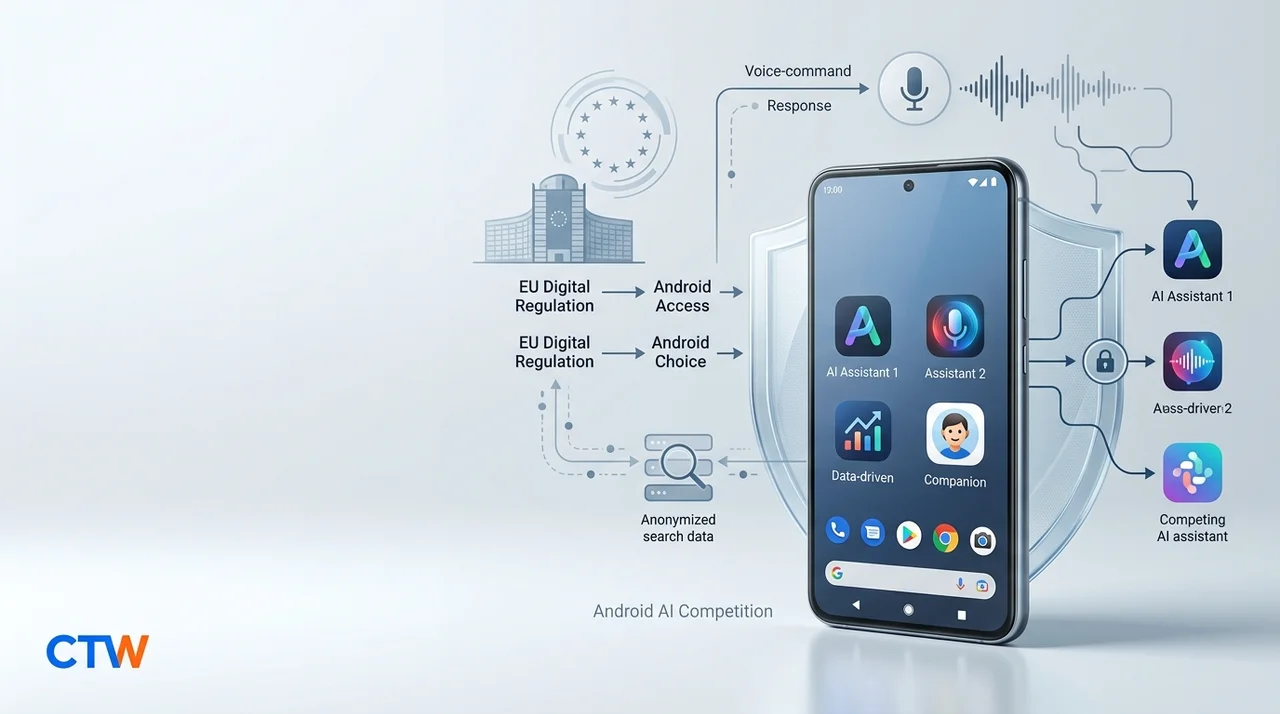
The landscape of mobile AI assistance is set for a significant transformation as the European Commission has mandated Google to open its Android operating system to competing AI assistants. This decision comes as part of the broader Digital Markets Act (DMA), aimed at fostering competition and innovation in the tech industry. The Commission's directive not only allows rival AI assistants to operate more effectively on Android devices but also requires Google to share anonymized search data with these competitors, leveling the playing field in the mobile ecosystem.
Implications of the New Mandate
This move by the European Commission is primarily focused on ensuring that users can easily activate their preferred AI assistants through voice commands, similar to the existing “Hey Google” functionality. By enabling third-party AI assistants to perform actions within apps on behalf of users, the Commission aims to enhance user choice and drive innovation in the AI space. This could potentially lead to a richer ecosystem of AI capabilities on Android devices, allowing users to select from a variety of assistants tailored to their needs.
Moreover, this change is expected to encourage developers to create more innovative AI solutions, as they will have access to a larger user base without being hindered by Google's dominance. The ability to integrate seamlessly into the Android platform can lead to the emergence of specialized AI assistants that cater to niche markets, thereby enriching the overall user experience.
Google's Response to the Directive
Google has expressed strong opposition to the European Commission's decision, raising concerns about privacy and security risks. The tech giant warns that granting deep, system-level permissions to external applications could bypass essential hardware safety guardrails, potentially leading to a security catastrophe for millions of users in Europe. Google’s apprehensions highlight the challenges of balancing competition with user safety in an increasingly complex digital environment.
In its defense, Google emphasizes the importance of maintaining a secure and reliable platform for users. The company argues that while competition is essential, it should not come at the cost of user safety and data integrity. This tension between fostering competition and ensuring security will be a crucial aspect of the ongoing discussions between Google and regulatory bodies.
The Role of the Digital Markets Act
The Digital Markets Act is a regulatory framework designed to ensure fair competition in the digital marketplace. By mandating that Google opens its Android platform to rival AI assistants, the EU seeks to dismantle the monopolistic control that Google has over mobile AI and search functionalities. The Commission believes that such measures are necessary to promote innovation and provide alternative services with a viable chance to succeed against established giants like Google.
The DMA aims to create a more balanced competitive landscape, where smaller companies can thrive alongside major players. By imposing these regulations, the European Commission hopes to stimulate a more dynamic market that encourages technological advancements and offers consumers a wider array of choices.
Potential Benefits for Users
The European Commission's directive could lead to several benefits for users. By allowing multiple AI assistants to coexist on Android, users may experience:
- Greater choice in AI capabilities tailored to specific needs.
- Enhanced functionality as different assistants may offer unique features.
- Increased competition that could drive improvements in performance and user experience.
- More transparency regarding data usage and privacy practices from competing AI services.
Additionally, users may benefit from innovations that arise from a more competitive environment. As AI assistants vie for user attention, we can expect to see advancements in natural language processing, machine learning, and user interface design, ultimately leading to smarter and more intuitive interactions.
Challenges Ahead for Implementation
While the Commission's mandate is a step towards promoting competition, the implementation of these changes may not be straightforward. Google will need to navigate numerous technical and regulatory challenges to ensure that the integration of third-party AI assistants does not compromise the user experience or security. Additionally, the tech giant may face pushback from its existing user base, who may be concerned about potential changes to their familiar Android interface.
Moreover, the integration of third-party assistants could lead to fragmentation within the Android ecosystem, where users might encounter inconsistencies in performance and functionality. Google will have to ensure that the user experience remains seamless and that the introduction of new assistants does not disrupt the existing services that users rely on.
The Future of AI Competition
This directive from the European Commission marks a pivotal moment in the ongoing battle between Big Tech companies and regulatory bodies. As the Commission continues to push for more equitable practices in the tech industry, the outcome of this initiative could serve as a precedent for future regulations. If successful, the initiative could not only reshape how users interact with their devices but also redefine the competitive landscape for AI technology as a whole.
Furthermore, the implications of this mandate extend beyond just Google and Android. Other tech companies may find themselves facing similar scrutiny and regulations as the EU strives to create a fairer digital marketplace. This could lead to a ripple effect, encouraging global discussions on the need for regulatory frameworks that promote competition while safeguarding user interests.
In conclusion, the European Commission's decision to mandate Google to open Android to rival AI assistants represents a significant shift in the mobile technology landscape. While it promises to enhance user choice and foster innovation, it also poses challenges that will require careful navigation by all stakeholders involved. The coming months will be crucial as both Google and the European Commission work to address these challenges and realize the potential benefits of a more competitive AI ecosystem.
Key Highlights
- The European Commission has mandated Google to open Android to rival AI assistants.
- Google must share anonymized Google Search data with competing services.
- The directive is part of the Digital Markets Act aimed at promoting competition.
- Users will be able to activate their preferred AI assistants via voice commands.
- Google has raised concerns about potential privacy and security risks.
- The move is intended to break Google's monopoly over mobile AI and search.
- The initiative could reshape the competitive landscape for AI technology.
Expert Analysis
Technical Analysis
The technology involved in this situation primarily revolves around Android, Google's mobile operating system, and various AI assistants that can now operate on it. The European Commission's mandate requires Google to allow competing AI assistants to integrate deeply into the Android ecosystem, which includes granting them system-level permissions. This integration aims to enhance user choice by enabling voice commands for different AI assistants, similar to the existing functionality provided by Google Assistant. The underlying technology includes natural language processing and machine learning, which are essential for AI assistants to understand and respond to user commands effectively.
However, this approach raises significant concerns regarding security and privacy. Google has warned that allowing external applications deep access to the Android system could bypass essential safety measures, potentially leading to vulnerabilities. This highlights a critical limitation of the initiative: while it aims to foster competition and innovation, it also risks compromising user safety and data integrity. The balance between encouraging a diverse ecosystem of AI solutions and maintaining a secure platform is a challenge that will need careful management as the initiative unfolds.
Advantages
- Increased user choice in selecting AI assistants tailored to individual needs.
- Enhanced functionality with unique features offered by different AI assistants.
- Greater competition that could drive improvements in performance and user experience.
- Potential for innovations in natural language processing and machine learning.
- More transparency regarding data usage and privacy practices from competing AI services.
Disadvantages
- Concerns about privacy and security risks associated with granting deep system-level permissions to third-party applications.
- Potential fragmentation within the Android ecosystem, leading to inconsistencies in performance and functionality.
- Pushback from existing users who may be apprehensive about changes to their familiar Android interface.
Real-World Use Cases
- Users can choose from multiple AI assistants based on specific tasks, such as scheduling, reminders, or home automation.
- Businesses can develop specialized AI assistants that cater to niche markets, enhancing customer engagement.
- Developers can create innovative AI solutions that leverage access to a larger user base on Android devices.
- Educational institutions can utilize diverse AI assistants to provide tailored learning experiences for students.
- Consumers may benefit from improved AI interactions as assistants compete to offer better services.
Business Impact
The European Commission's directive is poised to disrupt Google's monopoly over mobile AI and search functionalities, potentially leading to a more competitive market landscape. By mandating that Google opens its platform, smaller companies may find new opportunities to innovate and capture market share, which could reshape the dynamics of the tech industry. This shift could encourage other regulatory bodies worldwide to consider similar measures, further impacting how tech giants operate in various markets and opening new revenue opportunities for emerging players in the AI space.
User Impact
Ordinary users stand to benefit significantly from this initiative, as it promises a wider array of AI assistants that can cater to diverse needs and preferences. The increased competition among AI providers may lead to enhanced features and improved user experiences, making AI interactions more intuitive and effective. However, users who are accustomed to the existing Google Assistant may face challenges during the transition, particularly if they are concerned about changes to their familiar interface or potential security risks associated with third-party integrations.
Security & Privacy
Google's concerns about privacy and security risks highlight the potential vulnerabilities that could arise from allowing third-party AI assistants deep access to the Android system. This situation necessitates a careful examination of how data is handled and the safeguards that will be put in place to protect user information as new assistants are integrated into the ecosystem.
Future Outlook
In the near term, the successful implementation of this mandate will require collaboration between Google and the European Commission to address the technical and regulatory challenges involved. As third-party AI assistants begin to integrate into the Android ecosystem, we can expect to see a surge in innovation and competition. Over time, this could lead to a more dynamic market where users have access to a variety of AI solutions tailored to their specific needs, ultimately reshaping the landscape of mobile technology.
Expert Summary
The European Commission's push for Google to open Android to competing AI assistants represents a significant shift in the mobile technology landscape, with potential benefits for users and opportunities for innovation. Stakeholders, including tech companies, developers, and consumers, should pay close attention to how this initiative unfolds, as it may set a precedent for future regulations in the tech industry. Overall, this development could enhance user choice and drive advancements in AI technology, but it will require careful navigation of security and implementation challenges.
Originally reported by Android Authority.



