
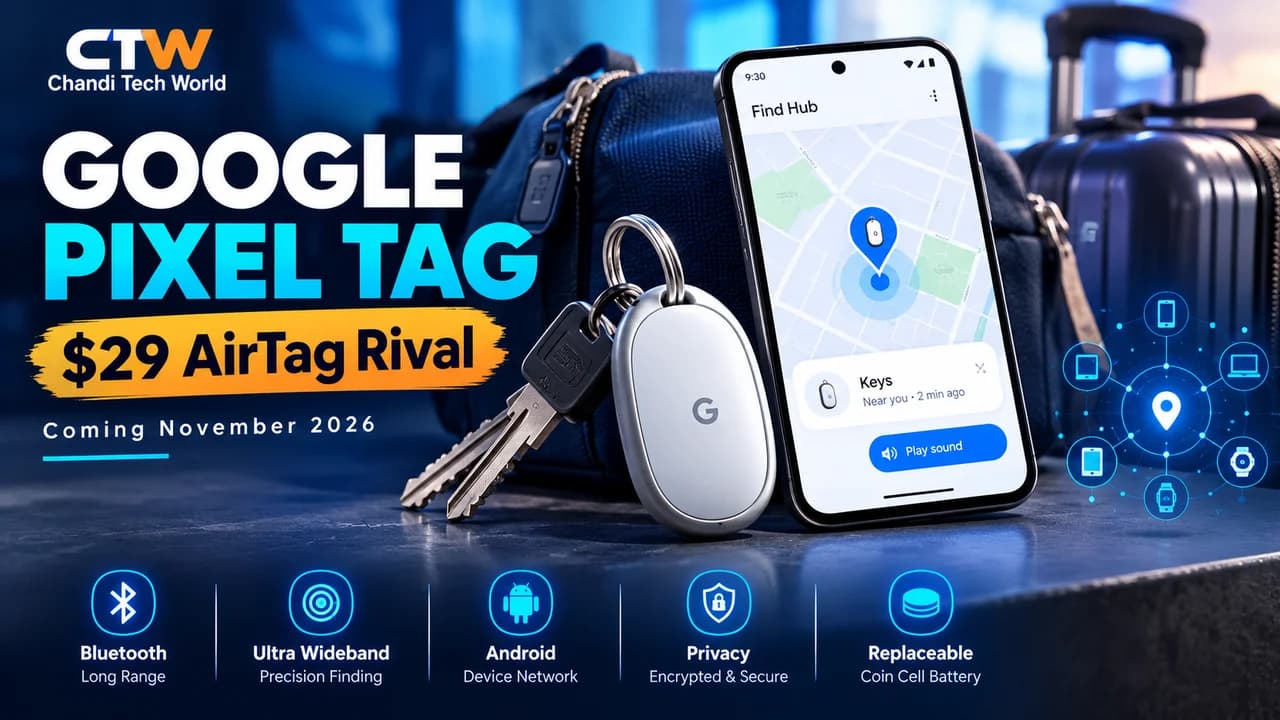
In a move to expand its product offerings and enhance user convenience, Google has unveiled the Pixel Tag, a new tracking device priced at an accessible $29. This innovation is designed to help users keep track of their belongings, such as keys and bags, by leveraging Google's extensive Find Hub network. With this launch, Google aims to provide a budget-friendly alternative to Apple's popular AirTag, which has dominated the item-tracking market since its release.
Understanding the Pixel Tag
The Pixel Tag is a compact and lightweight device that can be easily attached to various personal items. Its primary function is to assist users in locating lost belongings through the Find Hub network, which utilizes a combination of Bluetooth technology and a vast array of connected devices. When an item equipped with a Pixel Tag goes missing, users can receive real-time updates on its location, making it easier to retrieve lost items. The design emphasizes portability and ease of use, ensuring that users can attach the Pixel Tag to a wide range of items without hassle.
How the Find Hub Network Works
The Find Hub network is a critical component of the Pixel Tag's functionality. It operates by utilizing the collective power of Google’s ecosystem, allowing users to tap into a network of devices to locate their tagged items. When a Pixel Tag comes within range of any device connected to this network, it can relay its location back to the owner. This collaborative approach enhances the chances of recovering lost items, even in crowded or public spaces. The Find Hub network is designed to be expansive, drawing on the billions of devices connected to Google services, thus maximizing the potential for item recovery.
Comparing Pixel Tag to AirTag
Apple's AirTag has set a high standard in the item-tracking market, offering a seamless experience for users within the Apple ecosystem. However, the Pixel Tag aims to carve out its niche by providing a more affordable option without compromising on functionality. At just $29, the Pixel Tag is significantly less expensive than the AirTag, which may attract budget-conscious consumers looking for effective tracking solutions. While the AirTag integrates deeply with Apple's suite of products, the Pixel Tag seeks to appeal to a broader audience, including those who may not be entrenched in the Apple ecosystem.
User Experience and Features
Google has designed the Pixel Tag with user experience in mind. The device is easy to set up and can be managed through a dedicated app, allowing users to customize alerts and tracking preferences. Additionally, the Pixel Tag is equipped with a loud speaker that can emit sounds to help users locate their items quickly. This feature is particularly useful in noisy environments or when items are misplaced in hard-to-find spots. The app interface is user-friendly, providing clear instructions and intuitive navigation to enhance the overall experience. Furthermore, the Pixel Tag's battery life is optimized for long-term use, ensuring that users can rely on it without frequent replacements.
Market Implications
The introduction of the Pixel Tag signifies a strategic move by Google to strengthen its presence in the consumer electronics market. By directly competing with Apple's AirTag, Google is not only diversifying its product lineup but also appealing to a broader audience. This competition could lead to further innovations in item-tracking technology as both companies strive to enhance their offerings and attract more users. The entry of the Pixel Tag could potentially lower prices in the item-tracking market, making these devices more accessible to a wider range of consumers. Moreover, as tracking technology becomes more prevalent, it may encourage new applications and integrations across various industries, from logistics to personal safety.
Conclusion
With the launch of the Pixel Tag, Google is positioning itself as a formidable competitor in the item-tracking space. Offering a reliable and cost-effective solution for locating lost belongings, the Pixel Tag leverages the power of the Find Hub network to provide users with peace of mind. As the market for tracking devices continues to grow, the Pixel Tag may very well reshape consumer expectations and drive further advancements in this technology. Google's entry into this space not only highlights the importance of innovation in consumer electronics but also reflects the evolving needs of users who seek practical solutions for everyday challenges. As consumers increasingly rely on technology to manage their lives, products like the Pixel Tag will play a crucial role in enhancing convenience and security.
Key Highlights
- Google launches the Pixel Tag, priced at $29, for item tracking.
- The Pixel Tag utilizes Google's Find Hub network for enhanced tracking.
- It aims to compete directly with Apple's AirTag in the market.
- The device is designed to track items like keys and bags easily.
- Users can receive real-time location updates on their lost items.
- The Pixel Tag features a loud speaker for quick item location.
- This launch marks a strategic expansion for Google in consumer electronics.
Expert Analysis
Technical Analysis
The Pixel Tag utilizes Bluetooth technology in conjunction with Google's Find Hub network to help users locate lost items. This network leverages a vast array of connected devices within Google's ecosystem, allowing the Pixel Tag to communicate its location when it comes within range of any compatible device. This collaborative approach enhances the likelihood of recovering lost items, particularly in crowded or public spaces, where traditional tracking methods might fall short. The device is designed for ease of use, featuring a loud speaker to help users find misplaced items quickly, and a user-friendly app for customization and management of tracking preferences.
What sets the Pixel Tag apart from competitors like Apple's AirTag is its affordability and accessibility. Priced at $29, it offers a budget-friendly alternative without sacrificing functionality. While the AirTag is deeply integrated into the Apple ecosystem, the Pixel Tag aims to appeal to a broader audience, including those who may not own Apple devices. However, the reliance on the Find Hub network means that the effectiveness of the Pixel Tag is contingent on the density of Google-connected devices in the vicinity, which could be a limitation in less populated areas.
Advantages
- Affordable price point at $29, making it accessible to budget-conscious consumers.
- Utilizes the extensive Find Hub network, increasing the chances of recovering lost items.
- User-friendly app for easy setup and customization of alerts and tracking preferences.
- Equipped with a loud speaker to assist in locating items quickly, even in noisy environments.
- Optimized battery life for long-term use without frequent replacements.
Disadvantages
- Effectiveness may be limited in areas with fewer Google-connected devices.
- No major disadvantages reported yet.
Real-World Use Cases
- Individuals can attach the Pixel Tag to keys, bags, or other personal items to easily locate them when misplaced.
- Families can use the Pixel Tag to keep track of children's belongings, ensuring they do not lose important items.
- Businesses can utilize the Pixel Tag to manage inventory by tagging items and easily locating them within a workspace.
- Travelers can attach the Pixel Tag to luggage to help track bags in crowded airports or during travel.
- Students can use the Pixel Tag to keep track of school supplies and backpacks.
Business Impact
The launch of the Pixel Tag positions Google as a strong competitor in the item-tracking market, directly challenging Apple's AirTag. This move not only diversifies Google's product offerings but also has the potential to drive down prices in the sector, making tracking devices more accessible to a wider audience. As competition intensifies, both companies may invest in further innovations, leading to enhanced features and capabilities in item-tracking technology, which could open new revenue opportunities in various industries such as logistics and personal safety.
User Impact
Consumers stand to benefit significantly from the introduction of the Pixel Tag, particularly those who seek an affordable and effective solution for tracking their belongings. The device's ease of use and integration with the Find Hub network make it appealing to a broad audience, including those not already invested in the Google ecosystem. Ordinary users should care about this development as it represents a shift towards more accessible technology that can enhance everyday convenience and security. Adoption of the Pixel Tag could lead to improved organization and peace of mind for users managing multiple personal items.
Security & Privacy
Security and privacy analysis not applicable.
How It Compares
- Pixel Tag is priced at $29, significantly lower than Apple's AirTag, making it more accessible.
- While AirTag is integrated within the Apple ecosystem, Pixel Tag aims to appeal to a broader audience beyond Google device users.
Future Outlook
In the near term, we can expect Google to continue refining the Pixel Tag's features based on user feedback and market trends. As item-tracking technology gains traction, there may be developments in integration with other Google services and potential partnerships with third-party applications. The industry direction suggests a growing emphasis on affordability and functionality, which could lead to further innovations and enhancements in tracking devices, ultimately benefiting consumers.
Expert Summary
The launch of the Pixel Tag is a significant development in the item-tracking market, as it introduces a cost-effective alternative to Apple's AirTag. Stakeholders in consumer electronics, particularly those focused on tracking technology, should pay attention to how this competition may drive innovation and price adjustments. Overall, the Pixel Tag represents a promising step forward in making tracking solutions more accessible and user-friendly.
Originally reported by TechCrunch.



