
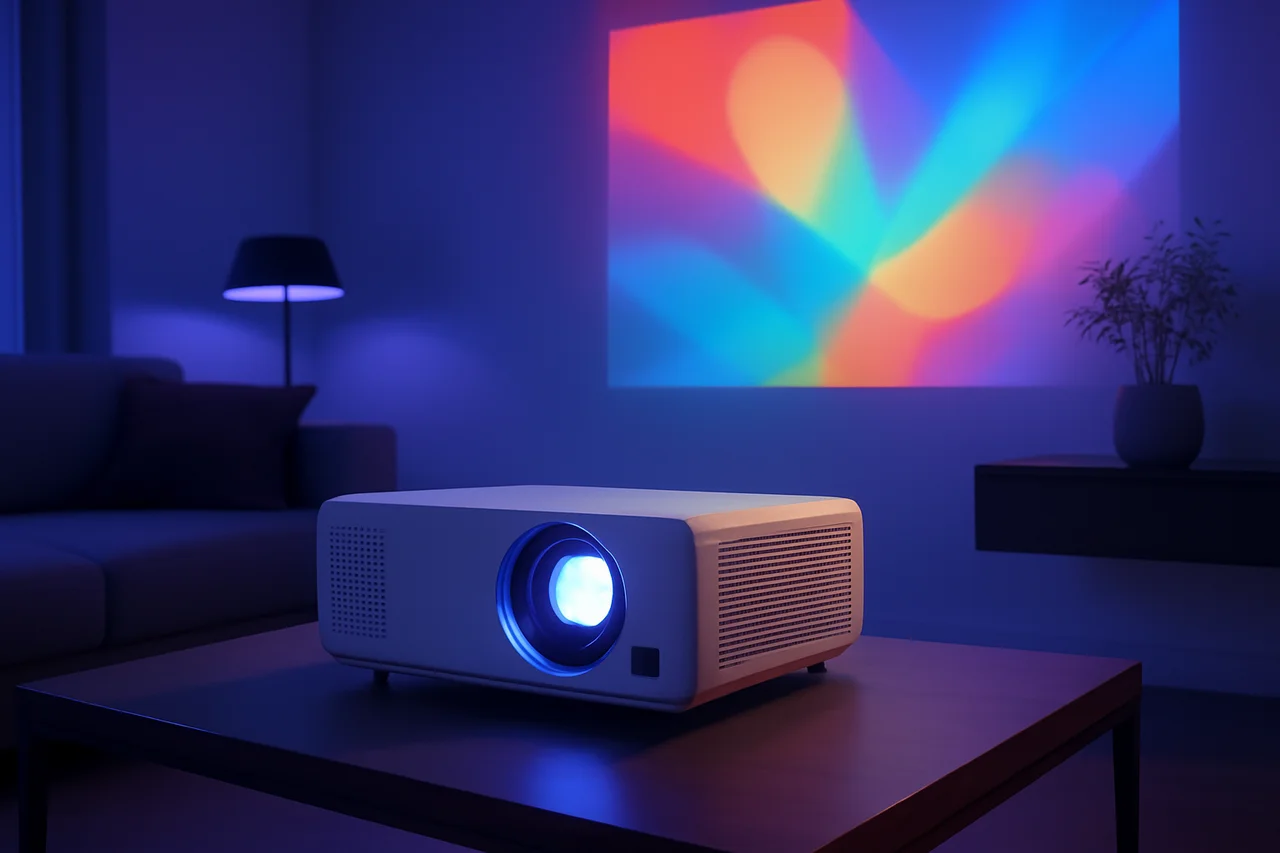
The emergence of budget projectors has transformed the home entertainment landscape, offering consumers a variety of options at different price points. Despite the buzz surrounding the Google TV projector, I find myself hesitant to make the investment. My experience with a budget projector has shaped my perspective, prompting me to weigh the pros and cons of this advanced technology against simpler alternatives.
The Rise of Budget Projectors
Over the past few years, the projector market has seen an influx of affordable options, with prices ranging from as low as $50 to over $500. This democratization of projection technology has made it accessible to a broader audience, allowing families and individuals to enhance their home entertainment experience without breaking the bank. My journey began with a modest investment in a $100 projector that came equipped with HDMI support and a Roku device. While it was never intended to replace a traditional TV, it provided an enjoyable outdoor movie-watching experience and piqued my interest in the world of projectors.
Experiencing Projector Life
Using my budget projector opened my eyes to the potential of projection technology. It was a simple yet effective way to enjoy films under the stars, and I began to imagine how a more advanced projector could enhance my viewing experience. The thought of upgrading to a higher-priced unit became increasingly appealing, especially as my living room television began to show signs of aging. The allure of a larger screen and better image quality was hard to resist. However, the experience also made me acutely aware of the limitations of budget projectors, such as lower brightness levels and reduced color accuracy, which could detract from the overall viewing experience.
The Allure of Google TV Projectors
As I explored projector options, the Google TV projector caught my attention. These devices have garnered positive reviews from both critics and consumers, highlighting their ease of use and integrated Google TV features. With no need for additional equipment or complicated setups, a Google TV projector seemed like a convenient solution to my entertainment needs. The integration of Google TV means users can access a vast library of content, including streaming services, live TV, and apps, all from one device. This seamless experience is particularly appealing for those who value simplicity and efficiency in their home entertainment setup.
Evaluating Cost vs. Value
Despite the attractive features of the Google TV projector, I found myself grappling with a significant question: is it worth spending $500 to $1000 on this technology? As I pondered this, I recalled my budget projector experience and began to consider whether a traditional “dumb” projector might provide similar, if not better, value for my money. The price range for projectors can be misleading; while higher-priced models often come with advanced features, they may not necessarily guarantee a superior viewing experience. The question of whether the additional investment translates into a significantly enhanced experience is one that many consumers face.
Advanced Features vs. Simplicity
The debate between advanced features and simplicity is at the forefront of my decision-making process. While the Google TV projector offers a seamless experience with its built-in platform, I couldn't shake the feeling that I might be better off investing in a more basic projector. The notion that a higher-priced unit could deliver superior performance is enticing, but I remain skeptical about whether the added features justify the expense. For instance, while features like automatic keystone correction and enhanced connectivity options are appealing, they may not be essential for casual viewers who primarily use projectors for occasional movie nights or outdoor gatherings.
Conclusion: A Personal Dilemma
As I continue to weigh my options, the decision to purchase a Google TV projector remains uncertain. My previous experience with a budget projector has led me to question the necessity of advanced features when simpler alternatives might suffice. While the allure of the Google TV projector is undeniable, I may ultimately choose to invest in a more traditional model that aligns with my needs and budget. The journey of exploring projectors has taught me that sometimes, the best choice is not the one with the most features but the one that best fits my lifestyle and viewing habits. In a market filled with options, the key is to find a balance between cost, value, and personal preference.
Key Highlights
- The budget projector market has expanded significantly, offering options from $50 to over $500.
- A personal experience with a $100 projector revealed the potential for outdoor movie enjoyment.
- The Google TV projector has received positive reviews for its user-friendly features.
- The author questions the value of spending $500-$1000 on a Google TV projector.
- There is an ongoing debate between advanced features and simpler projector alternatives.
- The decision to invest in a Google TV projector remains unresolved for the author.
- A traditional 'dumb' projector may provide better value than a feature-rich model.
Expert Analysis
Technical Analysis
The Google TV projector integrates advanced projection technology with the Google TV platform, allowing users to access a wide range of streaming services and apps directly from the device. This integration simplifies the user experience by eliminating the need for additional devices or complicated setups, making it an appealing option for those seeking convenience in their home entertainment systems. The projector likely employs HDMI connectivity to facilitate easy connections to various media sources, enhancing its versatility.
However, despite the advanced features, the Google TV projector faces competition from a growing market of budget projectors that offer satisfactory performance at significantly lower prices. While higher-priced projectors may provide better image quality and additional features, the article suggests that these enhancements may not always justify the cost for casual users. Limitations such as brightness levels and color accuracy in budget models are acknowledged, yet they may still meet the needs of many consumers who prioritize affordability over advanced technology.
Advantages
- Integrated Google TV features provide access to a vast library of content.
- Eliminates the need for additional equipment or complicated setups.
- Offers a seamless user experience for those valuing simplicity.
- Potential for enhanced image quality and larger screen sizes compared to budget projectors.
Disadvantages
- High price range ($500 to $1000) may not guarantee a superior viewing experience.
- Advanced features may not be essential for casual viewers.
Real-World Use Cases
- Families looking to enhance their home entertainment experience with a single device.
- Individuals who prefer a simple setup for occasional movie nights or outdoor gatherings.
- Users who want to access streaming services without needing additional devices.
Business Impact
The introduction of the Google TV projector could shift consumer preferences towards integrated solutions that combine projection technology with streaming capabilities. This may challenge traditional projector manufacturers to innovate and offer similar features at competitive prices. As the market for home entertainment continues to grow, there are significant revenue opportunities for companies that can successfully blend convenience with quality in their product offerings.
User Impact
Consumers who prioritize ease of use and access to streaming content will benefit from the Google TV projector's integrated features. However, those who are budget-conscious or do not require advanced functionalities may find better value in simpler, less expensive projectors. Ordinary users should consider their viewing habits and whether the additional investment in a Google TV projector aligns with their needs.
Security & Privacy
Security and privacy analysis not applicable.
Future Outlook
In the near term, we can expect continued advancements in projector technology, particularly in integrating smart features that enhance user experience. As competition intensifies, manufacturers may focus on improving image quality and affordability, potentially leading to more budget-friendly options that still offer advanced functionalities. The market may also see an increase in hybrid devices that combine projection with other home entertainment technologies.
Expert Summary
The discussion surrounding the Google TV projector highlights the ongoing evolution of home entertainment technology and the importance of aligning features with consumer needs. As more options become available, both consumers and manufacturers should pay attention to the balance between cost and value. Ultimately, the decision to invest in advanced technology like the Google TV projector should be based on individual viewing habits and preferences.
Originally reported by Android Authority.



