
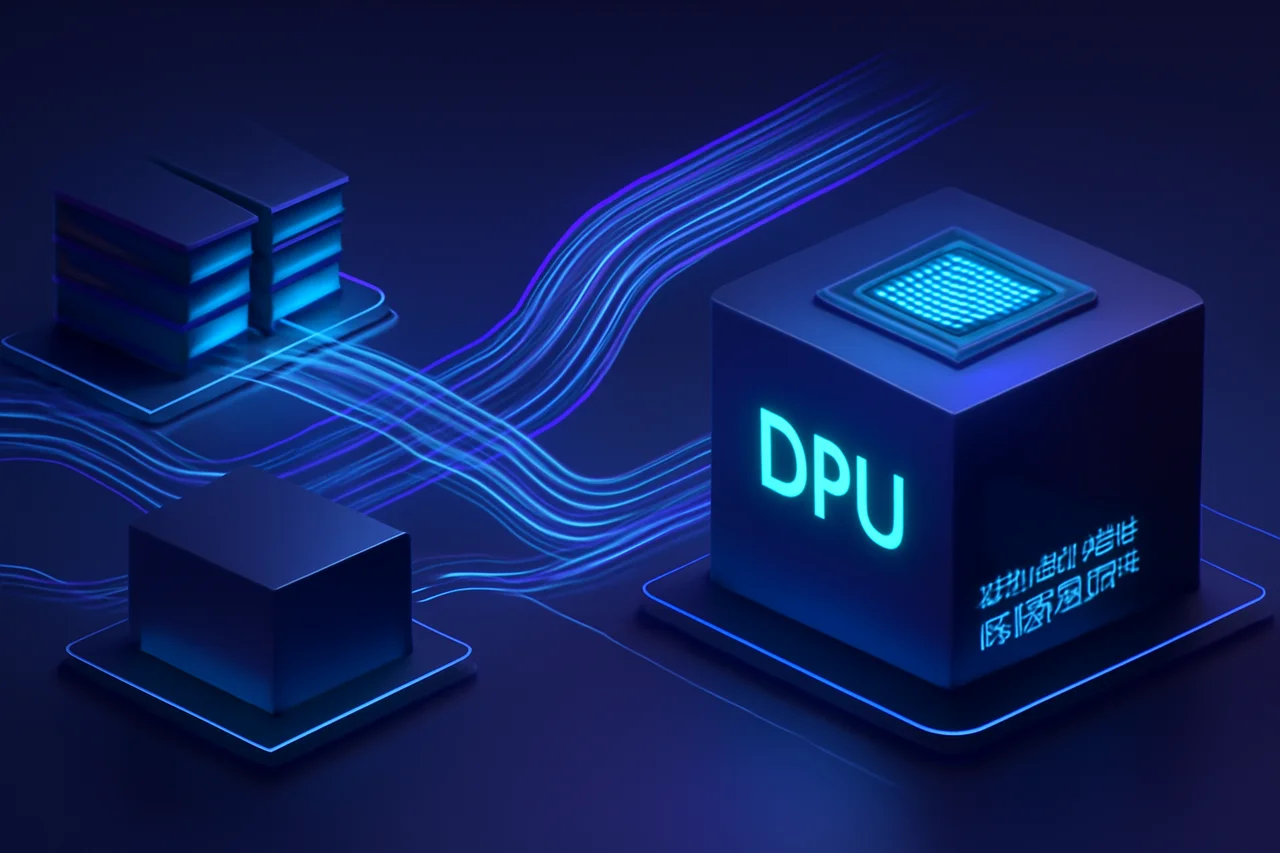
NVIDIA has made a significant leap in cloud infrastructure technology with the introduction of its latest product, the BlueField-4. This new offering is specifically designed to meet the demands of Agentic AI factories, which require high-performance computing capabilities to support diverse applications and workloads. Unlike traditional cloud setups that are optimized for predictable tasks, the BlueField-4 is engineered to handle the complexities of modern AI environments, providing multi-terabit bandwidth per server.
Transforming Cloud Infrastructure
The evolution of cloud infrastructure is driven by the increasing need for flexibility and efficiency in data processing. Traditional systems were primarily built for general-purpose workloads, often resulting in limitations when faced with the dynamic requirements of AI-driven applications. The BlueField-4 addresses these challenges by integrating dedicated Data Processing Units (DPUs) that facilitate improved networking, storage, and security functionalities.
This transformation is not merely a technological upgrade; it reflects a fundamental shift in how organizations approach data management and processing. As businesses increasingly rely on AI to drive innovation and efficiency, the need for infrastructure that can seamlessly adapt to varying workloads becomes paramount. The BlueField-4 is positioned at the forefront of this evolution, offering capabilities that go beyond conventional cloud solutions.
Agentic AI Factories Explained
Agentic AI factories represent a new paradigm in computing, where multiple users, agents, applications, and data sources converge to create a more interconnected environment. This setup demands a robust network infrastructure capable of supporting diverse workloads simultaneously. The BlueField-4 empowers these factories by ensuring that data can be processed at unprecedented speeds, thus enabling real-time analytics and decision-making.
In an Agentic AI factory, various components must work in harmony to achieve optimal performance. From data ingestion to processing and output, every stage requires a reliable and efficient infrastructure. The BlueField-4's architecture is designed to facilitate this interconnectedness, allowing for seamless communication between different agents and applications. As a result, organizations can leverage AI technologies more effectively, leading to enhanced productivity and innovation.
Key Features of BlueField-4
The BlueField-4 is not just another cloud infrastructure product; it is a comprehensive solution that offers several key features:
- Multi-Terabit Bandwidth: Each server can handle multi-terabit bandwidth, making it suitable for high-demand applications. This capability is essential for processing large datasets in real time, a requirement for many AI applications.
- Dedicated DPU Processing: The integration of DPUs allows for efficient line-rate networking and enhances overall system performance. This dedicated processing power ensures that data can be transferred and processed without bottlenecks, which is critical for maintaining the speed and efficiency of AI operations.
- Enhanced Security: With dedicated processing, security protocols can be implemented more effectively, safeguarding sensitive data. In an era where data breaches are increasingly common, the robust security features of the BlueField-4 provide peace of mind for organizations handling critical information.
- Scalability: The architecture of BlueField-4 allows for easy scaling, accommodating the growing needs of AI factories. As organizations expand their AI initiatives, the ability to scale infrastructure without significant overhauls is a key advantage.
The Need for Specialized Infrastructure
As AI technologies continue to evolve, the infrastructure supporting them must also advance. The introduction of the BlueField-4 highlights the necessity for specialized solutions that can adapt to the rapid changes in AI workloads. Traditional cloud infrastructures often struggle to keep pace, leading to inefficiencies and bottlenecks. NVIDIA's BlueField-4 aims to eliminate these issues, providing a tailored approach to meet the specific needs of Agentic AI factories.
Moreover, the rise of AI-driven applications has brought about a unique set of challenges. These applications often require not only significant computational resources but also the ability to process data from various sources in real time. The BlueField-4's design addresses these challenges head-on, ensuring that organizations can harness the full potential of their AI capabilities without being hindered by outdated infrastructure.
Impact on the Future of AI
The launch of the BlueField-4 is expected to have a profound impact on the future of AI development and deployment. By providing a robust foundation for high-speed data processing, NVIDIA is facilitating the growth of intelligent systems that can learn and adapt in real time. This advancement is crucial as industries increasingly rely on AI for decision-making and automation.
As organizations begin to implement the BlueField-4, we can anticipate a shift in how AI solutions are deployed across various sectors. From healthcare to finance, the ability to process vast amounts of data quickly and securely will enable organizations to make informed decisions faster than ever before. This capability not only enhances operational efficiency but also opens up new avenues for innovation and growth.
Conclusion
NVIDIA's BlueField-4 represents a significant milestone in the evolution of cloud infrastructure tailored for Agentic AI factories. With its focus on multi-terabit bandwidth and dedicated DPU processing, it addresses the unique challenges posed by modern AI applications. As organizations continue to embrace AI technologies, the BlueField-4 is poised to play a pivotal role in shaping the future of intelligent computing. By providing the necessary tools to support advanced AI workloads, NVIDIA is not just enhancing cloud infrastructure but also paving the way for the next generation of intelligent systems.
Key Highlights
- NVIDIA's BlueField-4 is designed for Agentic AI factories.
- It offers multi-terabit bandwidth per server for high-demand applications.
- Dedicated DPUs enhance networking, storage, and security capabilities.
- The infrastructure supports diverse workloads and users simultaneously.
- BlueField-4 marks a shift from traditional cloud setups to specialized solutions.
- The product aims to eliminate bottlenecks in AI processing.
- NVIDIA is positioning itself at the forefront of AI infrastructure development.
Expert Analysis
Technical Analysis
The NVIDIA BlueField-4 is a cutting-edge cloud infrastructure solution that integrates dedicated Data Processing Units (DPUs) to enhance performance in AI-driven environments. The architecture is designed to support multi-terabit bandwidth per server, which is essential for processing large datasets in real time. This capability allows organizations to manage diverse workloads efficiently, overcoming the limitations of traditional cloud setups that are often optimized for predictable tasks rather than the dynamic demands of modern AI applications. The BlueField-4's DPU processing facilitates improved networking, storage, and security functionalities, making it a comprehensive solution for organizations looking to leverage AI technologies.
What sets the BlueField-4 apart is its ability to adapt to the evolving needs of Agentic AI factories, where multiple users and applications converge. This interconnected environment requires robust infrastructure capable of seamless communication and real-time data processing. The BlueField-4 addresses these requirements by providing enhanced security measures and scalability, ensuring that organizations can expand their AI initiatives without significant infrastructure overhauls. However, while the BlueField-4 offers substantial improvements over traditional systems, its specialized nature may limit its applicability in more general-purpose computing scenarios.
Advantages
- Multi-terabit bandwidth per server enables real-time processing of large datasets.
- Dedicated DPU processing enhances overall system performance and prevents bottlenecks.
- Improved security features safeguard sensitive data effectively.
- Scalability allows organizations to expand AI initiatives without major infrastructure changes.
- Tailored infrastructure addresses the unique challenges of modern AI applications.
Disadvantages
- No major disadvantages reported yet.
Real-World Use Cases
- Organizations in healthcare can utilize BlueField-4 for real-time patient data analysis and decision-making.
- Financial institutions can leverage its capabilities for rapid fraud detection and risk assessment.
- Manufacturers can implement BlueField-4 to optimize supply chain operations through real-time data processing.
- Educational institutions can adopt the technology for advanced research projects requiring high-performance computing.
- Developers can use BlueField-4 to build and deploy AI applications that require significant computational resources.
Business Impact
The introduction of the BlueField-4 is likely to reshape the cloud infrastructure market, particularly for organizations focused on AI development. By providing a specialized solution that meets the demands of Agentic AI factories, NVIDIA positions itself as a leader in the evolving landscape of AI-driven technologies. This could lead to increased revenue opportunities as businesses seek to upgrade their infrastructure to support advanced AI applications, potentially outpacing competitors who rely on traditional cloud solutions.
As organizations increasingly adopt AI technologies, the demand for high-performance infrastructure will grow. This trend may prompt other companies in the cloud services space to innovate or enhance their offerings to remain competitive, leading to a broader transformation in the industry.
User Impact
The BlueField-4 has the potential to significantly benefit organizations that rely on AI for their operations, enabling them to process data more efficiently and make informed decisions faster. This advancement is particularly relevant for sectors such as healthcare, finance, and manufacturing, where real-time data processing is critical. Ordinary users may not directly interact with the BlueField-4, but they will benefit indirectly through improved services and products that leverage AI technologies.
However, organizations that do not engage in AI-driven initiatives may not find immediate relevance in adopting the BlueField-4. For those looking to enhance their AI capabilities, the investment in this infrastructure could be worthwhile, given the competitive advantages it offers in terms of speed, efficiency, and security.
Security & Privacy
Security and privacy analysis not applicable.
Future Outlook
In the near term, we can expect NVIDIA to continue refining the BlueField-4 and possibly introduce additional features that enhance its capabilities further. As AI technologies advance, the demand for specialized infrastructure will likely increase, prompting NVIDIA to innovate in response to market needs. The company may also explore partnerships or integrations with other technology providers to expand the BlueField-4's applicability across various sectors.
The industry direction seems to be leaning towards more tailored solutions that can efficiently handle the complexities of AI workloads. As organizations increasingly adopt AI, the infrastructure that supports these technologies will need to evolve, suggesting a promising future for specialized products like the BlueField-4.
Expert Summary
The unveiling of NVIDIA's BlueField-4 marks a significant advancement in cloud infrastructure tailored for AI applications. Organizations focused on leveraging AI technologies should pay close attention to this development, as it offers the necessary tools to enhance performance and security in data processing. Overall, the BlueField-4 represents a pivotal step forward in the evolution of intelligent computing, promising to reshape how businesses approach AI workloads.
Originally reported by NVIDIA Technical Blog.



