
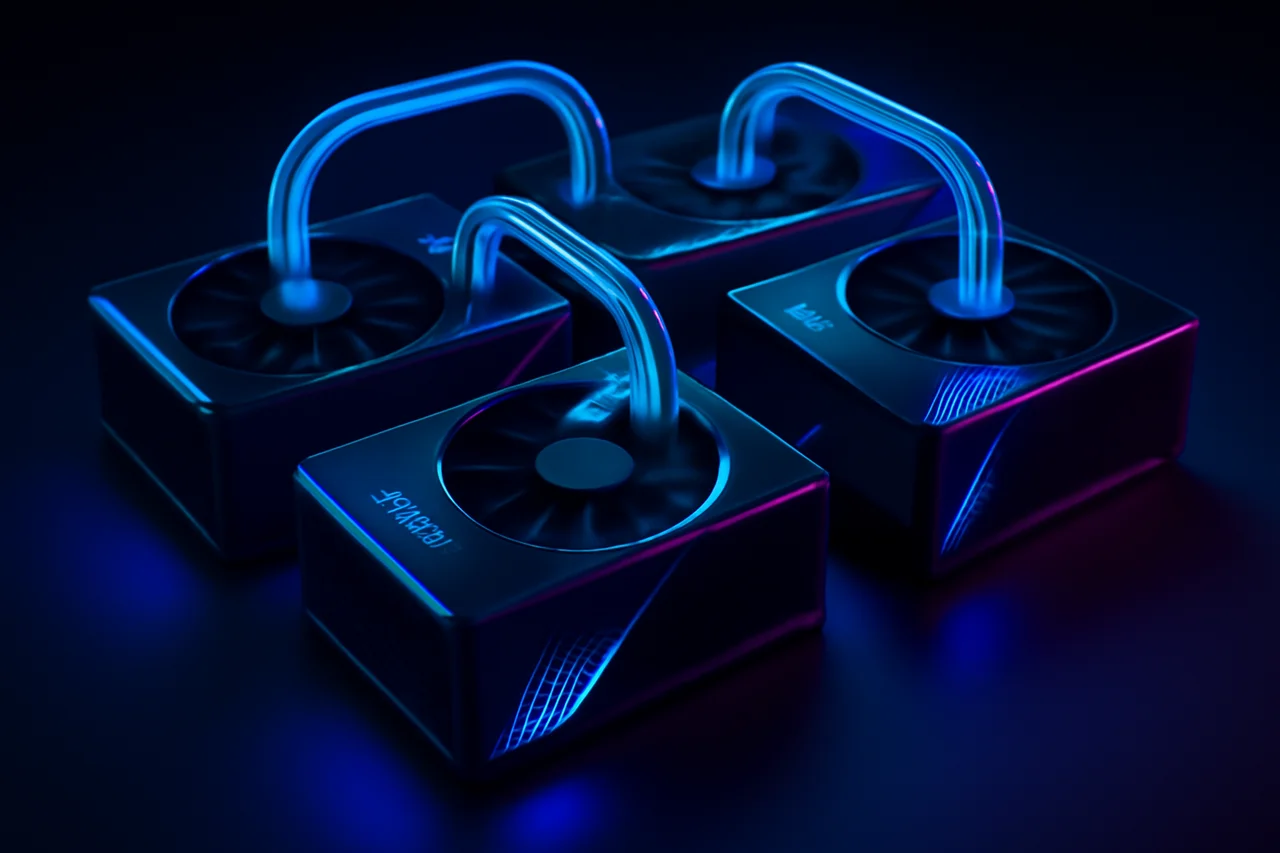
NVIDIA has unveiled its latest innovation, NVLink 6, designed specifically to enhance the capabilities of large-scale AI factories. In an era where productivity hinges on continuous output, the importance of efficient GPU synchronization cannot be overstated. This new technology promises to optimize operations, ensuring that AI systems can run smoothly and effectively, even under demanding conditions.
Understanding NVLink 6
NVIDIA NVLink 6 is a cutting-edge interconnect technology that facilitates high-speed communication between GPUs. By enabling seamless data transfer, it allows multiple GPUs to work in unison, synchronizing their efforts to achieve greater performance. This is particularly vital in environments where AI models require massive amounts of data processing, such as in training and inference stages. The architecture of NVLink 6 is built to support the increasing demands of modern AI applications, which often involve complex computations and large datasets that need to be processed in real-time.
Maximizing Continuous Output
For operators of AI factories, maximizing continuous output is critical. NVLink 6 addresses this need by ensuring that every GPU in a cluster can synchronize gradients across thousands of operations per second. This capability is essential for training large-scale AI models, where efficiency can determine the success of a project. With NVLink 6, GPUs can share information rapidly, reducing bottlenecks that often plague large-scale computations. The ability to synchronize multiple GPUs effectively means that tasks can be divided and processed in parallel, significantly speeding up the overall computation time. This is particularly important in scenarios where time-sensitive decisions are made based on AI outputs, such as in autonomous driving or real-time data analysis.
Reducing Unplanned Downtime
In the fast-paced world of AI, unplanned downtime can be detrimental. It not only hampers productivity but also limits the volume of requests that can be processed, directly impacting revenue. NVLink 6 mitigates these risks by providing a more resilient infrastructure. By enhancing the synchronization of GPUs, it minimizes the chances of failure during critical operations, allowing for a more reliable AI service. The robust design of NVLink 6 includes features that monitor and manage GPU health, ensuring that potential issues are addressed before they escalate into significant problems. This proactive approach to maintenance helps maintain operational continuity, which is essential for businesses that rely heavily on AI technologies.
Implications for AI Operations
The introduction of NVLink 6 is poised to revolutionize AI operations. With its ability to ensure continuous output and reduce downtime, operators can expect significant improvements in their productivity levels. This means that businesses relying on AI technologies can serve more requests, ultimately leading to increased revenue. The implications of this technology extend beyond mere performance; they also encompass the overall efficiency and reliability of AI systems. As organizations increasingly adopt AI-driven solutions, the need for dependable infrastructure becomes paramount. NVLink 6 not only enhances processing capabilities but also supports the scalability of AI operations, allowing businesses to expand their AI initiatives without the fear of performance degradation.
Conclusion
NVIDIA NVLink 6 represents a significant advancement in the realm of AI factory technology. By focusing on multi-layer resiliency, it addresses two of the most pressing challenges faced by operators: the need for continuous output and the reduction of unplanned downtime. As AI continues to evolve and expand into various sectors, technologies like NVLink 6 will be crucial in ensuring that these systems operate at peak performance, driving innovation and productivity in the industry. The ongoing development of interconnect technologies will likely play a pivotal role in shaping the future of AI, enabling more complex models and applications that can tackle the challenges of tomorrow.
Key Highlights
- NVIDIA NVLink 6 enhances GPU synchronization for AI factories.
- The technology maximizes continuous output, crucial for productivity.
- It allows GPUs to synchronize gradients across thousands of operations.
- NVLink 6 reduces unplanned downtime during AI inference.
- Operators can expect increased revenue from improved AI operations.
- The technology ensures reliability and efficiency in AI systems.
- NVIDIA's innovation addresses key challenges in large-scale AI training.
Expert Analysis
Technical Analysis
NVIDIA NVLink 6 is an advanced interconnect technology that enhances communication between GPUs, facilitating high-speed data transfer and synchronization. This technology is particularly crucial in large-scale AI factories where multiple GPUs need to work collaboratively to process vast amounts of data efficiently. By allowing GPUs to share information rapidly, NVLink 6 addresses the bottlenecks that can hinder performance in AI applications, especially during the training and inference stages of AI models. The architecture is designed to meet the increasing demands of modern AI workloads, which often involve complex computations and real-time data processing.
One of the standout features of NVLink 6 is its ability to synchronize gradients across thousands of operations per second, which is essential for training large-scale AI models. This capability not only accelerates computation times but also enhances the resilience of AI operations by reducing the likelihood of unplanned downtime. The technology includes monitoring features that help maintain GPU health, proactively addressing potential issues before they escalate. However, while NVLink 6 offers significant improvements in performance and reliability, it may require substantial investment in infrastructure to fully leverage its capabilities, which could be a barrier for some organizations.
Advantages
- Enhances GPU synchronization, leading to improved performance in AI applications.
- Reduces bottlenecks in data processing, allowing for faster computation times.
- Minimizes unplanned downtime, ensuring continuous output and operational continuity.
- Supports scalability of AI operations, enabling businesses to expand their AI initiatives without performance degradation.
Disadvantages
- No major disadvantages reported yet.
Real-World Use Cases
- Training large-scale AI models in environments requiring high data throughput.
- Real-time data analysis for industries such as finance and healthcare.
- Autonomous driving systems that rely on timely AI outputs for decision-making.
- AI-driven customer service applications that require high availability and reliability.
Business Impact
The introduction of NVLink 6 is likely to have a significant impact on businesses that rely on AI technologies, as it enhances productivity and operational efficiency. Companies can expect to serve more requests and process larger volumes of data, leading to increased revenue opportunities. Additionally, as organizations adopt more AI-driven solutions, the demand for reliable and resilient infrastructure will grow, positioning NVIDIA as a key player in the AI technology market.
User Impact
Ordinary users may not directly interact with NVLink 6, but they will benefit from the improved performance and reliability of AI applications that utilize this technology. Businesses that adopt NVLink 6 can provide faster and more dependable services, which can enhance user experiences. However, smaller organizations may find the investment in such advanced infrastructure challenging, potentially limiting their ability to compete in AI-driven markets.
Security & Privacy
Security and privacy analysis not applicable.
Future Outlook
In the near term, we can expect further developments in interconnect technologies like NVLink 6 as the demand for more powerful AI systems continues to grow. NVIDIA may enhance its offerings with additional features that improve GPU health monitoring and fault tolerance. As AI applications become more complex, the need for robust and scalable infrastructure will drive innovation in this space, potentially leading to new competitive solutions from other technology providers.
Expert Summary
NVIDIA NVLink 6 represents a pivotal advancement in AI factory technology, addressing critical challenges related to performance and reliability. Businesses and organizations leveraging AI technologies should pay close attention to this development, as it could significantly enhance their operational capabilities and revenue potential. Overall, NVLink 6 is a noteworthy innovation that could shape the future of AI applications across various industries.
Originally reported by NVIDIA Technical Blog.



