
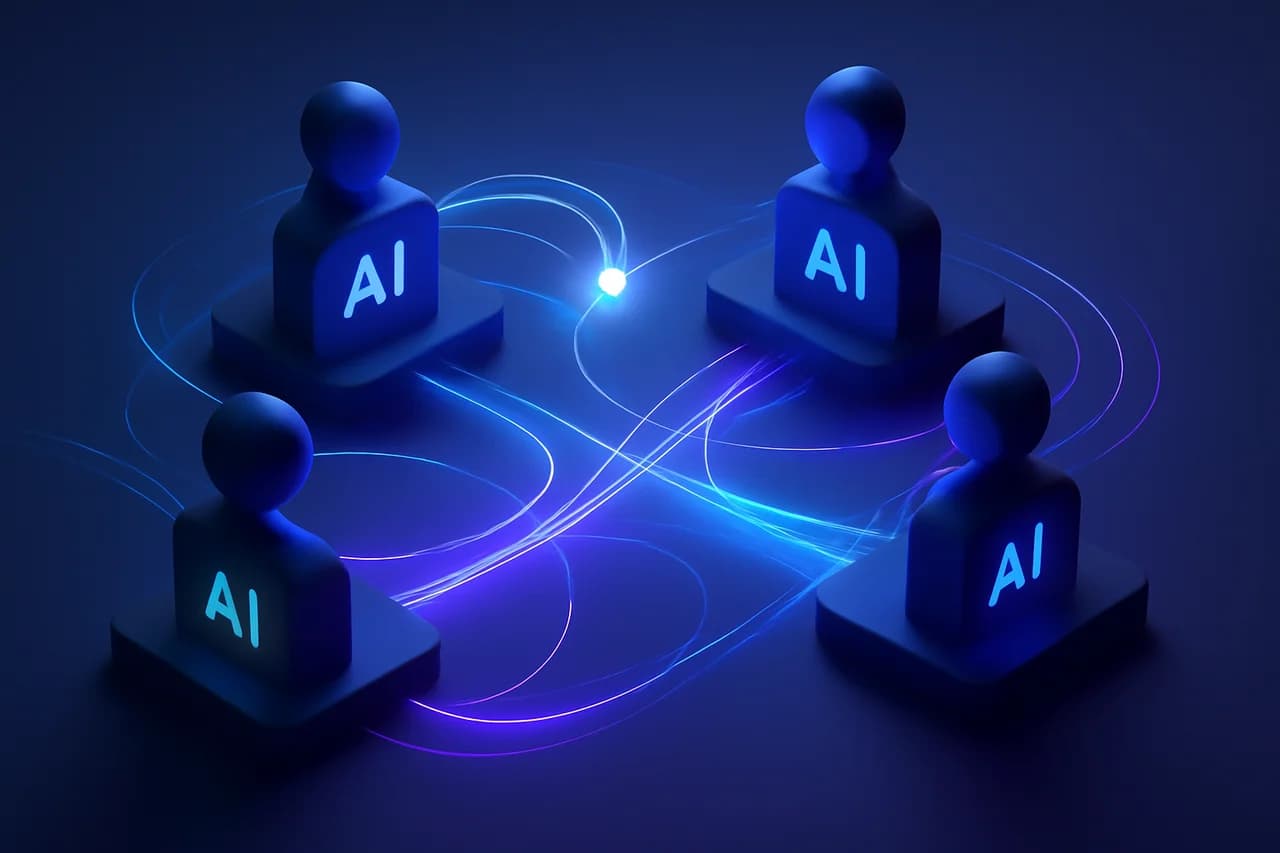
NVIDIA is making significant strides in the realm of artificial intelligence with its introduction of the PAIR Virtual Inference Router. This innovative tool is designed to expand the compute capabilities available on local networks, enabling AI agents to work more efficiently together. As the demand for AI-driven applications continues to grow, NVIDIA’s new router addresses the challenges of multi-agent workflows by allowing for enhanced collaboration among AI agents.
Understanding the PAIR Virtual Inference Router
The PAIR Virtual Inference Router is a cutting-edge solution that facilitates the collaboration of AI agents within a local network. By enabling a lead agent to decompose complex tasks into smaller, manageable jobs, the PAIR router allows specialized subagents to take on specific roles. This division of labor not only streamlines the workflow but also enhances the overall performance of AI-driven applications.
At its core, the PAIR router leverages advanced algorithms to optimize the interaction between agents, ensuring that they can communicate and share resources effectively. This is particularly important in environments where tasks are interdependent, as it allows agents to coordinate their efforts and avoid bottlenecks that can slow down processing times. The router's ability to manage these interactions is crucial for maintaining high levels of efficiency in multi-agent systems.
Benefits of Multi-Agent Workflows
Multi-agent workflows are becoming increasingly prevalent as users seek to optimize task completion times. With the PAIR router in place, AI agents can run multiple sessions simultaneously, which significantly boosts efficiency. This breadth-first approach allows for quicker processing of complex tasks, as the lead agent can delegate responsibilities based on the strengths of each subagent.
- Increased Efficiency: By allowing agents to work in parallel, the PAIR router minimizes idle time and maximizes resource utilization.
- Scalability: Organizations can easily scale their AI operations by adding more agents to tackle larger workloads without a corresponding increase in processing time.
- Improved Accuracy: With specialized agents focusing on specific tasks, the overall accuracy of the outputs can improve, as each agent can leverage its strengths.
This collaborative approach not only enhances productivity but also fosters a more dynamic environment where AI agents can learn from one another. As they engage in multi-agent workflows, they can adapt their strategies based on the outcomes of their peers, leading to continuous improvement in performance.
Enhanced Task Management
Task management is a critical aspect of AI operations, especially in environments that require high levels of collaboration. The PAIR Virtual Inference Router improves this by ensuring that tasks are distributed effectively among agents. By breaking down larger tasks into smaller components, the system allows for parallel processing, which can lead to faster results and improved productivity.
Moreover, effective task management facilitated by the PAIR router can lead to:
- Reduced Latency: By optimizing task distribution, the router can significantly reduce the time taken to complete complex operations.
- Enhanced Flexibility: Organizations can adapt to changing requirements more swiftly, as the router allows for quick reallocation of tasks among agents.
- Better Resource Management: With a clear understanding of task priorities, resources can be allocated more judiciously, ensuring that critical tasks receive the attention they need.
Real-World Applications
The capabilities of the PAIR router extend beyond theoretical applications; they have practical implications across various industries. For instance, in sectors such as healthcare, finance, and logistics, where complex data analysis is required, the ability to deploy multiple AI agents working in tandem can lead to significant advancements in efficiency and accuracy. This technology can transform how organizations approach problem-solving and decision-making.
In healthcare, for example, AI agents can analyze patient data, predict outcomes, and recommend treatments simultaneously, leading to faster and more accurate diagnoses. In finance, multi-agent systems can monitor market trends, execute trades, and manage portfolios in real-time, providing firms with a competitive edge. Logistics companies can optimize supply chain operations by coordinating various agents to track shipments, manage inventory, and forecast demand.
The Future of AI Collaboration
As AI technologies continue to evolve, tools like the PAIR Virtual Inference Router are paving the way for more sophisticated collaborative efforts among AI agents. This trend signifies a shift towards more integrated systems that can handle complex tasks more effectively. The implications of these advancements are vast, suggesting a future where AI agents can seamlessly collaborate to tackle challenges that were once deemed too complex for single-agent systems.
Furthermore, as organizations increasingly rely on AI for critical operations, the demand for robust multi-agent systems will likely grow. The PAIR router positions NVIDIA as a leader in this space, offering solutions that not only enhance collaboration but also drive innovation across various sectors.
Conclusion
NVIDIA’s PAIR Virtual Inference Router represents a significant leap forward in the capabilities of AI agents, enhancing their ability to collaborate on local networks. By facilitating multi-agent workflows and improving task management, this technology is set to redefine the landscape of AI applications. As organizations increasingly adopt AI solutions, the PAIR router will likely play a crucial role in driving efficiency and productivity across various sectors, ultimately shaping the future of artificial intelligence and its applications in the real world.
Key Highlights
- NVIDIA's PAIR Virtual Inference Router enhances local network compute capabilities.
- The router allows a lead AI agent to break down complex tasks for subagents.
- Multi-agent workflows are becoming more common in AI applications.
- The PAIR router improves task management and efficiency in AI systems.
- Real-world applications span industries like healthcare, finance, and logistics.
- NVIDIA's innovation signifies a shift towards integrated AI collaboration.
- The technology aims to redefine how organizations approach complex problem-solving.
Expert Analysis
Technical Analysis
The PAIR Virtual Inference Router introduced by NVIDIA is a sophisticated tool designed to enhance the collaboration of AI agents within local networks. It operates by allowing a lead agent to decompose complex tasks into smaller, manageable jobs, which specialized subagents can then execute. This division of labor is crucial in multi-agent systems, as it streamlines workflows and improves overall performance. The router employs advanced algorithms to optimize communication and resource sharing among agents, which is essential in environments where tasks are interdependent. This capability helps prevent bottlenecks that could hinder processing times, thereby maintaining high efficiency in AI-driven applications.
One of the key improvements offered by the PAIR router is its ability to facilitate parallel processing among AI agents. By enabling multiple agents to run sessions simultaneously, the router significantly boosts efficiency and minimizes idle time. This breadth-first approach not only accelerates task completion but also enhances the accuracy of outputs by allowing specialized agents to focus on their strengths. However, while the PAIR router provides substantial benefits in terms of scalability and resource management, it may also introduce complexities in task allocation and require careful management to ensure optimal performance across all agents involved.
Advantages
- Increased efficiency through parallel processing of tasks.
- Scalability allows organizations to expand AI operations without increasing processing time.
- Improved accuracy of outputs as specialized agents focus on specific tasks.
- Enhanced task management leads to reduced latency in complex operations.
- Better resource management ensures critical tasks receive necessary attention.
Disadvantages
- No major disadvantages reported yet.
Real-World Use Cases
- In healthcare, AI agents can analyze patient data and recommend treatments simultaneously, improving diagnosis speed and accuracy.
- In finance, multi-agent systems can monitor market trends and execute trades in real-time, enhancing competitive advantage.
- Logistics companies can use the PAIR router to optimize supply chain operations by coordinating agents for tracking shipments and managing inventory.
- Organizations can adapt quickly to changing requirements by reallocating tasks among agents efficiently.
Business Impact
The introduction of the PAIR Virtual Inference Router positions NVIDIA as a leader in the AI collaboration space, potentially reshaping how industries leverage AI for complex problem-solving. As organizations increasingly adopt AI solutions, the demand for robust multi-agent systems is likely to grow, creating new revenue opportunities for NVIDIA and its partners. This technology could lead to significant advancements in efficiency and productivity across various sectors, ultimately driving innovation in AI applications.
User Impact
Ordinary users stand to benefit from the advancements brought by the PAIR router, particularly in sectors like healthcare and finance where AI applications can lead to faster and more accurate outcomes. However, users may not directly interact with the technology but will experience its benefits through improved services and solutions. The adoption of such technologies is worth considering for organizations looking to enhance their operational efficiency and decision-making processes.
Security & Privacy
Security and privacy analysis not applicable.
Future Outlook
As AI technologies continue to evolve, tools like the PAIR Virtual Inference Router are expected to become more integral to collaborative efforts among AI agents. The trend towards more integrated systems capable of handling complex tasks suggests that future developments may focus on enhancing the capabilities of multi-agent systems. This could lead to more sophisticated AI applications that address challenges previously deemed too complex for single-agent solutions.
Expert Summary
The launch of NVIDIA's PAIR Virtual Inference Router marks a significant advancement in AI agent collaboration, offering enhanced efficiency and task management capabilities. Organizations across various sectors should pay attention to this development, as it has the potential to redefine operational workflows and improve decision-making processes. Overall, the PAIR router represents a pivotal step forward in the evolution of AI technologies and their applications.
Originally reported by NVIDIA Technical Blog.



