
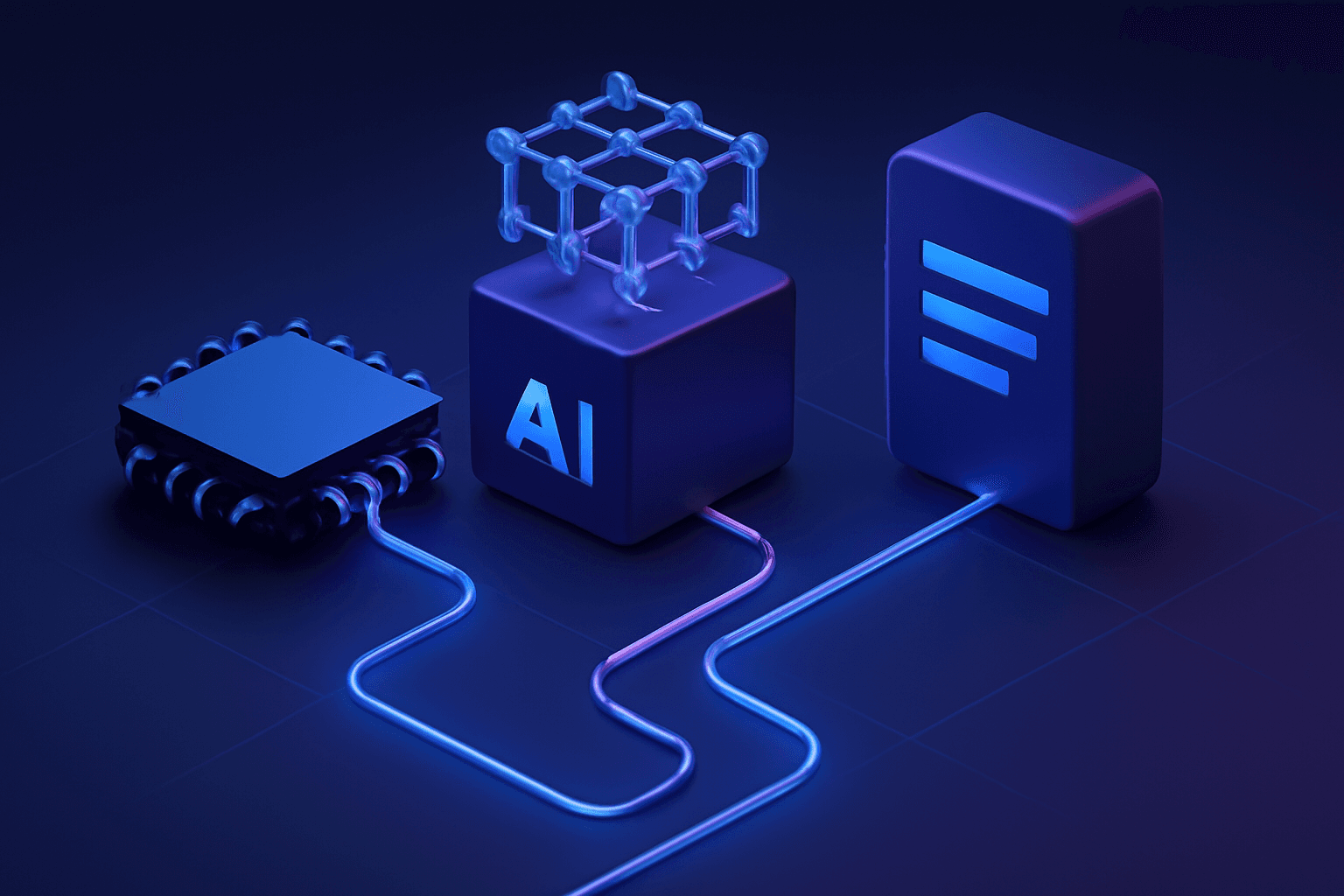
In the rapidly evolving landscape of artificial intelligence, the integration of various technological advancements plays a pivotal role in enhancing intelligence solutions. Recently, OpenAI's CFO Sarah Friar shed light on how improvements in chips, computing power, AI models, and product development work in tandem to provide more effective intelligence at a larger scale and reduced costs. This synergy not only enhances the capabilities of AI but also democratizes access to these powerful tools across various industries.
The Role of Chips in AI Development
Chips are the foundational hardware that powers AI systems. According to Friar, advancements in chip technology have significantly increased the processing capabilities essential for running complex AI models. As chips become more efficient, they enable faster computations, which is crucial for real-time data processing and decision-making in AI applications. This means that businesses can leverage AI technologies that are not only more powerful but also more accessible due to lower hardware costs. Moreover, as chip manufacturers innovate, they are developing specialized chips tailored for AI tasks, such as tensor processing units (TPUs) and graphics processing units (GPUs), which further enhance performance and efficiency.
Computing Power: The Engine Behind AI
Computing power is another critical component in the AI stack. Friar emphasized that the synergy between advanced chips and enhanced computing capabilities allows for the deployment of sophisticated AI models. The ability to perform large-scale computations efficiently translates into more accurate and reliable AI outputs. This is particularly important for industries that rely on AI for data analysis, predictive modeling, and automation. For instance, sectors such as finance can utilize AI to analyze market trends in real-time, while healthcare can benefit from AI-driven diagnostics that process vast amounts of patient data quickly and accurately.
Advancements in AI Models
The development of AI models has seen significant progress, with new architectures and algorithms emerging that can learn from vast amounts of data. Friar pointed out that these advancements enable models to understand and generate human-like text, recognize images, and even make complex decisions. The continuous refinement of these models ensures that they become more adept at providing insights and solutions that were previously unattainable. For example, advancements in natural language processing (NLP) have led to the creation of models that can engage in meaningful conversations, making AI more relatable and useful in customer service applications.
Product Development and Market Impact
Product development is the final piece of the puzzle in the AI ecosystem. OpenAI's focus on creating user-friendly applications that harness the power of AI technologies is crucial for widespread adoption. Friar noted that as AI becomes more integrated into everyday products, businesses can benefit from enhanced operational efficiencies and innovative solutions. This not only improves productivity but also drives down costs, making AI solutions more appealing to a broader audience. The proliferation of AI-driven tools in sectors such as marketing, logistics, and even creative industries illustrates how product development is key to unlocking the potential of AI.
The Importance of Technological Synergy
Friar's insights highlight the importance of synergy among chips, compute, models, and products. This interconnectedness allows for the compounding of benefits, resulting in more useful intelligence solutions that can be scaled effectively. As these technologies evolve together, they pave the way for breakthroughs in AI that could transform various sectors, from healthcare to finance. The collaborative nature of these advancements means that improvements in one area can lead to significant enhancements in others, creating a virtuous cycle of innovation.
Looking Ahead: The Future of AI
As OpenAI continues to innovate, the future of AI looks promising. The ongoing advancements in hardware and software are set to unlock new potentials in artificial intelligence, making it an indispensable tool for businesses and individuals alike. By focusing on the interplay of these technologies, OpenAI aims to lead the charge in delivering smarter, more efficient AI solutions that cater to the needs of a rapidly changing world. The implications of these advancements are profound, suggesting that as AI becomes more capable and cost-effective, it will increasingly be integrated into various aspects of daily life, fundamentally altering how we work, communicate, and solve problems.
Key Highlights
- OpenAI CFO Sarah Friar discussed the synergy of AI technologies.
- Advancements in chips enhance the processing capabilities for AI.
- Increased computing power enables sophisticated AI model deployment.
- New AI models are becoming more adept at understanding complex data.
- Product development is crucial for the adoption of AI technologies.
- Technological synergy leads to more cost-effective intelligence solutions.
- The future of AI is promising with ongoing advancements in hardware and software.
Expert Analysis
Technical Analysis
The article discusses the integration of advancements in chips, computing power, AI models, and product development as a synergistic approach to enhancing artificial intelligence. Chips serve as the foundational hardware for AI systems, with improvements leading to increased processing capabilities that facilitate real-time data processing and decision-making. Specialized chips like tensor processing units (TPUs) and graphics processing units (GPUs) are highlighted for their role in enhancing performance and efficiency, allowing businesses to leverage more powerful AI technologies at lower costs.
Computing power is described as the engine behind AI, enabling the deployment of sophisticated models that yield accurate and reliable outputs. The article emphasizes that advancements in AI models, particularly in natural language processing, have resulted in systems capable of understanding and generating human-like text. This continuous refinement of models is crucial for industries that rely on AI for data analysis and automation, suggesting a transformative potential across various sectors as these technologies evolve together.
Advantages
- Increased processing capabilities lead to faster computations for real-time data processing.
- Lower hardware costs make AI technologies more accessible to businesses.
- Enhanced accuracy and reliability of AI outputs due to improved computing power.
- AI-driven tools can significantly improve operational efficiencies across industries.
- Advancements in AI models enable more meaningful interactions in customer service applications.
- User-friendly applications promote widespread adoption of AI technologies.
Disadvantages
- No major disadvantages reported yet.
Real-World Use Cases
- Financial institutions can utilize AI for real-time market trend analysis.
- Healthcare providers can implement AI-driven diagnostics to process patient data efficiently.
- Marketing teams can leverage AI tools for targeted campaigns and customer engagement.
- Logistics companies can optimize supply chain operations using AI analytics.
- Creative industries can adopt AI for content generation and design assistance.
Business Impact
The advancements discussed by OpenAI indicate a significant market impact, as businesses across various sectors can harness AI technologies for improved efficiency and innovation. The integration of AI into everyday products suggests a shift in industry standards, where companies that adopt these technologies may gain a competitive edge. This creates revenue opportunities not only for OpenAI but also for businesses that successfully implement AI solutions in their operations.
User Impact
Ordinary users stand to benefit from the increased accessibility and effectiveness of AI tools in their daily lives, as these technologies become more integrated into products and services. However, those who may not have the resources to adopt or adapt to these advancements could find themselves at a disadvantage. Overall, the developments in AI suggest a compelling case for adoption, as they promise to enhance productivity and streamline processes across various domains.
Security & Privacy
Security and privacy analysis not applicable.
Future Outlook
The future of AI appears promising, with ongoing advancements in both hardware and software expected to unlock new potentials. As OpenAI continues to innovate, the interplay between chips, computing power, and AI models is likely to lead to further breakthroughs, making AI an indispensable tool for businesses and individuals. This suggests a trend towards deeper integration of AI into everyday life, fundamentally altering work and communication practices.
Expert Summary
This news highlights the critical advancements in AI technologies and their synergistic effects on enhancing intelligence solutions. Stakeholders in technology, business, and industry should pay attention to these developments, as they indicate a transformative shift in how AI can be leveraged for greater efficiency and innovation. Overall, the integration of these technologies positions OpenAI as a leader in the AI landscape, with significant implications for the future of various sectors.
Originally reported by OpenAI News.



