
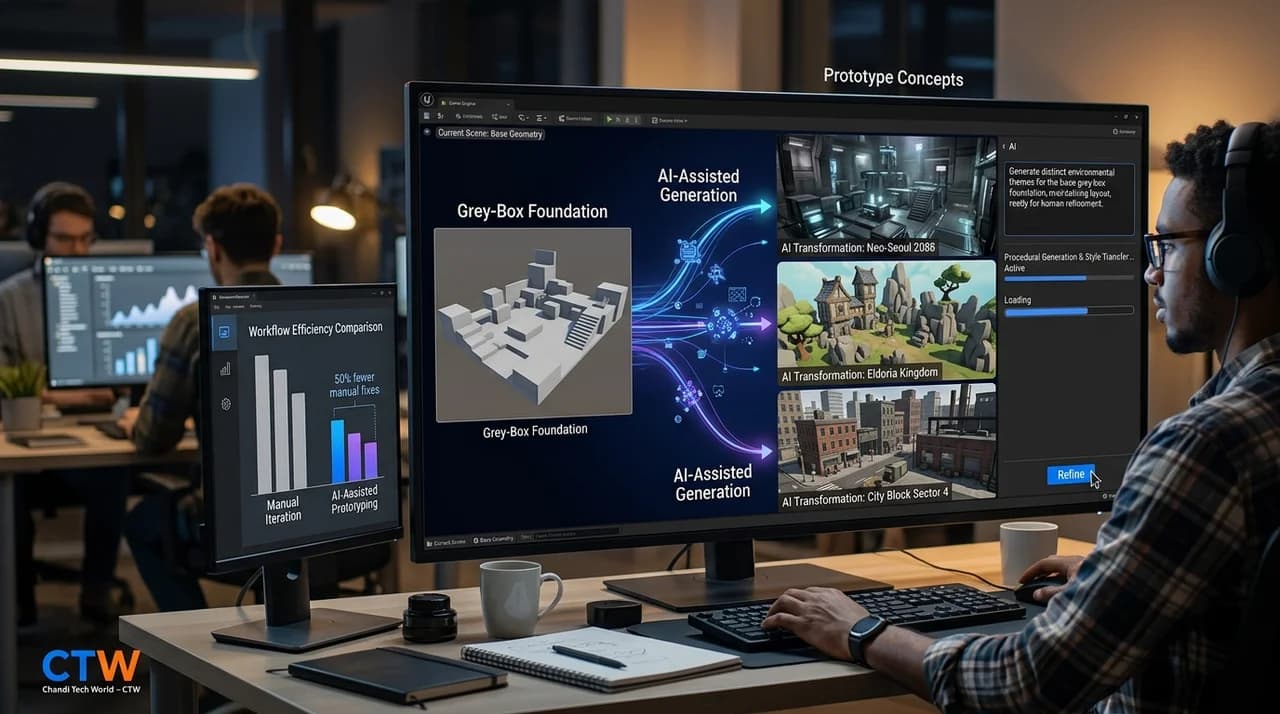
In a significant advancement for game development, Playco has harnessed the capabilities of GPT-6 Astra to streamline its game prototyping process. This innovative approach has led to the creation of three themed game prototypes built on a single grey box foundation, resulting in a remarkable 50% reduction in the need for manual fixes compared to previous models. This development highlights the growing role of artificial intelligence in enhancing efficiency and creativity within the gaming industry.
The Impact of AI on Game Development
The integration of AI technologies in game development is transforming how games are conceptualized and produced. Playco’s use of GPT-6 Astra exemplifies this trend, showcasing how AI can optimize workflows and reduce the time spent on manual corrections. By utilizing a singular grey box foundation, the company has been able to efficiently generate multiple game prototypes, thereby speeding up the development cycle. This shift not only improves productivity but also allows developers to explore more creative avenues without being bogged down by repetitive tasks.
Understanding GPT-6 Astra
GPT-6 Astra is the latest iteration of OpenAI's generative pre-trained transformer models, specifically designed to assist in various creative processes, including game development. This advanced model is capable of understanding complex prompts and generating coherent, contextually relevant outputs. For Playco, this means that the AI can help create gameplay mechanics, storylines, and even art assets, all while minimizing the need for human intervention in the initial stages of prototyping. The model's ability to produce high-quality content quickly is a game changer, enabling developers to iterate faster and refine their ideas more effectively.
Efficiency Gains in Prototyping
The reported 50% reduction in manual fixes is a significant indicator of the efficiency gains achieved through GPT-6 Astra. Traditionally, game prototyping involves numerous iterations and revisions, often leading to extensive manual adjustments. With the new AI model, Playco has streamlined this process, allowing developers to focus more on creativity and less on correcting errors. This shift is particularly beneficial in a fast-paced industry where time-to-market can be critical. By reducing the burden of manual fixes, Playco not only enhances its operational efficiency but also fosters a more dynamic and innovative development environment.
Three Themed Prototypes Developed
As part of its initiative, Playco has successfully developed three themed game prototypes using the capabilities of GPT-6 Astra. Each prototype stems from a common grey box foundation, illustrating the model's versatility and effectiveness in generating diverse gaming experiences. This approach not only showcases the potential of AI in crafting unique game concepts but also emphasizes the importance of a robust foundational structure in game design. The grey box foundation allows for rapid experimentation and iteration, enabling developers to test various gameplay mechanics and narratives without the need for extensive rework.
Future of Game Development with AI
The success of Playco with GPT-6 Astra is a promising sign for the future of game development. As AI continues to evolve, it is likely that more companies will adopt similar technologies to enhance their prototyping processes. This could lead to faster development cycles, more innovative game designs, and ultimately, a richer gaming experience for players. The gaming industry stands on the brink of a new era where AI plays an integral role in shaping the future of interactive entertainment. As the technology matures, we can expect to see even more sophisticated applications, such as personalized gaming experiences tailored to individual player preferences and behavior.
Conclusion
Playco's innovative use of GPT-6 Astra marks a significant milestone in the game prototyping landscape. By achieving a 50% reduction in manual fixes, the company not only demonstrates the power of AI but also sets a new standard for efficiency in game development. As the industry continues to embrace advanced technologies, the potential for creativity and innovation in gaming is boundless. The integration of AI tools like GPT-6 Astra could redefine the boundaries of what is possible in game design, paving the way for a new generation of interactive experiences that captivate and engage players like never before.
Key Highlights
- Playco has utilized GPT-6 Astra for game prototyping.
- The company developed three themed prototypes from one grey box foundation.
- There is a reported 50% reduction in manual fixes needed with the new model.
- GPT-6 Astra is designed to enhance various creative processes in game development.
- The integration of AI is transforming workflows in the gaming industry.
- Playco's approach speeds up the development cycle significantly.
- The future of game development may increasingly rely on AI technologies.
Expert Analysis
Technical Analysis
Playco's GPT-6 Astra leverages advanced AI capabilities to enhance the game prototyping process. This generative pre-trained transformer model is designed to understand complex prompts and generate contextually relevant outputs, which allows developers to create gameplay mechanics, storylines, and art assets with minimal human intervention. By utilizing a singular grey box foundation, Playco can efficiently produce multiple themed game prototypes, significantly streamlining the development cycle and reducing the time spent on manual corrections.
The introduction of GPT-6 Astra addresses a common challenge in game development: the extensive manual adjustments required during prototyping. The reported 50% reduction in manual fixes indicates a substantial improvement in operational efficiency. While the technology enhances creativity and productivity, it also presents limitations, such as dependence on the quality of input prompts and the potential for AI-generated content to lack the nuanced touch that human designers provide. Nevertheless, the advancements in AI-driven prototyping mark a significant shift in how games are conceptualized and produced, paving the way for more innovative and diverse gaming experiences.
Advantages
- 50% reduction in manual fixes improves operational efficiency.
- Faster development cycles allow for quicker time-to-market.
- Enables developers to focus on creativity rather than repetitive tasks.
- Facilitates rapid experimentation and iteration of game concepts.
Disadvantages
- Dependence on the quality of input prompts may limit output quality.
- AI-generated content may lack the nuanced touch of human designers.
Real-World Use Cases
- Game developers can use GPT-6 Astra to quickly prototype new game ideas.
- Studios can leverage the technology to create diverse gameplay mechanics and narratives.
- Educational institutions can incorporate AI tools in game design curricula to enhance learning experiences.
Business Impact
The integration of GPT-6 Astra into Playco's prototyping process positions the company as a leader in the gaming industry, potentially influencing competitors to adopt similar AI technologies. This shift could lead to a broader trend of AI adoption in game development, fostering innovation and efficiency across the sector. As more studios embrace these advancements, there may be significant revenue opportunities tied to faster development cycles and the creation of unique gaming experiences that attract players.
User Impact
Ordinary users stand to benefit from the enhanced gaming experiences that result from faster and more innovative game development. As Playco and potentially other companies leverage AI for prototyping, players may enjoy a wider variety of engaging games that are developed more quickly. However, some users may be concerned about the implications of AI in creative processes, particularly regarding the authenticity and originality of game content. Overall, the advancements in AI-driven prototyping suggest a positive trend for gamers looking for fresh and captivating experiences.
Security & Privacy
Security and privacy analysis not applicable.
Future Outlook
As AI technologies like GPT-6 Astra continue to evolve, the gaming industry can expect further enhancements in prototyping processes. Future developments may include even more sophisticated AI applications that allow for personalized gaming experiences tailored to individual player preferences. The trend suggests that AI will become an integral part of game design, leading to a new era of interactive entertainment characterized by rapid innovation and creativity.
Expert Summary
Playco's use of GPT-6 Astra represents a significant advancement in game prototyping, showcasing the potential of AI to transform the gaming industry. Developers, studios, and educators should pay attention to these developments as they signal a shift towards more efficient and creative game design processes. Overall, this news highlights the importance of AI in shaping the future of gaming, making it a crucial area for stakeholders to monitor.
Originally reported by OpenAI News.



