
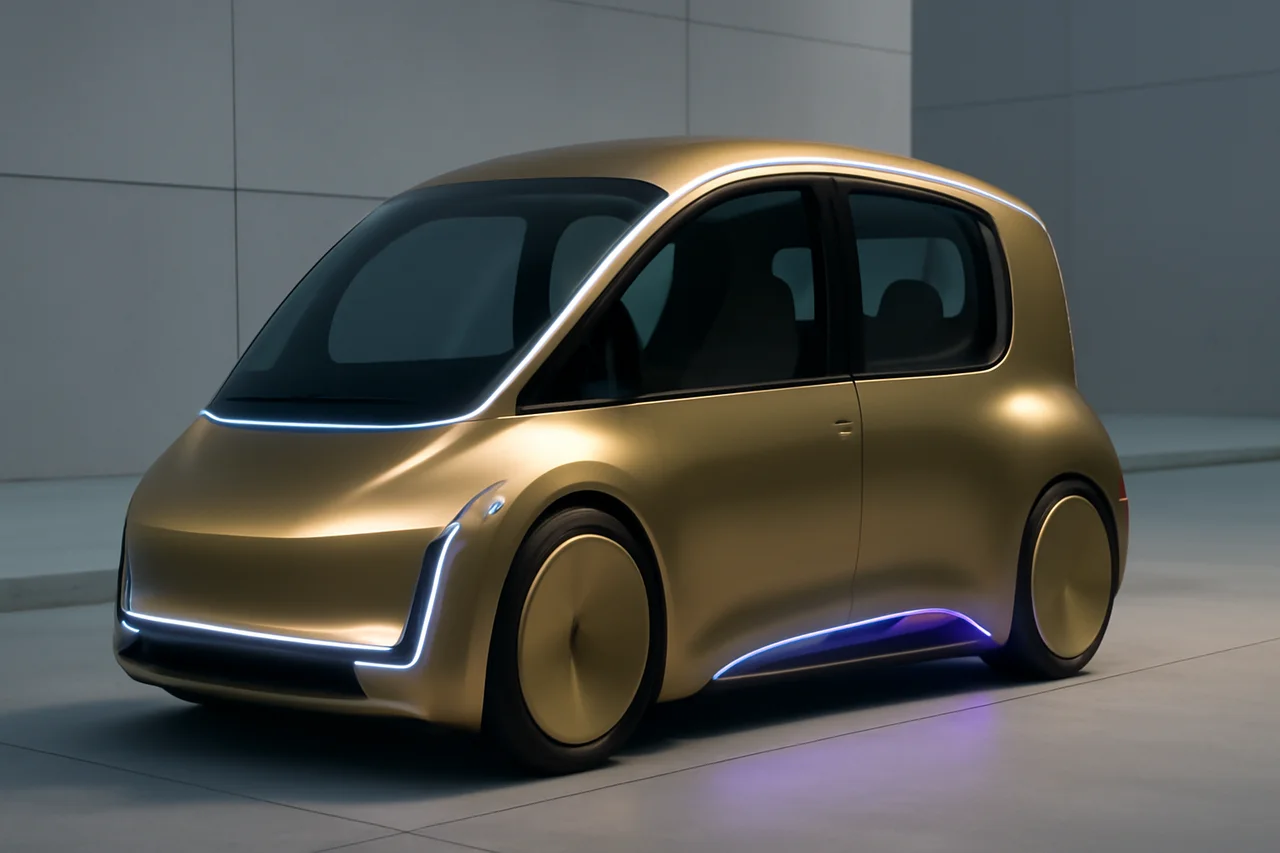
Tesla is on the brink of unveiling its latest innovation, the Cybercab, a two-seater vehicle that is set to redefine personal transportation. With a striking gold exterior and a design that eschews traditional driving controls, this vehicle could represent a significant pivot for the company. As Tesla prepares for this launch, industry experts are watching closely, as it could mark a transformative moment in the automotive sector.
Innovative Design Features
The Cybercab stands out due to its radical design, which eliminates the steering wheel and pedals entirely. This departure from conventional vehicle architecture is not just aesthetic; it signifies Tesla's commitment to advancing automated driving technology. The absence of traditional controls suggests that the Cybercab is intended to operate primarily in autonomous mode, allowing passengers to enjoy a new kind of travel experience. This innovative approach may also reflect a growing trend in the automotive industry where manufacturers are increasingly prioritizing user experience and comfort over traditional driving dynamics.
A Shift in Tesla's Trajectory
The launch of the Cybercab is seen as a pivotal moment that could change Tesla forever. As the company continues to push boundaries in electric vehicle technology, the introduction of such an unconventional model could pave the way for future innovations. Industry analysts believe that this move towards more autonomous, user-friendly designs may attract a broader audience, potentially reshaping Tesla’s market position. By stepping away from conventional vehicle design, Tesla is not only reinforcing its image as a leader in innovation but also challenging competitors to rethink their strategies in an evolving market.
Market Implications
The Cybercab's launch could have significant implications for Tesla's competitors and the automotive market as a whole. By embracing a design that prioritizes automation and passenger comfort, Tesla may set new standards that other manufacturers will feel compelled to follow. This could lead to a shift in consumer expectations regarding vehicle functionality and design. As other companies scramble to keep up with Tesla's advancements, we may see a surge in investment in autonomous vehicle technology across the industry. The Cybercab could serve as a catalyst for change, prompting a reevaluation of what consumers expect from their vehicles in terms of technology, safety, and convenience.
Consumer Reception
As Tesla prepares for the Cybercab's debut, consumer interest is already high. Early reactions to the vehicle's design and concept have been mixed, with some praising its boldness while others express skepticism about the practicality of a steering-less vehicle. Concerns about safety, usability, and the learning curve associated with fully autonomous vehicles are prevalent among potential buyers. However, the true test will come once the Cybercab is available for public use, allowing potential buyers to experience its features firsthand. Consumer feedback will be crucial in determining whether the Cybercab can successfully penetrate the market and establish a loyal customer base.
The Future of Tesla and Mobility
Looking ahead, the Cybercab may not just be a new model for Tesla, but a glimpse into the future of mobility. As urban environments evolve and the demand for sustainable transportation increases, Tesla's focus on innovative designs could position the company as a leader in the next generation of vehicles. The Cybercab could serve as a blueprint for future models that prioritize efficiency, sustainability, and user experience. The integration of advanced technologies such as artificial intelligence and machine learning in the Cybercab could further enhance its capabilities, making it a benchmark for future innovations in the automotive sector.
Conclusion
In summary, the upcoming launch of the Tesla Cybercab represents a crucial moment for the company and the automotive industry at large. With its groundbreaking design and potential for enhanced automation, the Cybercab may very well be a turning point that influences the direction of Tesla and the future of transportation. As the world watches, Tesla continues to challenge the status quo, and the Cybercab is just the latest example of its innovative spirit. The implications of this launch extend beyond Tesla itself, potentially reshaping consumer expectations and industry standards for years to come.
Key Highlights
- Tesla is set to launch the Cybercab, a revolutionary two-seater vehicle.
- The Cybercab features no steering wheel or pedals, emphasizing automation.
- This launch could be a defining moment for Tesla's future in the automotive industry.
- The design shift may attract a broader consumer base to Tesla's offerings.
- The market implications of the Cybercab could influence other manufacturers.
- Consumer reactions to the Cybercab's design are mixed but highly anticipated.
- The Cybercab may serve as a blueprint for the future of sustainable mobility.
Expert Analysis
Technical Analysis
The Tesla Cybercab represents a significant advancement in automotive technology, particularly in the realm of autonomous driving. By eliminating traditional driving controls such as the steering wheel and pedals, Tesla is signaling a shift towards a fully automated driving experience. This design choice not only enhances passenger comfort but also aligns with the growing trend of prioritizing user experience in vehicle design. The Cybercab is expected to operate primarily in autonomous mode, utilizing advanced sensors and AI algorithms to navigate and respond to its environment, thereby solving the problem of driver fatigue and enhancing overall travel convenience.
What sets the Cybercab apart from traditional vehicles is its radical departure from conventional automotive architecture. This innovative approach may lead to improvements in safety and efficiency, as the vehicle can be designed specifically for autonomous operation without the constraints of accommodating human driving. However, this also raises limitations, such as the need for robust safety measures and public acceptance of steering-less vehicles. The success of the Cybercab will depend on its ability to address these challenges while delivering a seamless user experience.
Advantages
- Elimination of traditional driving controls enhances passenger comfort and experience.
- Focus on automation could lead to reduced driver fatigue and increased safety.
- Potential to attract a broader audience interested in innovative transportation solutions.
- Establishes Tesla as a leader in the evolving automotive market, setting new standards for design and functionality.
Disadvantages
- Concerns about the practicality and safety of a steering-less vehicle.
- Potential learning curve for users unfamiliar with fully autonomous systems.
Real-World Use Cases
- Urban commuters seeking a comfortable and efficient mode of transportation.
- Individuals who prefer not to drive due to personal preferences or disabilities.
- Businesses looking to implement autonomous vehicle solutions for employee transport.
- Ride-sharing services that can utilize the Cybercab for enhanced passenger experience.
Business Impact
The launch of the Cybercab could significantly impact Tesla's market position, potentially attracting new customers and reshaping consumer expectations in the automotive sector. As Tesla continues to innovate, competitors may be compelled to accelerate their own advancements in autonomous vehicle technology to keep pace. This could lead to increased investment across the industry, fostering a competitive environment that prioritizes automation and user experience.
Furthermore, the Cybercab's introduction may open new revenue opportunities for Tesla, not only through vehicle sales but also through potential partnerships in the autonomous driving space. As consumer interest grows, Tesla could capitalize on its innovative image to expand its market share and influence the direction of future automotive developments.
User Impact
Ordinary users stand to benefit from the Cybercab's innovative features, particularly those who prioritize comfort and convenience in their travel experiences. The shift towards a fully autonomous vehicle could appeal to individuals who may not be comfortable driving or those seeking a more relaxed mode of transportation. However, skepticism regarding safety and usability may deter some potential buyers, particularly those who are accustomed to traditional driving controls. Overall, the Cybercab represents a significant step towards a new era of mobility, and its adoption will depend on consumer acceptance of its unique design and functionality.
Security & Privacy
Security and privacy analysis not applicable.
Future Outlook
In the near term, the Cybercab's launch is likely to prompt increased interest in autonomous vehicle technology across the automotive industry. As Tesla sets new standards for design and functionality, other manufacturers may be encouraged to innovate and adapt their offerings to meet evolving consumer expectations. Future developments could include enhancements in AI integration and safety features, as well as broader acceptance of steering-less vehicles as the technology matures.
Additionally, as urban environments continue to evolve and the demand for sustainable transportation grows, Tesla's focus on innovative designs like the Cybercab may position the company as a leader in the next generation of vehicles, paving the way for further advancements in mobility solutions.
Expert Summary
The unveiling of the Tesla Cybercab is a pivotal moment for both the company and the automotive industry. Its groundbreaking design and emphasis on automation could redefine consumer expectations and challenge competitors to innovate. Stakeholders in the automotive sector, including manufacturers, investors, and consumers, should pay close attention to this development, as it may signal the future direction of personal transportation and the role of technology in shaping mobility.
Originally reported by TechCrunch.



