
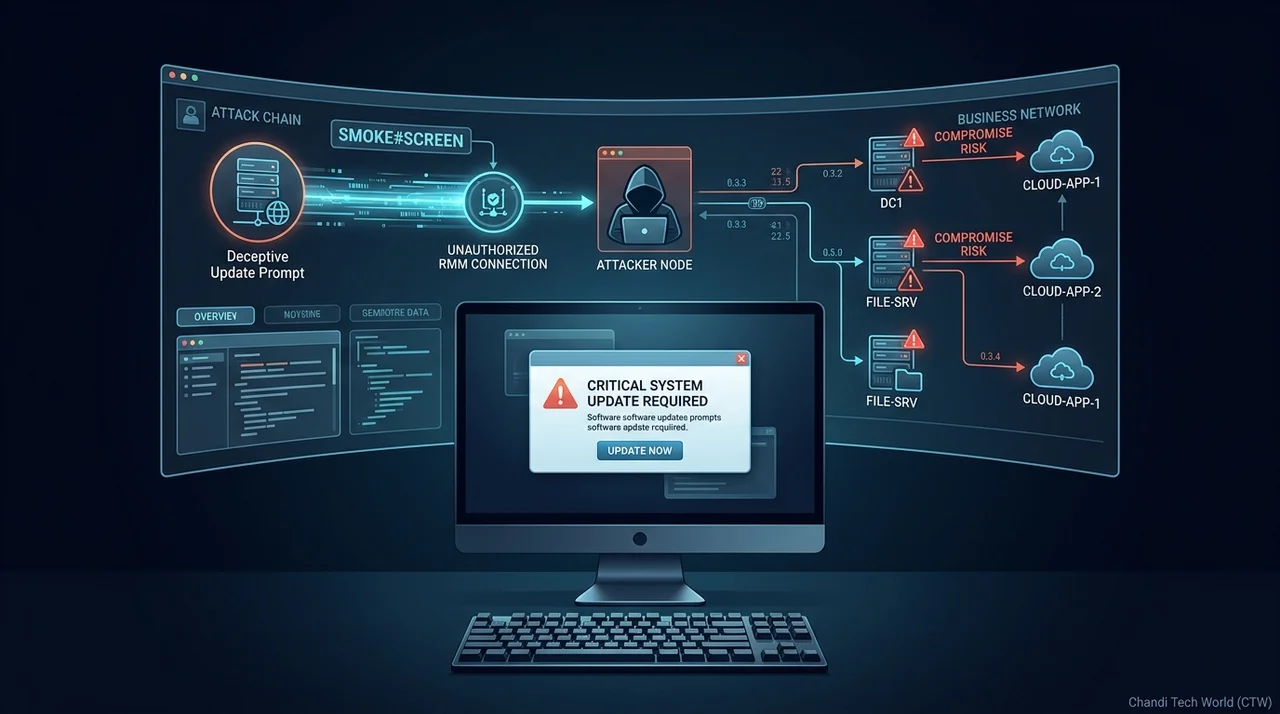
In the ever-evolving landscape of cybersecurity threats, a new campaign has emerged that exploits social engineering tactics to deceive users into installing malicious software. Researchers from Securonix Threat have identified this operation, codenamed SMOKE#SCREEN, which primarily targets unsuspecting businesses through fake software updates for popular applications like Adobe and Zoom.
Understanding the SMOKE#SCREEN Campaign
The SMOKE#SCREEN campaign is characterized by its multi-wave approach, utilizing various deceptive strategies to lure individuals into downloading harmful software. By masquerading as legitimate updates from trusted companies, attackers are able to gain access to sensitive systems. This method not only highlights the effectiveness of social engineering but also underscores the need for vigilance in software management.
Social engineering attacks have become increasingly sophisticated, leveraging the trust that users place in well-known brands. The attackers behind SMOKE#SCREEN have meticulously crafted their approach to mimic legitimate software update notifications, which are often routine in the digital workspace. By exploiting this trust, they can bypass many of the traditional security measures that organizations have in place.
How the Attack Works
At the core of this malicious campaign are fake notifications that prompt users to install what appear to be critical updates for Adobe and Zoom. Once the user agrees, the installation process begins, but instead of legitimate software, Remote Monitoring and Management (RMM) tools like ConnectWise ScreenConnect are deployed. These tools enable attackers to maintain persistent remote access to the compromised systems, raising significant security concerns.
Once installed, these RMM tools can allow attackers to control the victim's system as if they were the legitimate user. This level of access can lead to a range of malicious activities, including data exfiltration, system manipulation, and further penetration into the organization’s network. The implications of such access can be dire, potentially leading to extensive data breaches and significant operational disruptions.
Implications for Business Security
The implications of the SMOKE#SCREEN campaign are profound, particularly for businesses that rely heavily on software updates for operational efficiency. With the rise of remote work, employees may be more susceptible to these types of phishing attacks. The deceptive nature of the campaign can lead to unauthorized access to sensitive data, potentially resulting in financial loss and reputational damage.
Moreover, the fallout from such breaches can extend beyond immediate financial losses. Organizations may face regulatory scrutiny, legal challenges, and a loss of customer trust. In an era where data breaches are increasingly common, the reputational damage from a successful attack can have long-lasting effects on a business’s viability.
Identifying the Threat
Recognizing the signs of such attacks is crucial for prevention. Organizations should train employees to be cautious when prompted to install updates, especially from unfamiliar sources. Key indicators of a potential phishing attempt include:
- Unexpected prompts for software updates.
- Emails or notifications that contain grammatical errors or unusual language.
- Requests for sensitive information during the update process.
- Links that do not lead to official websites or domains.
By educating employees about these indicators, organizations can foster a culture of security awareness that can significantly reduce the likelihood of falling victim to such attacks.
Best Practices for Protection
To safeguard against the threats posed by campaigns like SMOKE#SCREEN, businesses should implement a robust cybersecurity strategy. This can include:
- Regular employee training on recognizing phishing attempts and social engineering tactics.
- Utilizing endpoint detection and response tools to monitor and manage software installations.
- Establishing a clear protocol for verifying software updates from trusted vendors.
- Implementing multi-factor authentication to add an additional layer of security.
- Conducting regular security audits and vulnerability assessments to identify and mitigate potential risks.
By taking these proactive measures, organizations can better defend themselves against the evolving tactics used by cybercriminals.
Conclusion
As cyber threats continue to evolve, it is imperative for businesses to stay informed and proactive. The SMOKE#SCREEN campaign serves as a stark reminder of the risks associated with social engineering tactics and the importance of maintaining rigorous security measures. By understanding the nature of these attacks and implementing best practices, organizations can better protect themselves against potential breaches, ensuring not only their operational integrity but also the trust of their customers and stakeholders.
Key Highlights
- A new cybersecurity campaign named SMOKE#SCREEN has been identified.
- The campaign uses fake Adobe and Zoom updates to install malware.
- Attackers deploy ConnectWise ScreenConnect for persistent remote access.
- Businesses are at significant risk due to these deceptive tactics.
- Employee training is crucial for recognizing phishing attempts.
- Key indicators of phishing include unexpected update prompts and errors.
- Implementing robust cybersecurity strategies can mitigate risks.
Expert Analysis
Technical Analysis
The SMOKE#SCREEN campaign utilizes social engineering tactics to deceive users into installing malicious software disguised as legitimate updates for widely used applications such as Adobe and Zoom. This campaign highlights the growing sophistication of cyber threats, where attackers exploit the inherent trust users have in well-known brands. By mimicking the appearance of genuine software update notifications, these attackers can bypass traditional security measures, making it imperative for organizations to adopt a proactive stance in software management and user education.
At the heart of the attack are Remote Monitoring and Management (RMM) tools, specifically ConnectWise ScreenConnect, which are deployed under the guise of critical updates. Once installed, these tools provide attackers with persistent remote access to compromised systems, enabling a range of malicious activities such as data exfiltration and system manipulation. The implications of such access are severe, potentially leading to extensive data breaches and significant operational disruptions, underscoring the need for organizations to implement robust cybersecurity strategies to mitigate these risks.
Advantages
- Increased awareness of social engineering tactics among employees.
- Potential for improved organizational security through training and best practices.
- Enhanced monitoring and management of software installations with endpoint detection tools.
- Strengthened security posture through multi-factor authentication.
Disadvantages
- No major disadvantages reported yet.
Real-World Use Cases
- Businesses can train employees to recognize phishing attempts and suspicious software update prompts.
- Organizations can implement endpoint detection and response tools to monitor software installations.
- Companies can establish protocols for verifying software updates from trusted vendors to reduce risk.
- Educational institutions can incorporate cybersecurity awareness training into their curriculum to prepare students for real-world threats.
Business Impact
The SMOKE#SCREEN campaign poses a significant threat to businesses, particularly those that rely on software updates for operational efficiency. As remote work becomes more prevalent, the risk of falling victim to such phishing attacks increases. Organizations that experience a successful breach may face not only financial losses but also regulatory scrutiny and reputational damage, which can have long-lasting effects on their market position and customer trust. This situation creates an opportunity for cybersecurity firms to offer enhanced training and protective solutions to businesses looking to safeguard their operations.
Competitors in the cybersecurity space may need to adapt their offerings to address the evolving tactics employed by cybercriminals. This could lead to increased investment in advanced threat detection technologies and employee training programs, ultimately reshaping the industry landscape as businesses prioritize cybersecurity in their operational strategies.
User Impact
Ordinary users stand to benefit from increased awareness of the risks associated with phishing attacks and the importance of verifying software updates. By understanding the tactics used in campaigns like SMOKE#SCREEN, users can better protect themselves and their organizations from potential breaches. However, users who do not engage with cybersecurity training or remain unaware of these threats may find themselves at greater risk. Overall, the adoption of best practices in cybersecurity is worth considering for individuals and businesses alike, as it can significantly enhance their defense against evolving cyber threats.
Security & Privacy
Security and privacy analysis not applicable.
Future Outlook
In the near term, organizations are likely to increase their focus on employee training and awareness programs to combat the rising threat of social engineering attacks. Additionally, advancements in endpoint detection and response technologies may emerge as businesses seek to bolster their defenses against sophisticated phishing attempts. As cyber threats continue to evolve, the cybersecurity industry will need to adapt rapidly, potentially leading to the development of new tools and strategies aimed at preventing such attacks from compromising sensitive business operations.
Expert Summary
The emergence of the SMOKE#SCREEN campaign underscores the critical need for businesses to remain vigilant against social engineering tactics in cybersecurity. Organizations should prioritize employee training and robust security measures to mitigate the risks associated with deceptive software updates. This news is particularly relevant for IT professionals, business leaders, and anyone involved in organizational security, as it highlights the ongoing challenges posed by cybercriminals and the importance of proactive defense strategies.
Originally reported by The Hacker News.



