
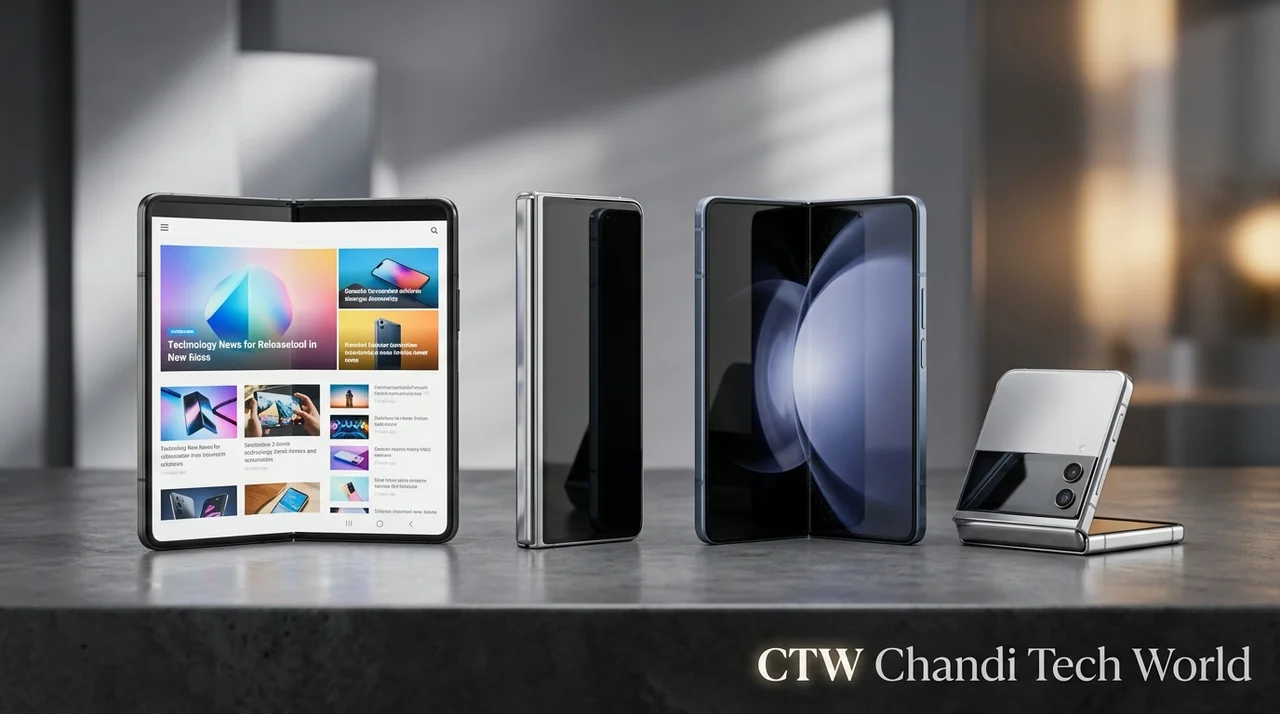
5 Foldable Phones to Buy Instead of the Google Pixel 11 Pro Fold
The Google Pixel 11 Pro Fold brings a thinner design, an 8-inch inner display, and magnetic wireless charging to Google's foldable lineup. But at around $1,899, it faces strong competition from Samsung and Motorola. Here are five alternatives worth considering, whether you want better multitasking, a larger battery, or a more affordable foldable.
Foldable smartphones have come a long way from their early days. Better displays, more capable processors, and improved software have made them increasingly practical for everyday use. However, not every foldable is designed for the same kind of buyer.
Some models prioritize a large inner screen for productivity and entertainment. Others focus on portability, camera hardware, battery capacity, or value for money.
Google's Pixel 11 Pro Fold offers an 8-inch folding display and a 6.5-inch cover screen. Its refined design makes it a serious option, but its price means buyers should compare it carefully with the competition.
According to Android Authority's comparison, these five Android foldables are worth considering before spending nearly $1,900 on Google's newest model.
1. Motorola Razr Fold: A Strong All-Round Alternative
The Motorola Razr Fold is one of the closest competitors to the Pixel 11 Pro Fold because it offers a book-style folding design with a large inner display.
Its 8.1-inch main screen provides slightly more display space than Google's 8-inch panel. Motorola also equips the device with a 6.6-inch cover display, making it suitable for quick tasks when the phone is closed.
Battery capacity is another major advantage. The Razr Fold features a 6,000mAh silicon-carbon battery, compared with the Pixel 11 Pro Fold's 4,806mAh typical battery capacity listed by Google. Motorola also supports up to 80W wired charging and 50W wireless charging, giving it an advantage for buyers who prioritize charging speed.
The camera hardware is competitive, too. The Razr Fold has three 50MP rear cameras, including a periscope-style zoom camera. That setup may appeal to people who want more photographic flexibility from a foldable phone.
There are trade-offs, however. Motorola's device is not necessarily thinner or lighter than Google's foldable, and its software-update commitment is shorter than what many buyers expect from a premium phone.
Best for: Buyers who want a large display, substantial battery capacity, fast charging, and versatile cameras.
2. Samsung Galaxy Z Fold 8: A Wider Screen for Everyday Use
Samsung's Galaxy Z Fold 8 takes a different approach to foldable design. Instead of prioritizing the largest possible inner display, it uses a wider form factor intended to make everyday interactions more comfortable.
The phone has a 5.5-inch cover display and a 7.6-inch folding screen. While these screens are smaller than the Pixel 11 Pro Fold's displays, the Galaxy's inner screen uses a wider 4:3 aspect ratio.
That difference matters when watching widescreen videos or using applications that benefit from a more landscape-oriented layout. It can reduce the feeling of unused space compared with a nearly square display, although black bars may still appear with widescreen content.
Samsung also offers a Snapdragon 8 Elite Gen 5 for Galaxy processor, a 4,800mAh battery, and 45W wired charging. These features make it a compelling choice for people who value performance and multimedia use.
The design comes with compromises. The smaller cover display may not be ideal for everyone, and the phone lacks a dedicated telephoto camera.
At a starting price of approximately $1,899, the Galaxy Z Fold 8 competes directly with Google's foldable.
Best for: Users who prefer a wider foldable design, strong performance, and an inner display suited to video playback and multitasking.
3. Samsung Galaxy Z Fold 8 Ultra: A Premium Upgrade
If budget is less important than hardware, Samsung's Galaxy Z Fold 8 Ultra is another option.
The Ultra model is designed for buyers who want a premium book-style foldable without making major compromises in display size, performance, or camera hardware.
It features an 8-inch folding display and a 6.5-inch cover screen, matching Google's screen sizes. Samsung's device is also notably thin, measuring approximately 8.9mm when folded, and weighs around 215 grams.
Under the hood, it uses the Snapdragon 8 Elite Gen 5 for Galaxy processor and a 5,000mAh silicon-carbon battery. The rear camera system includes a 200MP main camera, a 50MP ultrawide camera, and a 10MP telephoto camera.
These specifications make it attractive to people who want a large-screen phone with flagship-level hardware.
The main drawback is the price. With a starting price of approximately $2,099, the Galaxy Z Fold 8 Ultra costs about $200 more than the Pixel 11 Pro Fold.
It also lacks the magnetic Qi2 charging advantage offered by Google's device. Buyers should therefore compare the overall experience rather than assuming that the more expensive model is automatically the better choice.
Best for: Buyers who want a thin, lightweight premium foldable with powerful hardware and a high-resolution main camera.
4. Motorola Razr Ultra (2025): A More Affordable Foldable
Not everyone needs a large book-style foldable. If portability and price matter more than having an 8-inch inner screen, the Motorola Razr Ultra (2025) is worth considering.
Unlike the Pixel 11 Pro Fold, the Razr Ultra uses a clamshell design. It folds vertically into a compact shape, making it easier to carry in a pocket or a small bag.
When opened, its 7-inch main display offers plenty of space for messaging, browsing, social media, and video. The external display also makes it possible to check notifications and handle some quick tasks without unfolding the phone.
The 2025 model uses Qualcomm's Snapdragon 8 Elite processor and includes a 4,700mAh battery. It supports up to 68W wired charging, which is faster than the Pixel 11 Pro Fold's supported wired charging rate.
Price is its biggest advantage. Android Authority reports that the previous-generation Razr Ultra has been available for under $800 in some US retail listings, although actual prices depend on stock, condition, and seller.
There is an important limitation: the phone launched with a shorter software-update commitment than Google offers for its newer flagship devices. Since it is already a previous-generation model, buyers should check how many updates remain.
Best for: People who want a premium flip phone at a substantially lower price than a large-screen foldable.
5. Original Google Pixel Fold: A Lower-Cost Option for Pixel Fans
If you prefer Google's software and camera experience but cannot justify the Pixel 11 Pro Fold's price, the original Google Pixel Fold may be worth considering.
Released in 2023, the first Pixel Fold is older and heavier than current foldables. Its hinge and bezels also feel less refined than those of newer models.
However, it still offers a 7.6-inch inner display, a 5.8-inch cover screen, and Google's Pixel software experience. Its camera system and compact, wider cover-screen design remain appealing to some users.
The original model runs on the Tensor G2 processor, which is considerably older than the Tensor G6 in the Pixel 11 Pro Fold. Buyers should not expect the same performance, efficiency, or long-term support runway as a newer device.
Its value depends heavily on the price. Android Authority reported that new units could be found for around $600, with used and refurbished models sometimes costing less. These prices can change quickly, so check the device's condition, warranty, and remaining software support before buying.
A used foldable also deserves a careful inspection. Check the hinge, inner display, outer glass, battery condition, and whether the seller provides a return policy.
Best for: Pixel fans who want a foldable experience for much less money and are comfortable buying an older model.
Quick Comparison: Which Foldable Fits Your Needs?
| Phone | Main advantage | Main compromise |
|---|---|---|
| Motorola Razr Fold | 8.1-inch display and 6,000mAh battery | Shorter software-update commitment |
| Samsung Galaxy Z Fold 8 | Wide inner screen and powerful processor | Smaller cover and inner displays |
| Samsung Galaxy Z Fold 8 Ultra | Thin design and flagship camera hardware | Higher price |
| Motorola Razr Ultra (2025) | Compact design and lower cost | Smaller inner screen and older hardware |
| Original Google Pixel Fold | Lower-cost entry into Google's foldable ecosystem | Older processor, heavier design, and shorter remaining support |
Specifications and retail prices can vary by market. The comparison above is intended to help buyers narrow down their choices, not replace checking the exact configuration available in their country.
What About the Pixel 11 Pro Fold?
Google's foldable remains a strong option if you want a large screen, Google's software experience, and modern connectivity features.
Google lists an 8-inch inner display, a 6.5-inch cover display, a Tensor G6 processor, and a typical 4,806mAh battery. The device also supports Pixelsnap magnetic wireless charging based on Qi2.2, with wireless charging up to 25W when using compatible accessories.
Its slimmer design and updated hardware make it more competitive than its predecessor. However, the relatively high starting price means buyers should decide whether Google's software and features matter more to them than another phone's battery capacity, camera hardware, charging speed, or price.
You can review Google's official Pixel 11 Pro Fold specifications before making a purchase decision.
Final Verdict
The Google Pixel 11 Pro Fold is not the only compelling foldable in the market. Motorola's Razr Fold offers a larger battery and faster charging, while Samsung's Galaxy Z Fold 8 delivers a wider inner display that may work better for certain types of content.
For buyers seeking premium hardware, the Galaxy Z Fold 8 Ultra is worth comparing, though its higher price will not suit everyone. Those who prefer a compact flip phone can consider the Motorola Razr Ultra (2025), while the original Pixel Fold provides a potentially more affordable route into Google's foldable ecosystem.
The best alternative depends on your priorities: choose battery capacity and charging speed, display proportions, camera hardware, software support, or price before deciding which phone deserves your money.
Source: Android Authority — “5 Android phones you should buy instead of the Google Pixel 11 Pro Fold.”. This CTW article is an independent rewrite of the original comparison, not a first-hand test of every device listed.
Originally reported by Android Authority.



