
Samsung Galaxy Z Fold8: Wider Design, Snapdragon 8 Elite Gen 5 and Dual 50MP Cameras
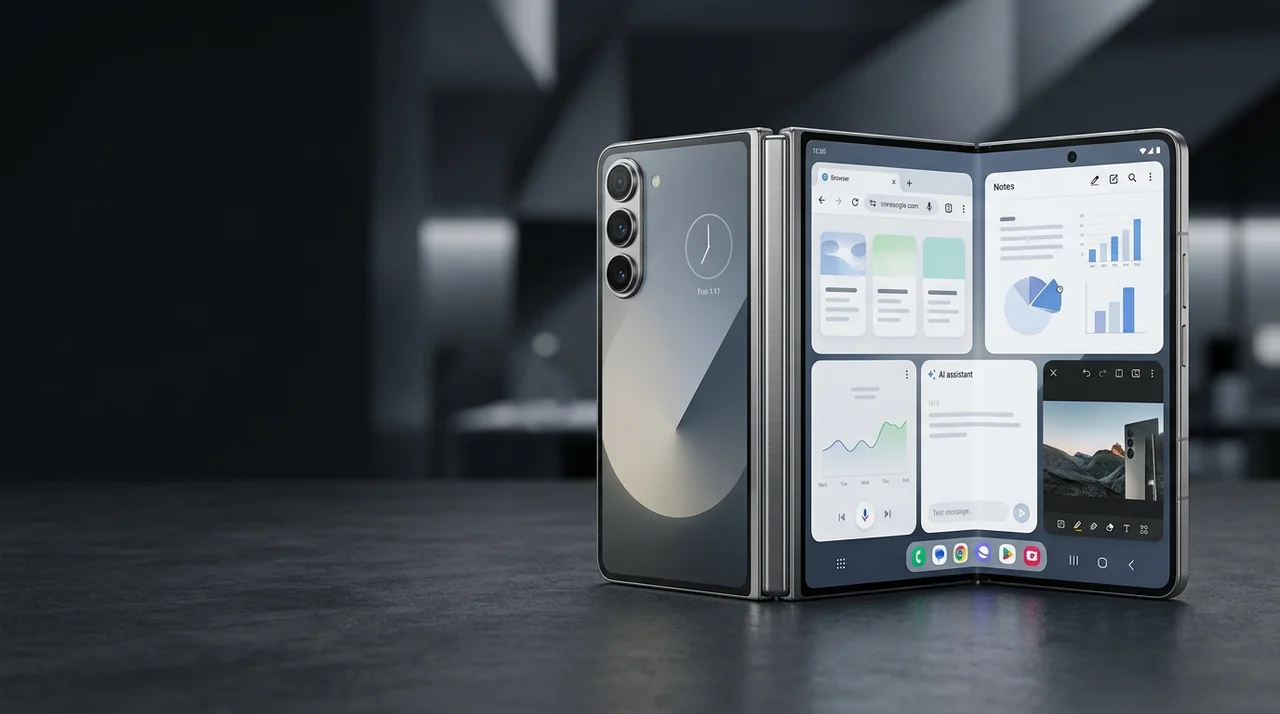
Samsung has officially unveiled the Galaxy Z Fold8, introducing a redesigned foldable smartphone with a shorter, wider form factor, a 4:3 main display, the Snapdragon 8 Elite Gen 5 for Galaxy processor, and a dual 50MP rear-camera system.
The Galaxy Z Fold8 was unveiled at Samsung's Galaxy Unpacked event in London on July 22, 2026, with availability beginning in August. The new design represents a notable shift from the taller, narrower proportions used by earlier Galaxy Z Fold models.
A Shorter and Wider Foldable Design
The most noticeable change to the Galaxy Z Fold8 is its new shape. Samsung has moved toward a wider, shorter design intended to make the phone more comfortable to use while improving the experience of viewing content on the large internal display.
The Fold8 features a 5.5-inch cover screen and a 7.6-inch main display. When unfolded, the internal screen uses a 4:3 aspect ratio, giving the device a broader canvas for videos, reading, browsing, gaming, and multitasking.
The phone weighs 201 grams, making it Samsung's lightest Galaxy Z Fold model to date. Samsung also redesigned the device's overall proportions around content consumption and more comfortable everyday handling.
This is more than a cosmetic redesign. The wider internal display changes how applications, documents, websites, and media can be viewed when the phone is unfolded.
Snapdragon 8 Elite Gen 5 for Galaxy
Powering the Galaxy Z Fold8 is Qualcomm's Snapdragon 8 Elite Gen 5 for Galaxy. Samsung says the customized platform combines CPU, GPU, and NPU improvements to support demanding applications, graphics, and on-device AI features.
The processor is also closely tied to Samsung's latest Galaxy AI capabilities. The NPU handles AI workloads directly on the device, while the upgraded CPU and GPU provide the performance required for multitasking, gaming, streaming, and other demanding tasks.
Storage configurations include 256GB, 512GB, and 1TB, with the 1TB model paired with 16GB of memory while the lower-capacity versions use 12GB. Availability can vary by market.
Dual 50MP Rear Cameras
Samsung has equipped the standard Galaxy Z Fold8 with a dual-camera rear system rather than the larger camera setup found on the Fold8 Ultra.
The rear system consists of:
50MP wide camera with OIS
50MP ultra-wide camera
10MP cover-screen camera
10MP main-screen camera
The 50MP wide camera supports 2x optical-quality zoom, while the ultra-wide camera provides a 120-degree field of view. Samsung also supports video recording at up to 8K at 30fps.
Samsung's ProVisual Engine is designed to improve image processing, noise reduction, and low-light photography. The company has also introduced features such as Dual Recording, allowing users to capture the subject and their own reaction in the same recording.
One important distinction is that the standard Fold8 does not have the 200MP main camera or dedicated telephoto camera found on the Galaxy Z Fold8 Ultra. That makes the two models meaningfully different for users who prioritize long-range photography.
Battery Life and Charging
The Galaxy Z Fold8 includes a 4,800mAh dual battery. Samsung rates it for up to 26 hours of continuous video playback, although actual battery life will vary according to network conditions, brightness, applications, and usage patterns.
The phone also supports 45W wired charging. Samsung says the battery can reach approximately 63% in around 30 minutes when used with a compatible 45W adapter and 3A USB-C cable.
For users who regularly stream video, read documents, browse the web, or work while traveling, the combination of the larger internal display and improved power management makes battery endurance particularly relevant.
Galaxy AI and Software
The Galaxy Z Fold8 runs Samsung's latest foldable software experience and is built around Android 17 and One UI 9.
Samsung has expanded AI functionality across the device, including features designed for productivity, photography, content creation, and contextual assistance. The hardware's NPU provides local processing for supported AI workloads, reducing reliance on cloud processing for certain tasks.
The wider 4:3 internal display also gives Samsung more room to implement multitasking and content-focused features. Users can take advantage of the larger screen for reading, browsing, video playback, and working with multiple applications.
Galaxy Z Fold8 vs. Galaxy Z Fold8 Ultra
Samsung's 2026 lineup includes both the standard Galaxy Z Fold8 and the higher-end Galaxy Z Fold8 Ultra.
The distinction is important. The Fold8 uses the dual 50MP camera system and a 4,800mAh battery, while the Fold8 Ultra moves to a more advanced camera configuration and a larger 5,000mAh battery. The Ultra also targets users who want a larger productivity-focused foldable experience.
This means the standard Fold8 is not simply a smaller version of the Ultra. Samsung has positioned the two devices around somewhat different use cases, with the Fold8 emphasizing portability and content consumption.
What the New Design Means for Everyday Use
The wider form factor is arguably the most significant change for ordinary users.
When closed, the cover screen is designed around a 10:16 aspect ratio, while opening the device provides a much wider 4:3 workspace. This makes the Fold8 particularly suited to activities such as reading articles, viewing documents, browsing websites, watching videos, and using multiple apps.
The 201-gram weight is another important factor. Foldable phones traditionally carry a weight penalty because of their hinge and dual-display construction. Samsung's latest design reduces that burden while maintaining a large internal screen.
However, the wider design does not eliminate every compromise associated with foldables. Buyers still need to consider the long-term durability of a flexible display and hinge, app optimization for the unusual screen ratio, and the higher cost associated with premium foldable hardware.
Key Specifications
| Feature | Galaxy Z Fold8 |
|---|---|
| Main display | 7.6-inch Dynamic AMOLED 2X |
| Main display aspect ratio | 4:3 |
| Cover display | 5.5-inch |
| Weight | 201g |
| Processor | Snapdragon 8 Elite Gen 5 for Galaxy |
| Rear cameras | 50MP wide + 50MP ultra-wide |
| Cover camera | 10MP |
| Main-screen camera | 10MP |
| Battery | 4,800mAh |
| Video playback | Up to 26 hours |
| Wired charging | Up to 45W |
| Video recording | Up to 8K at 30fps |
| Storage | 256GB / 512GB / 1TB |
| RAM | 12GB / 16GB depending on configuration |
| Launch | July 22, 2026 |
| Availability | August 2026 |
Specifications are based on Samsung's published Galaxy Z Fold8 information and can vary by market.
Final Take
The Galaxy Z Fold8 represents a substantial redesign of Samsung's standard foldable rather than a simple specification upgrade.
Its shorter and wider body, 4:3 internal display, 201-gram weight, Snapdragon 8 Elite Gen 5 for Galaxy processor, and dual 50MP camera system give it a distinct identity within Samsung's 2026 foldable lineup.
The biggest question is no longer whether Samsung can make a powerful foldable. The company has already demonstrated that. The more important question for buyers is whether the wider form factor and large 4:3 display fit their daily workflow better than a conventional flagship smartphone or the more expensive Galaxy Z Fold8 Ultra.
For users who value a large screen in a relatively portable package, the Galaxy Z Fold8 is one of Samsung's most significant foldable redesigns to date.*
Originally reported by The Verge.



