
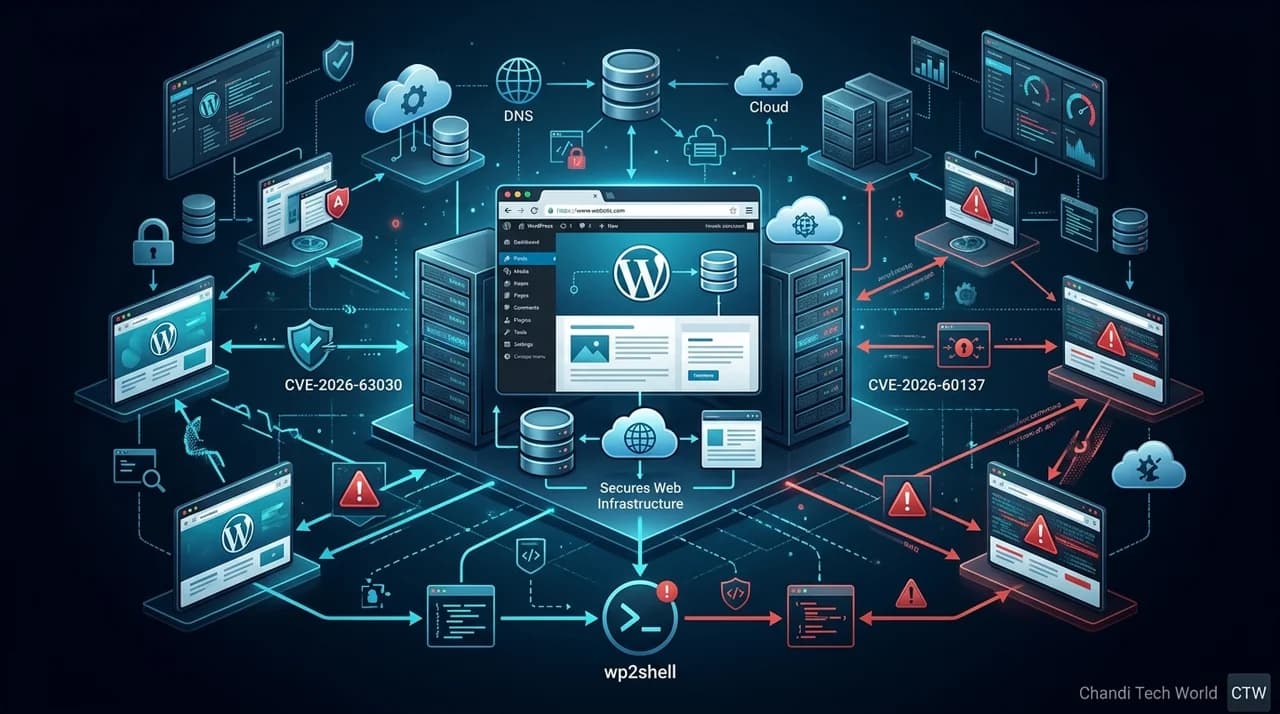
In recent days, the cybersecurity landscape has been shaken by the emergence of two critical vulnerabilities in WordPress, known collectively as wp2shell. These vulnerabilities have raised alarms among website administrators due to their potential for enabling unauthenticated remote code execution (RCE), leading to the full compromise of affected sites. As reports indicate, the exploitation of these flaws is already underway, prompting urgent calls for action from the WordPress community.
Understanding the Vulnerabilities
The vulnerabilities in question are tracked as CVE-2026-63030 and CVE-2026-60137. When exploited, they allow attackers to execute arbitrary code on vulnerable WordPress installations without requiring any form of authentication. This alarming capability means that even sites with robust security measures in place could be at risk if they are not promptly updated to mitigate these vulnerabilities. The nature of these vulnerabilities highlights the importance of timely software updates and the need for continuous vigilance in cybersecurity practices.
The wp2shell Threat
The term wp2shell refers to the combination of these two vulnerabilities, which together create a pathway for attackers to gain unauthorized access and control over WordPress sites. As of early Saturday morning (UTC), reports indicated that successful exploitations were already being observed, highlighting the urgency for website owners to assess their security posture. The wp2shell vulnerabilities exemplify a growing trend in cyber threats where attackers exploit known weaknesses in widely used platforms, emphasizing the need for proactive security measures.
Impact on Website Security
The implications of these vulnerabilities extend beyond individual website security. A successful attack can lead to a cascade of consequences, including data breaches, loss of sensitive information, and damage to a site's reputation. Moreover, compromised sites can be repurposed for further attacks, potentially affecting other websites and users. This interconnectedness of the web underscores the importance of addressing vulnerabilities immediately. The potential for widespread damage is particularly concerning for businesses that rely on their online presence for revenue and customer engagement. A single compromised site could serve as a launchpad for attacks on other interconnected systems, leading to a broader cybersecurity crisis.
Recommendations for WordPress Users
To protect against the wp2shell vulnerabilities, WordPress users are urged to take immediate action. Here are some recommended steps:
- Update WordPress: Ensure that your WordPress installation is up to date with the latest security patches. Regular updates are crucial as they often contain fixes for known vulnerabilities.
- Review Plugins and Themes: Check all installed plugins and themes for updates or vulnerabilities that may exacerbate the issue. Outdated or unsupported plugins can introduce additional risks.
- Implement Security Measures: Use security plugins that can help monitor and protect against unauthorized access. Consider employing firewalls and intrusion detection systems to bolster defenses.
- Backup Regularly: Maintain regular backups of your website to mitigate the impact of a potential compromise. In the event of an attack, having recent backups can be invaluable for recovery.
Community Response and Future Actions
The WordPress community is actively monitoring the situation and working to provide guidance and support to affected users. Security researchers are also investigating the extent of the exploitation and developing strategies to counteract the threat. As the situation evolves, it is crucial for website owners to stay informed and proactive about their security measures. Community forums, blogs, and official WordPress communications are valuable resources for obtaining the latest information on vulnerabilities and recommended practices.
Conclusion
The emergence of wp2shell vulnerabilities serves as a stark reminder of the ever-present risks in the digital landscape. With attackers already exploiting these flaws, it is imperative for WordPress users to take immediate action to safeguard their websites. By staying vigilant and implementing recommended security practices, website owners can mitigate the risks posed by these vulnerabilities and protect their online assets. The ongoing threat of cyber attacks underscores the necessity for a culture of security awareness and preparedness among all users of digital platforms.
Key Highlights
- Two critical vulnerabilities in WordPress, CVE-2026-63030 and CVE-2026-60137, are under active exploitation.
- The vulnerabilities allow for unauthenticated remote code execution, posing significant risks to affected sites.
- The combined threat is referred to as wp2shell, highlighting the urgency for website administrators.
- Successful exploitations were reported as early as Saturday morning (UTC).
- Website owners are advised to update their WordPress installations immediately.
- Implementing security plugins and regular backups are essential for protection.
- The WordPress community is responding to the threat with guidance and support for users.
Expert Analysis
Technical Analysis
The wp2shell vulnerabilities, identified as CVE-2026-63030 and CVE-2026-60137, are critical security flaws in WordPress that enable unauthenticated remote code execution (RCE). This means that attackers can execute arbitrary code on vulnerable WordPress installations without needing any form of authentication, posing a significant risk to website security. The vulnerabilities highlight the importance of timely software updates and continuous vigilance in cybersecurity practices, as even sites with robust security measures can be compromised if not promptly updated.
What sets these vulnerabilities apart is their potential to allow attackers to gain unauthorized access and control over WordPress sites, which can lead to severe consequences such as data breaches and reputational damage. The interconnected nature of the web means that a single compromised site can serve as a launchpad for further attacks, potentially affecting other websites and users. While the vulnerabilities underscore the need for proactive security measures, they also reveal limitations in the current security practices among website administrators, who may not prioritize regular updates or security assessments.
Advantages
- Immediate updates can significantly reduce the risk of exploitation.
- Proactive security measures can protect against unauthorized access.
- Regular backups can facilitate recovery in case of a compromise.
- Community support and resources can help users stay informed about vulnerabilities.
Disadvantages
- No major disadvantages reported yet.
Real-World Use Cases
- Website administrators can update their WordPress installations to the latest version to mitigate vulnerabilities.
- Businesses can implement security plugins and firewalls to enhance their website defenses.
- Developers can review and update plugins and themes to ensure they are not introducing additional risks.
- Educational institutions can use this incident as a case study to teach cybersecurity awareness and best practices.
Business Impact
The emergence of the wp2shell vulnerabilities poses a significant threat to businesses that rely on their online presence. A successful attack could lead to data breaches and loss of customer trust, potentially affecting revenue streams. Additionally, the interconnectedness of websites means that a single compromised site could lead to broader cybersecurity issues, prompting businesses to reassess their security strategies and invest in more robust protections to safeguard their online assets.
User Impact
Ordinary users of WordPress should be particularly concerned about the wp2shell vulnerabilities, as they could lead to unauthorized access to their websites and sensitive data. Website owners who may not prioritize security updates could find themselves at risk, while those who take proactive measures can protect their sites effectively. Ultimately, this situation underscores the importance of adopting a culture of security awareness among all users of digital platforms.
Security & Privacy
Security and privacy analysis not applicable.
Future Outlook
In the near term, it is expected that the WordPress community will continue to monitor the wp2shell vulnerabilities closely, providing updates and guidance to users. As security researchers investigate the extent of the exploitation, we may see the development of additional security measures and best practices aimed at preventing similar vulnerabilities in the future. The incident may also prompt a broader industry discussion on the importance of timely updates and proactive security measures in widely used platforms.
Expert Summary
The wp2shell vulnerabilities in WordPress highlight a critical cybersecurity threat that demands immediate attention from website administrators. As attackers exploit these flaws, it is essential for users to prioritize security updates and implement protective measures. This news is particularly relevant for businesses and individuals relying on WordPress for their online presence, as the implications of a successful attack can be far-reaching. Overall, staying informed and proactive is key to safeguarding digital assets in an increasingly complex cybersecurity landscape.
Originally reported by The Hacker News.



