
Enhancing AI Model Co-Design with Speculative Decoding Techniques
The article discusses accelerating LLM inference through AI model co-design using speculative decoding, providing guidelines for draft length and mechanisms to maintain accuracy.
Category
Artificial intelligence, machine learning, and generative AI breakthroughs.
The article discusses accelerating LLM inference through AI model co-design using speculative decoding, providing guidelines for draft length and mechanisms to maintain accuracy.
Explore
Continue browsing across the newsroom.
Emerging tech, industry shifts, and digital transformation news.
Wearables, smart home devices, and consumer electronics reviews.
Smartphone launches, mobile OS updates, and app ecosystem news.
Apps, platforms, developer tools, and open-source updates.
Web platforms, connectivity, cloud services, and digital culture.
Threat intelligence, privacy, breaches, and security best practices.
The article discusses the challenges of managing agentic AI fleets and how NVIDIA's Vera CPU addresses these issues by improving computational efficiency and orchestration in AI factories.
NVIDIA Groq 3 LPX is an AI inference accelerator designed for the NVIDIA Vera Rubin platform, featuring the NVL72 machine. It offers high throughput and interactivity for a wide range of AI workloads.
Alibaba has released the model weights for Qwen3.8-Flash-Next, a multimodal mixture-of-experts model with 125 billion parameters, as a preview for the upcoming Qwen4 architecture. This model features a native context window of 262,144 tokens, extendable to 1 million tokens.
NVIDIA's BlueField-4 is designed to enhance network infrastructure for Agentic AI factories, enabling high-performance computing with multi-terabit bandwidth per server and essential DPU processing for networking, storage, and security.
The rise of generative AI is reshaping data center design, highlighting the limitations of traditional Ethernet networks as performance bottlenecks in large-scale distributed model training.

NVIDIA has introduced the Nemotron 3.5 Lightning NVFP4 model, which offers up to 4x faster throughput while maintaining accuracy. The model has been compressed to 22 GB from its original 66 GB full precision size, allowing developers to customize their models for various performance targets.
The article discusses the importance of navigation in robotics, highlighting how it enables robots to autonomously interpret their surroundings and reach goals while avoiding obstacles. It emphasizes the challenges of transferring navigation capabilities to new robots or environments.
NVIDIA introduces NVLink Fusion, a technology designed to enhance AI infrastructure by supporting larger models and complex workloads through high-bandwidth memory and custom AI accelerators.

The article discusses the complexities of managing user identity across federated Kubernetes and AI platforms, emphasizing the need for unified workflows despite crossing various control-plane and data-plane boundaries.

The NVIDIA Technical Blog discusses the development of a memory-driven AI agent using NVIDIA NemoClaw, designed to assist in enterprise work by maintaining a human-readable knowledge layer.
Alibaba has released the open weights for its largest AI model, Qwen3.8-2.4T-A95B, featuring 2.4 trillion parameters and advanced capabilities for the open ecosystem.
NVIDIA's PAIR Virtual Inference Router enhances local network compute capabilities by enabling AI agents to collaborate more effectively. This allows a lead agent to delegate tasks to specialized subagents, improving efficiency in complex workflows.
The article discusses the challenges of deploying multi-step reasoning AI models on edge devices, particularly NVIDIA Jetson. It highlights the historical dependency on data centers for inference and the recent advancements that allow for local execution, reducing costs and enhancing data privacy.

NVIDIA has released JetPack 7.2.1, enhancing video capabilities for Jetson applications across various sectors including robotics and healthcare. The update introduces agentic video skills and T3000 emulation.
The article discusses how generative recommenders are transforming recommender systems (RecSys) in the consumer internet industry, moving from traditional methods to generative approaches that predict user actions based on historical data.

NVIDIA's latest development showcases a frontier-level general-purpose architecture for long-horizon autonomous agents, achieving a 100% score on the ARC-AGI-3 benchmark. This architecture emphasizes the importance of the surrounding agent system in enhancing the capabilities of frontier language mo
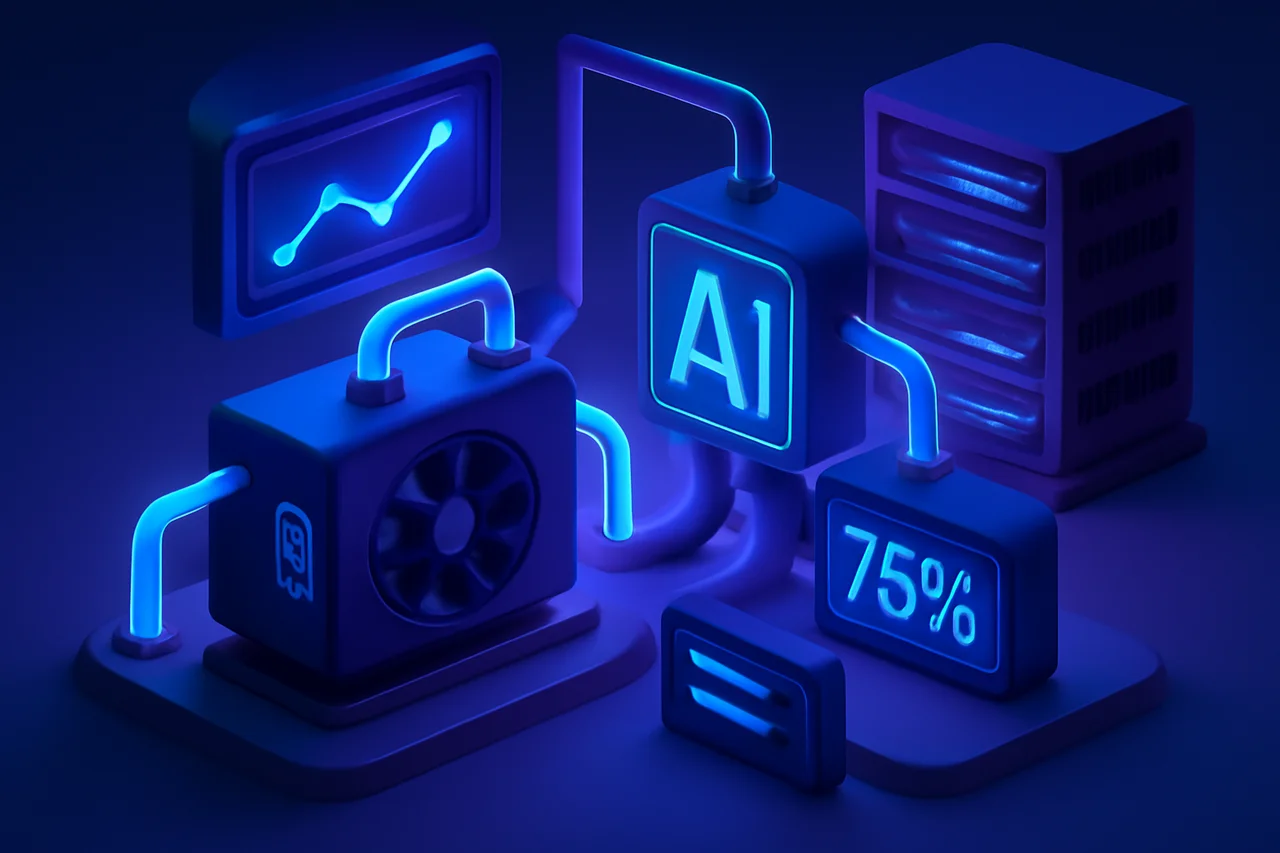
The NVIDIA Technical Blog discusses the importance of maximizing AI factory performance per watt, emphasizing that efficiency is measured by AI output per megawatt rather than GPU count.
NVIDIA's latest benchmarks highlight advancements in AI-native storage, focusing on faster encryption, compression, integrity checking, and recovery processes essential for efficient AI workflows.

The article discusses the importance of co-designing AI models to optimize attention mechanisms for improved inference performance, particularly in long-context workloads. It emphasizes the need to align model architecture with GPU execution.

Google DeepMind has partnered with Singapore to leverage advanced AI technologies to tackle significant challenges in health, education, and sustainability.
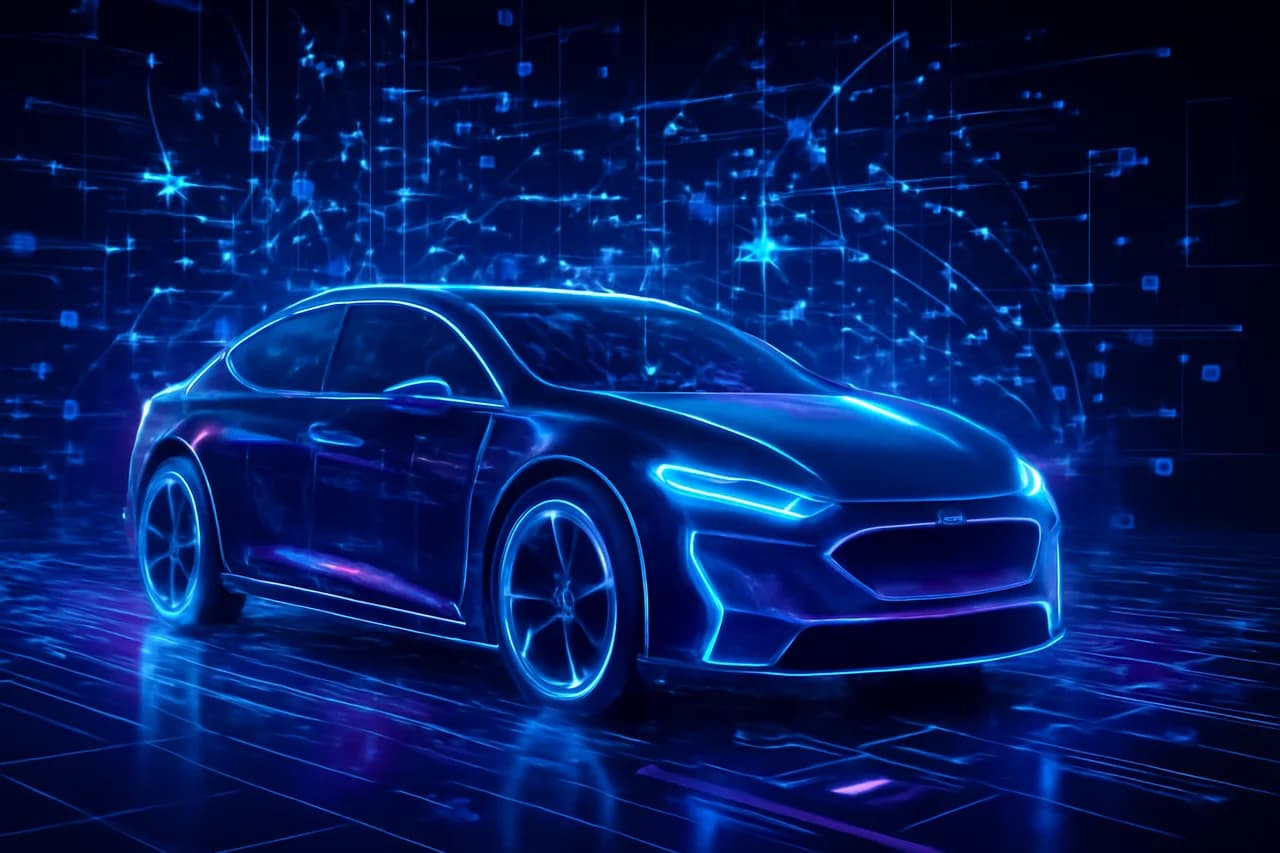
NVIDIA introduces Alpamayo 2 Super, a 34-billion-parameter reasoning vision model aimed at improving autonomous vehicle development by integrating trajectory generation, intent prediction, and scene understanding into a unified framework.

The article discusses the challenges in robotics related to building policies that generalize beyond training demonstrations. It emphasizes the need for robots to understand the underlying physics of tasks to adapt to varying conditions.

Meta has launched Muse Glimmer, a 30B open-weight AI model designed for local agentic workflows, optimized for NVIDIA platforms. It can process 20K tokens per second on a single GPU.